
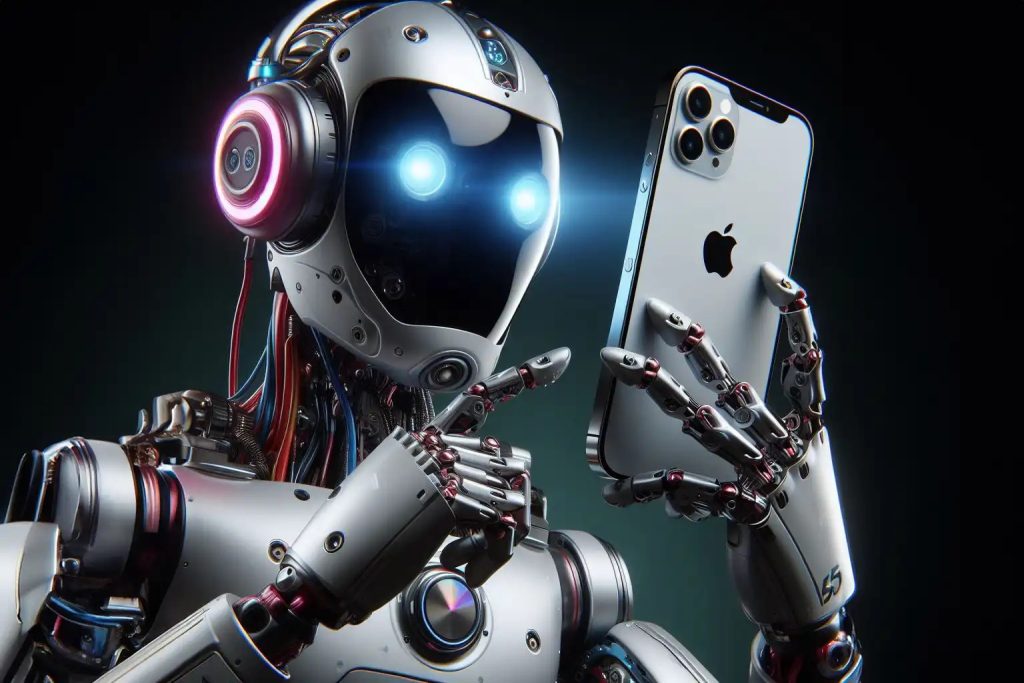


Apple (AAPL) has quietly developed an internal ChatGPT-like iPhone application as part of its push to overhaul Siri, its decade-old voice assistant, in what could be the company’s most ambitious AI upgrade in years. People familiar with the project say the tool is designed to accelerate testing and refine features before a public launch now targeted for early 2025.
According to these sources, the software—code-named Veritas (Latin for “truth”)—acts as an internal sandbox for Apple’s engineers and product managers. By putting the still-unfinished version of Siri into a chatbot format, Apple can stress-test new features in real time and gather employee feedback at scale. Among the capabilities being trialed: smarter searches through a user’s personal content, such as songs or emails, and the ability to execute in-app actions like editing photos or sending quick replies without leaving the current screen.
Apple has not announced any plans to release Veritas to consumers. Instead, the company is using it to determine which features are reliable enough for the public, and whether the chatbot interface itself adds value to Siri’s traditional voice-first experience. A spokesperson for Cupertino, California-based Apple declined to comment on the initiative.
Even without a public rollout, the existence of Veritas signals a pivotal new stage in Apple’s AI efforts. Siri’s planned overhaul—running on a new underlying system code-named Linwood—relies heavily on large language models, the same type of technology behind generative-AI tools such as OpenAI’s ChatGPT, Google’s Gemini, and Anthropic’s Claude. Linwood blends Apple’s in-house Foundation Models team’s work with a third-party model to support more nuanced and conversational interactions.
The stakes for Apple are high. Siri has long been seen as falling behind rival assistants like Google Assistant or Amazon’s Alexa, and competition in AI features is expected to become a key factor in smartphone purchases next year. Google and Samsung have already begun marketing generative-AI-powered search, translation, and photo-editing tools in their flagship phones. Apple conspicuously avoided highlighting its own AI platform at this month’s iPhone 17 launch, a move analysts saw as evidence the technology wasn’t yet ready for prime time.
Internally, the new Siri has faced setbacks. Bloomberg previously reported that Apple postponed its original rollout last spring after engineering tests showed the upgraded features failed as much as a third of the time. The new timeline calls for a debut as early as March 2025. If it works as promised, the refreshed Siri could help Apple reassert its leadership in consumer AI; if not, it risks cementing perceptions that the company is lagging in one of tech’s most important frontiers.
People who have seen Veritas describe an interface similar to other leading chatbots. It allows employees to manage multiple ongoing conversations across different topics, refer back to past exchanges, follow up on earlier queries, and maintain extended back-and-forth dialogues—all features designed to simulate how real customers might interact with the next-generation Siri. In effect, the app gives Apple a living laboratory to test and refine Linwood’s capabilities before millions of iPhone owners ever see them.
As Apple heads toward its planned release window, the competitive pressure is only increasing. Generative AI is becoming a central selling point for mobile devices and services, with tech companies racing to integrate smarter assistants, on-device large language models, and new ways to search and act on personal data. For Apple, the Veritas project underscores that its Siri overhaul is not just an incremental update but a potential relaunch—one that could shape how the world perceives its AI strategy for years to come.



 Pump Radar
 Stock Alerts