
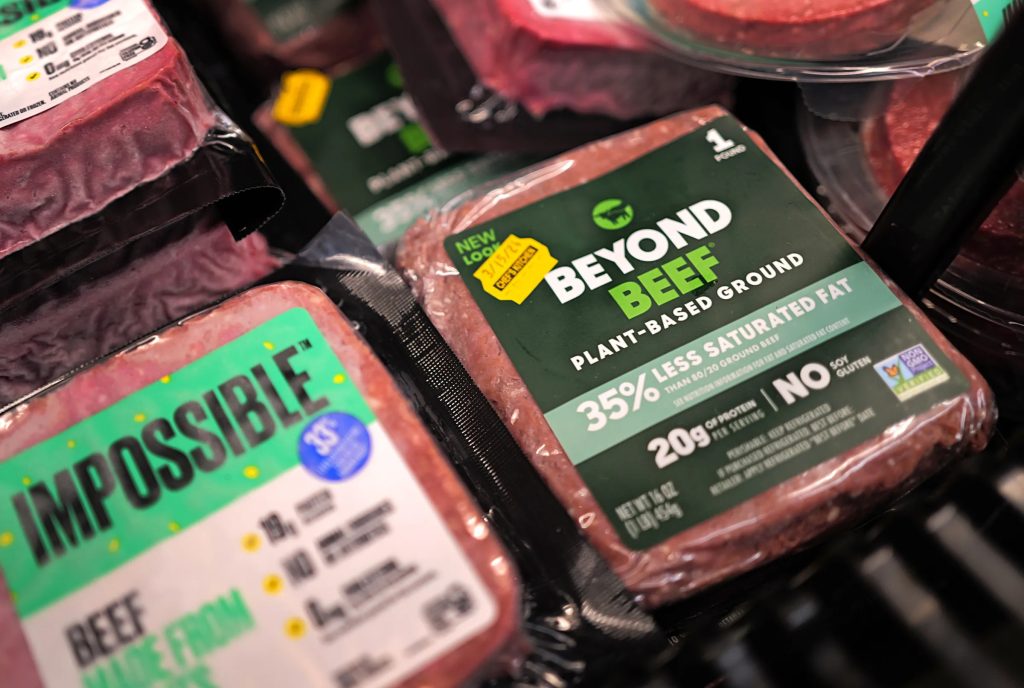


Beyond Meat’s stock tumbled to an all-time low on Monday after the plant-based protein pioneer launched an aggressive plan to slash its towering debt load. Shares of Beyond Meat (NASDAQ: BYND) were last down 32.1% at $1.93, hitting an intraday low of just $1.23 — a stark reversal for a company once viewed as the face of the alternative-protein revolution.
The selloff comes as Beyond Meat attempts to restructure its balance sheet through a complex exchange offer for its outstanding convertible bonds. According to a regulatory filing, the company is seeking to exchange $1.15 billion of 0% convertible notes due 2027 for up to $202.5 million of new 7% payment-in-kind (PIK) convertible notes due 2030 and approximately 326 million shares of common stock. Payment-in-kind provisions allow Beyond Meat to issue additional debt in lieu of cash to cover interest payments, at an annual rate of 9.5% for the new notes.
President and CEO Ethan Brown framed the move as essential to Beyond Meat’s long-term viability, saying the exchange would “significantly reduce leverage and extend maturities,” thereby freeing the company to pursue its vision of becoming a global leader in plant-based proteins. As of Monday’s filing, roughly 47% of existing noteholders had already agreed to the offer, with the remainder given until October 28 to decide.
The dramatic step underscores the financial strain on Beyond Meat after a series of disappointing results. In August, the company reported a sharper-than-expected revenue decline and a wider loss, blaming weak U.S. consumer demand, shifting tastes in the plant-based meat segment, and broader economic uncertainty. Management said at the time that it would not provide full-year guidance due to what it called “an elevated level of uncertainty.”
The company’s debt-heavy balance sheet and faltering sales have drawn sharp criticism from Wall Street. In an August note, TD Cowen analysts wrote that Beyond Meat’s leadership had “recognized the existential threat facing the business” and was taking steps to conserve cash and stabilize operations. Even so, they reiterated a sell recommendation, citing fragile finances and a saturated market for meat alternatives.
Analyst sentiment remains overwhelmingly negative. Of the nine analysts tracked by LSEG, six rate Beyond Meat shares “sell” or “strong sell” and only three maintain a “hold” rating. Year-to-date, the stock has lost about 50% of its value, a stunning drop from its 2019 IPO highs and a sign of investor skepticism about whether Beyond Meat can execute its turnaround plan.
The exchange offer is the company’s most ambitious effort yet to buy time, reduce debt, and reset investor expectations. Whether it succeeds may hinge on consumer willingness to return to plant-based meats and on Beyond Meat’s ability to regain pricing power and scale amid rising competition from traditional food giants and newer entrants in the alternative protein space.
 Pump Radar
 Stock Alerts