
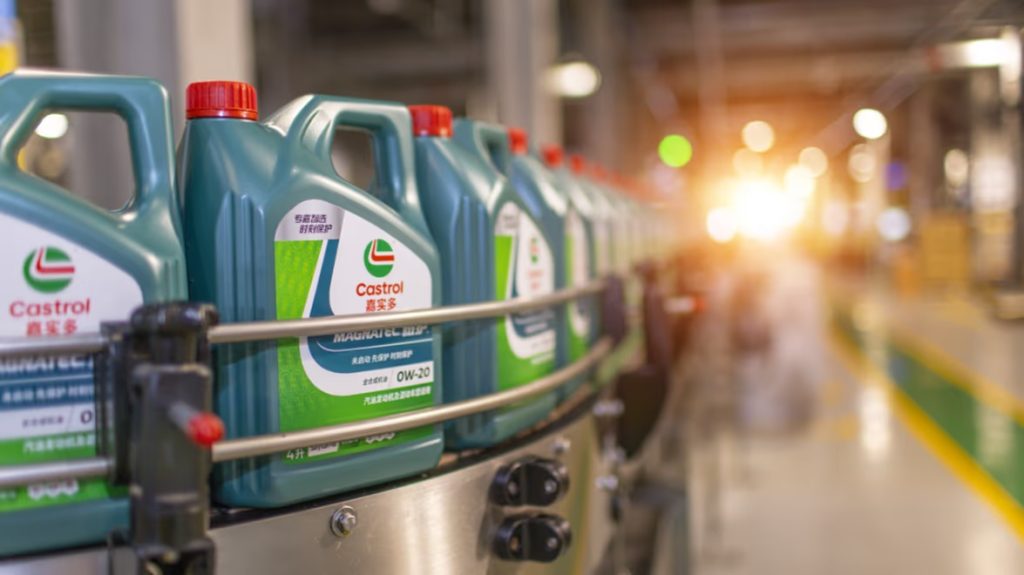


BP is conducting a strategic review of its global lubricants business, Castrol, with a potential sale being a strong possibility. This move aligns with BP’s broader strategy to raise $20 billion through asset divestments by 2027, as the company shifts its focus back to oil and gas investments and reduces capital expenditure on renewables.
Acquired by BP in 2000 for $4.73 billion, Castrol is a renowned brand supplying lubricants across automotive, marine, industrial, and energy sectors in over 150 countries. Despite its success, Castrol’s fit within BP’s evolving energy strategy has been uncertain, especially with BP’s recent “reset” announced on February 26, 2025.
Castrol is a leading and trusted global lubricants brand, marketing premium products in more than 150 countries and serving customers and consumers in the automotive, marine, industrial and energy sectors. Castrol has significant growth ambitions, including growing its core mobility businesses, expanding participation in industrial lubricants, enhancing its mobility services and diversifying into data centre fluids.
The strategic review of Castrol will consider all options with a focus on value creation. Proceeds from any potential transaction that may arise as a result of the review will be allocated to strengthening bp’s balance sheet.
The strategic overhaul, led by CEO Murray Auchincloss, involves increasing annual investment in oil and gas to $10 billion while reducing spending on transition businesses, including biofuels and EV charging, to $1.5–2 billion per year. Proceeds from any potential Castrol sale are intended to strengthen BP’s balance sheet and reduce net debt to $14–18 billion by 2027.
Activist investor Elliott Management, holding nearly a 5% stake in BP, has been pressuring the company to scale back renewable energy investments and focus on high-margin oil and gas operations. The potential sale of Castrol aligns with Elliott’s agenda, reinforcing BP’s shift away from lower-margin businesses.
In addition to the Castrol review, BP has put on hold its plans to develop the Kwinana Renewable Fuels project in Australia, citing a need to optimize capital efficiency and align with government policies. This decision reflects BP’s decisive return to traditional oil and gas investments, reversing much of the company’s prior renewable energy push.
With Castrol’s future under review and biofuels initiatives facing delays, BP is signaling a clear commitment to prioritizing oil and gas in its portfolio.


 Pump Radar
 Stock Alerts