
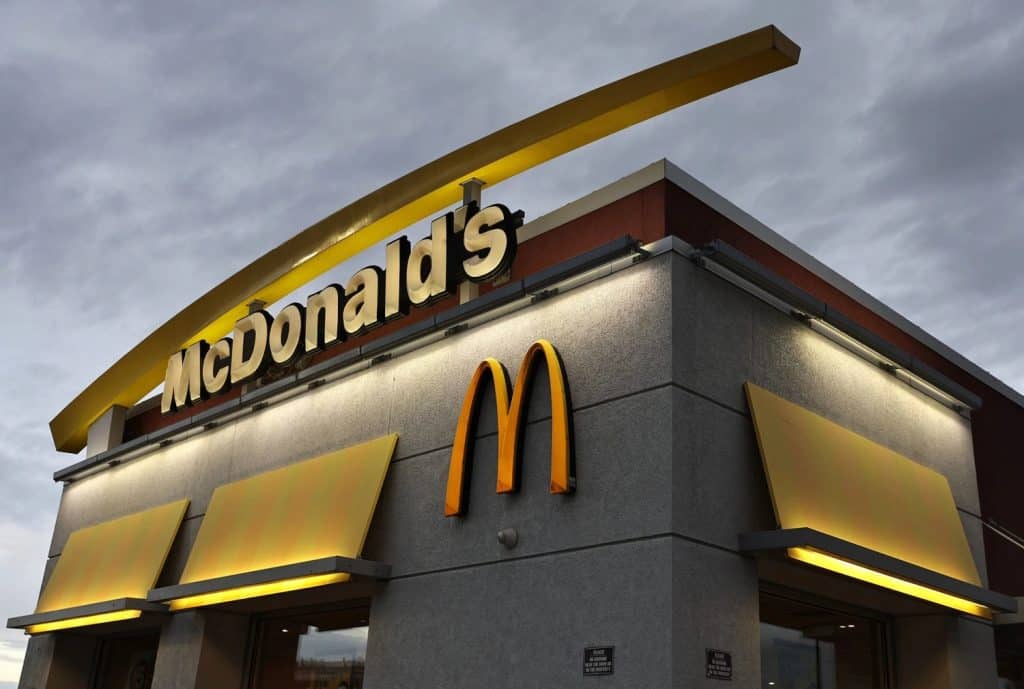


McDonald’s is the newest focus of the grassroots “economic blackout” campaign, which has alternated between large targets with mixed success.
John Schwarz’s group, The People’s Union USA, is calling for a boycott of McDonald’s from Tuesday through next Monday. In an Instagram post, Schwarz said the protest demands “fair taxes, an end to price gouging, real equality, and corporate accountability.”
“This is a show of strength, solidarity and people powered change,” Schwarz wrote. “Let them feel it. Let them hear us.”
In a statement to CNN, McDonald’s said it welcomes “honest dialogue with the communities we serve, but we’re disappointed to see these misleading claims that distort our values and misrepresent our actions.”
The chain added that its “commitment to inclusion remains steadfast,” highlighting the “meaningful work opportunities” provided to 800,000 restaurant employees and its sizable supplier spend. It also noted: “The McDonald’s System also generates billions in federal, state and local taxes annually, and we’ll continue to pay our fair share.”
Organizing large-scale boycotts is notoriously tough, and it’s uncertain whether this effort will dent McDonald’s sales. Still, it comes as the company reports a second straight quarter of declining sales, with lower- and middle-income customers tightening their belts.
Price backlash hasn’t helped: average menu prices have climbed roughly 40% since 2019, which McDonald’s attributes to rising costs.
Schwarz did not immediately respond to a request for comment. His website describes The People’s Union USA as “a grassroots movement dedicated to economic resistance, government accountability, and corporate reform,” and says the “goal is to unite Americans against the corruption and greed that has kept us struggling for decades.”
Earlier this year, Schwarz called for an “economic boycott” of Walmart, Target, and Amazon, partly over their rollback of diversity, equity, and inclusion (DEI) programs. In January, McDonald’s likewise dropped certain supplier DEI targets, stopped taking part in outside diversity surveys, and rebranded its diversity group as the Global Inclusion Team.
Many firms have softened DEI commitments following President Donald Trump’s reelection and a Supreme Court ruling against affirmative action. Pressure from lawsuits, political pushback, and customer opposition has prompted companies including Walmart, Ford, Harley-Davidson, and John Deere to rethink their initiatives.
Schwarz’s earlier Amazon boycott appeared to have little impact—Amazon beat earnings expectations that quarter. Experts in consumer activism doubt the loosely organized “economic blackout” will significantly affect corporate results, let alone the broader U.S. economy.
Target, however, did see sales slip after a 40-day boycott led by Rev. Jamal Bryant, a move the retailer partly blamed on customer anger over its DEI retreat.

 Pump Radar
 Stock Alerts