
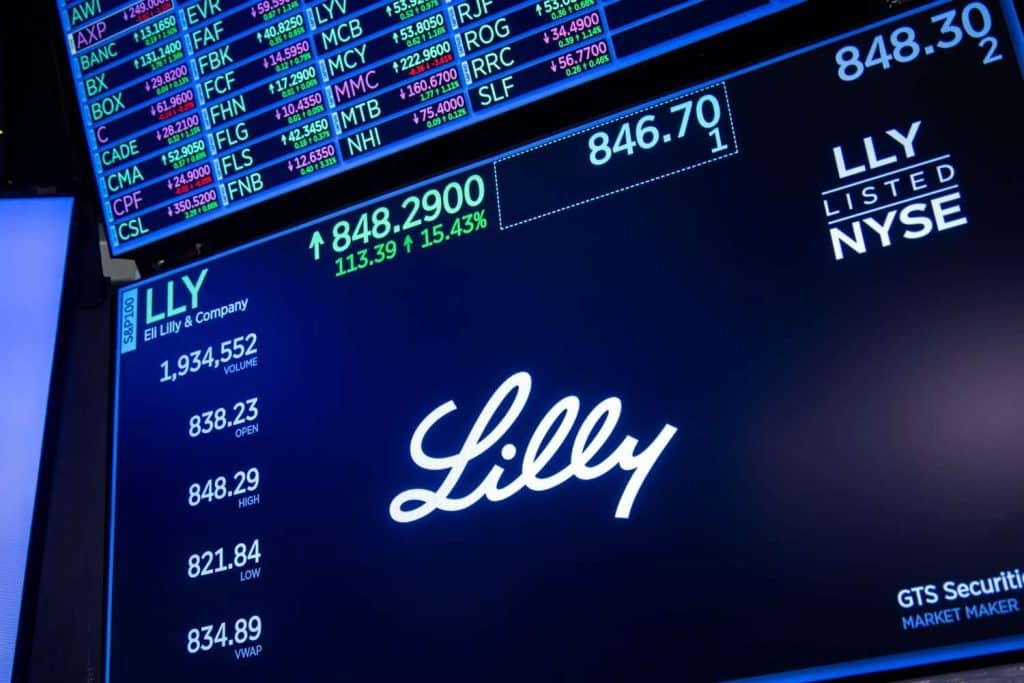


Eli Lilly (LLY) shares fell around 13% Thursday after the company reported late-stage trial results for its experimental obesity pill, orforglipron. The highest dose helped patients lose nearly 12% of their body weight—or about 27 pounds—over 72 weeks. However, this fell short of Wall Street’s hopes for closer to 15% weight loss, and shares of rival Novo Nordisk jumped more than 7% in response.
While some physicians were encouraged by the results, others noted concerns over the number of patients on the highest dose who discontinued treatment due to side effects. “This is a strong and promising result for an oral agent,” said Dr. Jaime Almandoz of UT Southwestern, calling the weight loss “a significant and clinically meaningful outcome.” He added, “Injectables have set a high bar, but this study reinforces the potential for an oral GLP-1 to be transformative in obesity care.”
Dr. Mihail “Misha” Zilbermint of Johns Hopkins said the pill “has the potential to be a game changer, as long as people can tolerate the side effects.” In the trial, about 10.3% of patients on the highest dose discontinued due to mainly gastrointestinal issues like nausea and vomiting, higher than analysts had expected.
“We’re not disappointed with these results. It’s right on thesis for us,” said Eli Lilly CEO David Ricks in an interview on CNBC’s Squawk Box. “The goal was to create an oral pill that was convenient and can be made at a huge scale, really, for the mass market.”
Ricks added the company plans to submit the data to regulators by year-end and aims for a global launch around mid-2026. He emphasized that the dropout rate was in line with expectations: “We’re right in the middle… But the dropout from the drug is what we pay attention to, and here again, we’re right on with the profile.”
Analysts and physicians see strong potential in orforglipron’s convenience, especially for patients averse to injections. “I don’t believe the discontinuation rates or side effects will be a deciding factor,” said Dr. Amy Sheer of the University of Florida, adding that an oral option may increase comfort among physicians hesitant to prescribe injectables.
Eli Lilly is currently several years ahead of other companies developing oral GLP-1s. The market for these drugs is projected to exceed $150 billion by the early 2030s, with oral versions making up as much as $50 billion, according to Guggenheim analyst Seamus Fernandez.
Leerink downgraded shares to market perform from outperform. However, Bank of America analyst Tim Anderson said the sell-off was “overdone,” as he reiterated his buy rating and $1,000 price target.
“Yes, weight loss fell a bit short, but ask 100 prescribers whether this new data will really make a difference in who they’d put on orforglipron, and our belief is the vast majority would say, ‘not really,’” Anderson wrote in a note to clients.
Additional trial data will be presented at a European medical meeting in September, with more results expected later this year, including a study on patients with Type 2 diabetes.
 Pump Radar
 Stock Alerts