
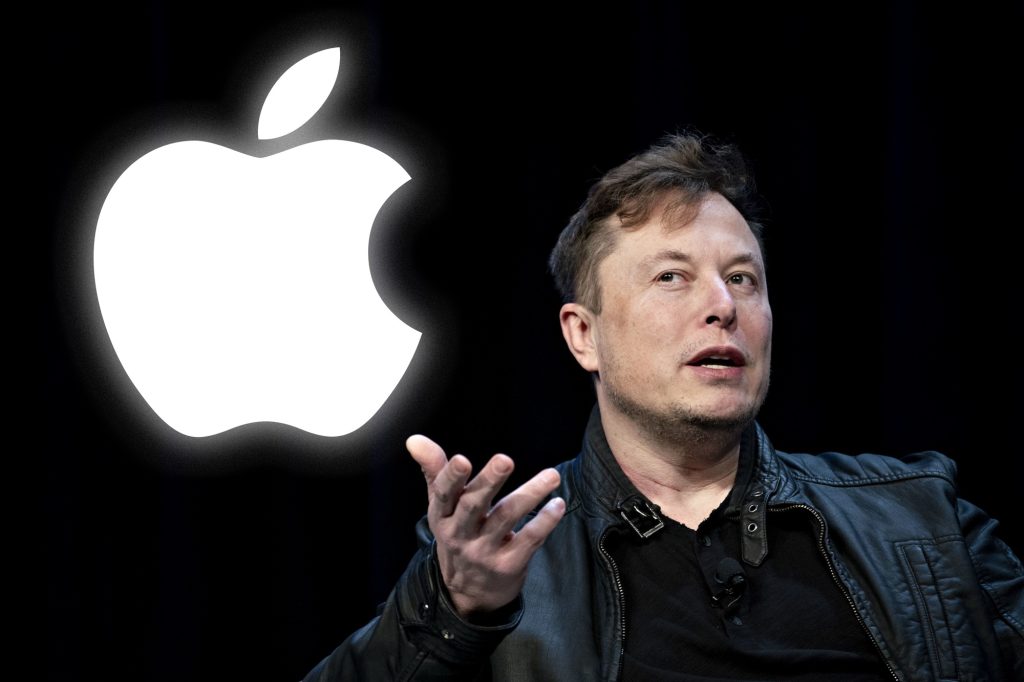

Billionaire entrepreneur Elon Musk has escalated his battle with Apple and OpenAI, filing a sweeping lawsuit in U.S. federal court in Texas on Monday. Musk’s artificial intelligence startup, xAI, accused the two companies of illegally conspiring to suppress competition in the fast-growing AI sector and of locking up key markets to preserve what the complaint describes as entrenched monopolies.
The lawsuit centers on Apple’s deep partnership with OpenAI, which has integrated the ChatGPT platform into Apple’s ecosystem of iPhones, iPads, and Macs. According to the filing, Apple’s decision to exclusively highlight OpenAI’s tools has come at the expense of Musk’s products, including the X app and Grok chatbot. “If not for its exclusive deal with OpenAI, Apple would have no reason to refrain from more prominently featuring the X app and the Grok app in its App Store,” the lawsuit states. Musk’s company is seeking billions of dollars in damages, arguing that Apple and OpenAI’s collaboration has created insurmountable barriers for rivals.
The lawsuit comes after weeks of public sparring between Musk and Apple. Earlier this month, Musk threatened to take legal action, writing on his social media platform X that Apple’s behavior “makes it impossible for any AI company besides OpenAI to reach #1 in the App Store.” OpenAI, for its part, dismissed the Texas lawsuit as another attempt by Musk to disrupt competitors. “This latest filing is consistent with Mr. Musk’s ongoing pattern of harassment,” an OpenAI spokesperson said in a statement. Apple has not yet responded to the claims.
The dispute underscores the increasingly high stakes in the AI race. Since its release in late 2022, OpenAI’s ChatGPT has become the fastest-growing consumer application in history, winning widespread adoption and transforming the way users interact with technology. Microsoft’s multibillion-dollar investment has further cemented OpenAI’s position at the top of the market. Musk, who co-founded OpenAI with Sam Altman in 2015 as a nonprofit research lab before later splitting with the group, now finds himself in direct competition through xAI, the company he launched less than two years ago.
To accelerate xAI’s progress, Musk spent $33 billion earlier this year acquiring his social media platform X, which he has repurposed in part to train AI models on massive streams of real-time data. He has also integrated xAI’s Grok chatbot into Tesla vehicles, framing it as a competitor to ChatGPT and other leading conversational AI tools. Still, Musk argues that Apple’s distribution practices and OpenAI’s market dominance prevent companies like xAI from competing on a level playing field.
The legal clash with Apple and OpenAI adds to Musk’s growing docket of lawsuits in the AI arena. In a separate case filed in California, Musk is suing OpenAI and CEO Sam Altman to challenge the company’s transformation from a nonprofit research group into a for-profit business backed heavily by Microsoft. Musk contends the shift violates OpenAI’s founding mission of developing safe AI for the benefit of humanity.
Apple, meanwhile, has faced its own antitrust scrutiny in recent years. Its App Store practices have been targeted by regulators and rival developers, most notably in a high-profile lawsuit with Fortnite creator Epic Games. In that case, a judge ruled Apple must allow greater competition in app payment options, though Apple continues to defend the App Store’s walled-garden approach. Musk’s lawsuit now extends those criticisms to the AI space, alleging Apple has once again used its platform dominance to tilt the market.
As AI adoption accelerates worldwide, the Texas lawsuit could become a pivotal case in shaping how much control a handful of tech giants will wield over the next wave of computing. For Musk, it is the latest in a series of battles aimed at loosening the grip of Big Tech — and positioning his ventures as challengers in one of the most consequential technology races of the decade.

 Pump Radar
 Stock Alerts