


The European Union announced on Monday that it will postpone for six months its planned retaliatory tariffs against the United States, which were originally scheduled to take effect this Thursday.
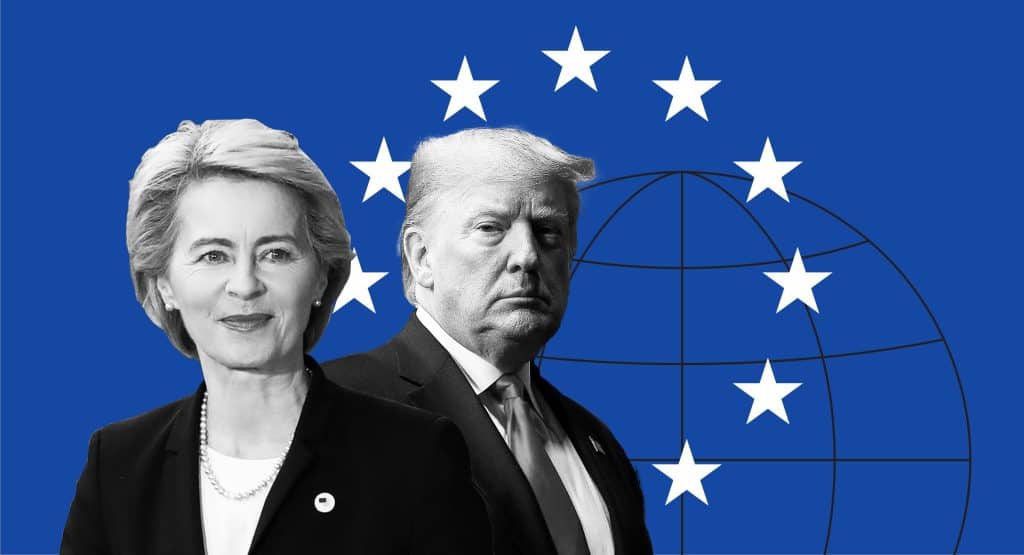
This move represents a significant concession from the 27-member bloc, one of America’s largest trading partners, following weeks of ongoing trade discussions between U.S. President Donald Trump and European Commission President Ursula von der Leyen.
“On 27 July 2025, European Commission President Ursula von der Leyen and US President Donald J. Trump agreed a deal on tariffs and trade,” the EU Commission spokesperson for trade said in an official statement.
The spokesperson described the agreement as restoring “stability and predictability for citizens and businesses on both sides of the Atlantic.”
“The EU continues to work with the US to finalise a Joint Statement, as agreed on 27 July,” the spokesperson added.
“With these objectives in mind, the Commission will take the necessary steps to suspend by 6 months the EU’s countermeasures against the US, which were due to enter into force on 7 August.”
The European Commission, which serves as the executive branch of the EU, expects the suspension to formally begin on Tuesday.
The White House has not yet responded to CNBC’s request for comment regarding the EU’s announcement.
This delay signals a diplomatic compromise following extensive negotiations between Trump and von der Leyen.
Last month, Trump unveiled a trade deal with the EU that included a 15% tariff on most European goods entering the U.S., including automobiles.
Under the agreement, the White House stated that the EU “will remove significant tariffs, including the elimination of all EU tariffs on U.S. industrial goods exported to the EU.”
Trump further claimed the 27-member bloc agreed to purchase $750 billion worth of U.S. energy and to invest an additional $600 billion into the U.S. beyond current levels.
However, details remain unclear about who would make these investments or how they would be executed, as the EU cannot compel private companies to buy American oil or agricultural products.
An EU statement on the July deal emphasized that it is a political agreement and “not legally binding.”
“Beyond taking the immediate actions committed, the EU and the US will further negotiate, in line with their relevant internal procedures, to fully implement the political agreement,” the statement said.
This announcement coincides with a pivotal week for Trump’s broader trade strategy. After several deadline shifts, the president last week postponed the implementation date for new tariff rates.
Tariffs targeting more than 60 countries are now set to begin August 7, delayed from the original August 1 date.


 Pump Radar
 Stock Alerts