
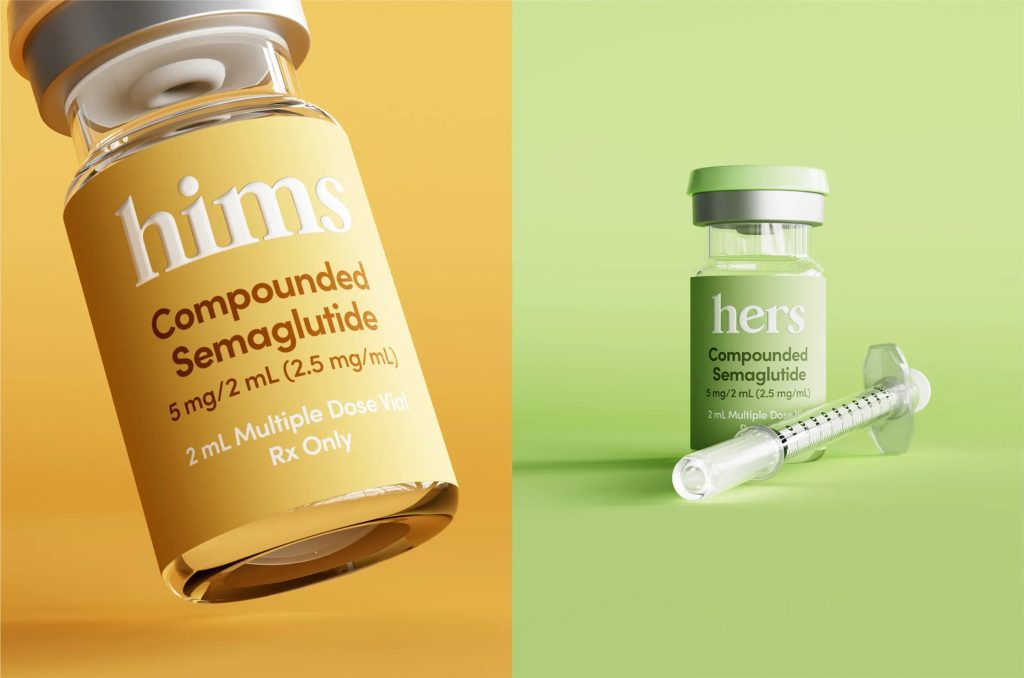


For the first time, federal health officials are targeting telehealth companies that promote unofficial versions of prescription medications, including high-demand weight-loss treatments, as part of the Trump administration’s intensified scrutiny of pharmaceutical advertising. On Tuesday, the Food and Drug Administration posted more than 100 warning letters to drugmakers and online prescribing platforms, including San Francisco-based Hims & Hers, which has grown into a multibillion-dollar company by offering lower-cost versions of blockbuster obesity drugs.
The FDA’s letters to Hims & Hers specifically warned the company to remove “false and misleading” claims from its website, including statements suggesting its compounded products contain “the same active ingredient” as FDA-approved drugs such as Wegovy and Ozempic. Regulators emphasized that these formulations, produced by specialty compounding pharmacies, are not evaluated or approved by the FDA. “Your claims imply that your products are the same as an FDA-approved product when they are not,” the Sept. 9 letter stated. Hims responded that it looks forward to engaging with the FDA and noted that its website and customer-facing materials clearly indicate that compounded treatments are not FDA-approved or evaluated.
The agency’s actions represent a significant departure from its usual, more bureaucratic approach, as the letters include explicit “cease and desist” language. This move reflects a broader push from the Trump administration, following a memo signed last week instructing Health Secretary Robert F. Kennedy Jr. and the FDA to ensure that pharmaceutical advertising on television, social media, and other online platforms is “truthful and non-misleading.” Kennedy, a longtime critic of the pharmaceutical industry, has previously argued that obesity can be addressed through diet and exercise alone rather than relying on drugs like GLP-1 therapies.
The FDA’s crackdown also included letters to manufacturers of GLP-1 medications such as Wegovy, Ozempic, and Zepbound, highlighting concerns over a 2024 infomercial featuring Oprah Winfrey. Regulators said the 42-minute TV segment from Eli Lilly and Novo Nordisk presented a “misleading impression” about the safety of these drugs, which carry multiple serious and potentially life-threatening risks.
Hims & Hers has faced regulatory scrutiny previously. Earlier this year, the company ran a Super Bowl advertisement touting its weight-loss medications but omitting any discussion of potential side effects, which violates FDA rules requiring a balanced presentation of risks and benefits. Dr. Marty Makary of the Journal of the American Medical Association described the ad as a “brazen” example of how marketing contributes to the U.S. culture of overreliance on pharmaceuticals.
Originally, Hims and similar telehealth companies focused on inexpensive generics for conditions such as hair loss and erectile dysfunction. The surge in demand for obesity medications, however, created a lucrative market for cheaper copies. While FDA regulations allow “compounding”—the customized production of drugs—during shortages, GLP-1 drugs no longer meet the shortage criteria. Nonetheless, Hims and others have continued compounding by offering personalized dosages for individual patients, claiming added benefits.
Shares of Hims & Hers Health Inc. fell more than 6.4% in trading on Tuesday following the FDA letters. This action follows another recent FDA letter from the agency’s vaccine division criticizing a TV advertisement for AstraZeneca’s FluMist, in which background visuals and music were said to distract from important information about side effects. Dr. Vinay Prasad, FDA vaccine chief and ally of Kennedy, signed that letter after returning to the agency following a brief leave of absence.
Consumer advocates and researchers have long noted that upbeat TV depictions of patients enjoying life often overshadow important safety information. Studies also suggest that exposure to direct-to-consumer drug advertising increases patient demand—even when they are not suitable candidates—raising broader concerns about how these marketing practices influence healthcare decisions. The American Medical Association has repeatedly called for stricter controls, arguing that such ads inflate demand for newer and more expensive medications.

 Pump Radar
 Stock Alerts