
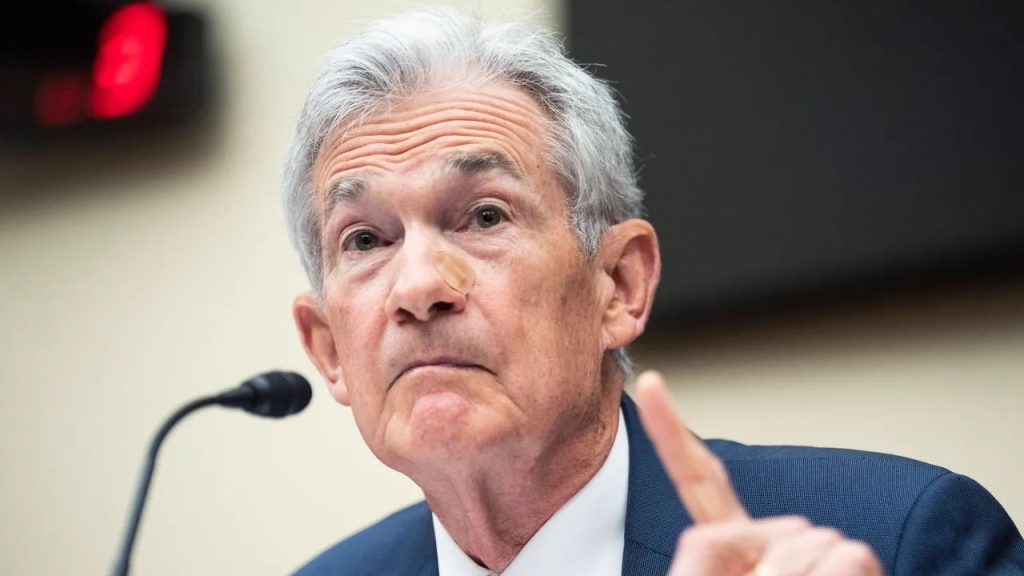


Federal Reserve Chair Jerome Powell signaled the possibility of a rate cut in September during his keynote at the Jackson Hole Economic Symposium on Friday, emphasizing that “the baseline outlook and the shifting balance of risks may warrant adjusting our policy stance.” The speech, which addressed both the current economic landscape and the Fed’s updated policy framework, came amid heightened investor expectations that the central bank may soon ease interest rates.
Powell acknowledged that inflation risks remain “tilted to the upside,” citing clearly visible tariff-driven price pressures. “We expect those effects to accumulate over [the] coming months, with high uncertainty about timing and amounts,” he said. “The question that matters for monetary policy is whether these price increases are likely to materially raise the risk of an ongoing inflation problem.” He emphasized the Fed’s commitment to preventing one-time price shocks from turning into persistent inflation: “We will not allow a one-time increase in the price level to become an ongoing inflation problem.”
The Fed left rates unchanged at 4.25%-4.50% at its July 31 meeting. Powell’s remarks immediately spurred a rally in U.S. stocks and a drop in Treasury yields, with CME Group data showing the probability of a September rate cut surging above 90% in response. Public statements since that meeting suggest mixed views among Fed officials. Governors Michelle Bowman and Chris Waller, who voted for cuts in July, have voiced support for lower rates, while some regional Fed presidents, including Cleveland’s Beth Hammack, argue inflation risks justify holding rates steady.
Powell also highlighted risks in the labor market, noting a slowdown in hiring alongside a slowdown in workforce growth. “This unusual situation suggests that downside risks to employment are rising,” he said. “And if those risks materialize, they can do so quickly in the form of sharply higher layoffs and rising unemployment.” The July jobs report showed the U.S. economy added just 73,000 positions, while revisions to May and June data removed 250,000 previously reported gains, leaving a three-month average of just 35,000 new jobs. The labor market slowdown has drawn attention from President Trump, who recently removed the head of the Bureau of Labor Statistics following the July report.
The Jackson Hole speech also provided insight into the Fed’s revised policy framework. Powell explained that the central bank will now more directly target a 2% inflation rate rather than aiming for a multi-year average. “As it turned out, the idea of an intentional, moderate inflation overshoot had proved irrelevant,” Powell said. “There was nothing intentional or moderate about the inflation that arrived a few months after we announced our 2020 changes to the consensus statement, as I acknowledged publicly in 2021.” The Fed’s new language emphasizes that maintaining a 2% inflation rate aligns best with its statutory dual mandate of maximum employment and price stability.
The Jackson Hole speech comes at a pivotal moment for U.S. monetary policy. Inflation has cooled somewhat from recent highs, but price pressures—especially from tariffs—remain a concern. Simultaneously, weak job growth and revisions to prior months’ data suggest the labor market may be softening faster than expected, creating a delicate balance for the Fed between sustaining economic growth and preventing inflation from reaccelerating.
Markets reacted swiftly to Powell’s statements. Stocks surged on the prospect of rate cuts, Treasury yields fell, and investors are now closely monitoring upcoming economic data for signs that the Fed may act sooner than previously expected. Powell’s comments underscore the central bank’s dual challenge: managing persistent inflation risks while remaining attentive to slowing job growth and broader economic momentum.

 Pump Radar
 Stock Alerts