
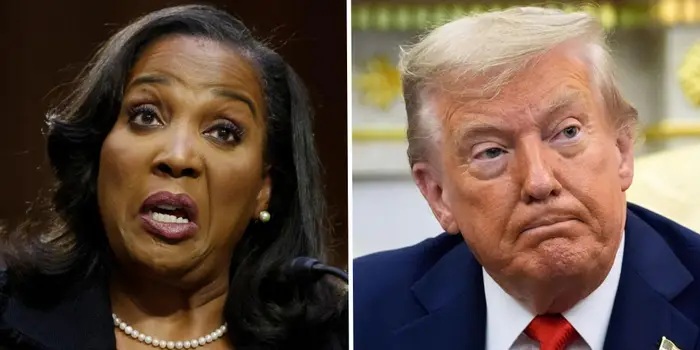


Federal Reserve Governor Lisa Cook filed a lawsuit Thursday against President Trump, the Federal Reserve Board of Governors, and Fed Chair Jerome Powell, arguing that the president’s attempt to remove her from office exceeded his legal authority and violated her constitutional rights.
In her complaint, Cook contends that the administration’s move to oust her—based on allegations of mortgage fraud—deprived her of her Fifth Amendment due process rights and her statutory protections under the Federal Reserve Act. Cook, 61, is seeking an injunction from the U.S. District Court in Washington, D.C., to confirm her status as a sitting governor and to preserve what she calls the central bank’s “congressionally mandated independence.”
“The president’s actions violate Governor Cook’s Fifth Amendment due process rights and her statutory right to notice and a hearing under the Federal Reserve Act,” her six-count filing states.
The lawsuit marks a historic showdown over the limits of presidential authority and the degree of independence granted to the Federal Reserve. No U.S. president has ever before attempted to fire a sitting Fed governor, making the case a major test of executive power over monetary policy.
Refusing to Resign
Cook has flatly rejected a termination letter signed by Trump and released publicly on Monday. The letter asserted that she could be removed “for cause” under the Federal Reserve Act due to alleged mortgage misconduct.
Cook quickly responded: “I will not resign. I will continue to carry out my duties to help the American economy as I have been doing since 2022.”
Her stance has set up a rare confrontation between the White House and the Fed. Cook’s attorney, Abbe Lowell—best known for high-profile political cases—argues that the “for cause” justification cited by the administration is baseless and unsupported by law.
Independence on Trial
Cook’s case lands amid broader debates over the boundaries of presidential influence on independent agencies. The Supreme Court has grappled with the issue in recent years, expanding the president’s removal powers over bodies like the National Labor Relations Board (NLRB) and the Merit Systems Protection Board (MSPB).
But earlier this year, in Trump v. Wilcox, the Court distinguished the Fed from those agencies, describing it as a “uniquely structured, quasi-private entity” with a tradition rooted in the failures of the First and Second Banks of the United States—both of which collapsed in part due to political interference.
Still, the Court has never squarely ruled on whether a president can unilaterally fire a Fed governor. Cook’s lawsuit may ultimately force that decision.
The Legal Standard
The relevant statute—Section 10 of the Federal Reserve Act—provides that governors serve 14-year terms “unless sooner removed for cause by the President.” Courts have generally interpreted “for cause” to mean “inefficiency, neglect of duty, or malfeasance.” That definition traces back to the 1935 Supreme Court case Humphrey’s Executor v. United States, which curtailed Franklin Roosevelt’s attempt to remove a Federal Trade Commissioner.
Cook argues that the standard clearly requires a connection to official misconduct, not mere allegations of personal wrongdoing. Her complaint states that even if private conduct were relevant, “cause” must be grounded in facts, not unsubstantiated claims.
Political and Market Fallout
The White House, however, is pushing back. National Economic Council Director Kevin Hassett told reporters Wednesday that Cook’s refusal to step aside undermines the Fed’s neutrality.
“The fact that she is not doing that suggests that she is partisan and is trying to make a partisan stance, which is contrary to the independence of the Fed,” Hassett said.
The allegations against Cook stem from real estate transactions in 2021, when she purchased homes in Michigan and Georgia, each time declaring the property as her primary residence on mortgage applications. The Georgia property was later listed for rent. The White House argues those actions amount to mortgage fraud, while Cook insists they have no bearing on her role as a Fed governor.
The controversy comes against the backdrop of Trump’s broader attacks on Fed leadership. Earlier this year, the president openly mused about firing Fed Chair Powell, prompting warnings from economists and lawmakers that such moves could destabilize financial markets and weaken confidence in the central bank’s independence.
Legal experts remain divided. Some say the president’s “for cause” authority could cover personal misconduct if it erodes public trust. Others insist that firing Cook on such grounds would stretch the statute beyond recognition and risk undermining the Fed’s credibility.
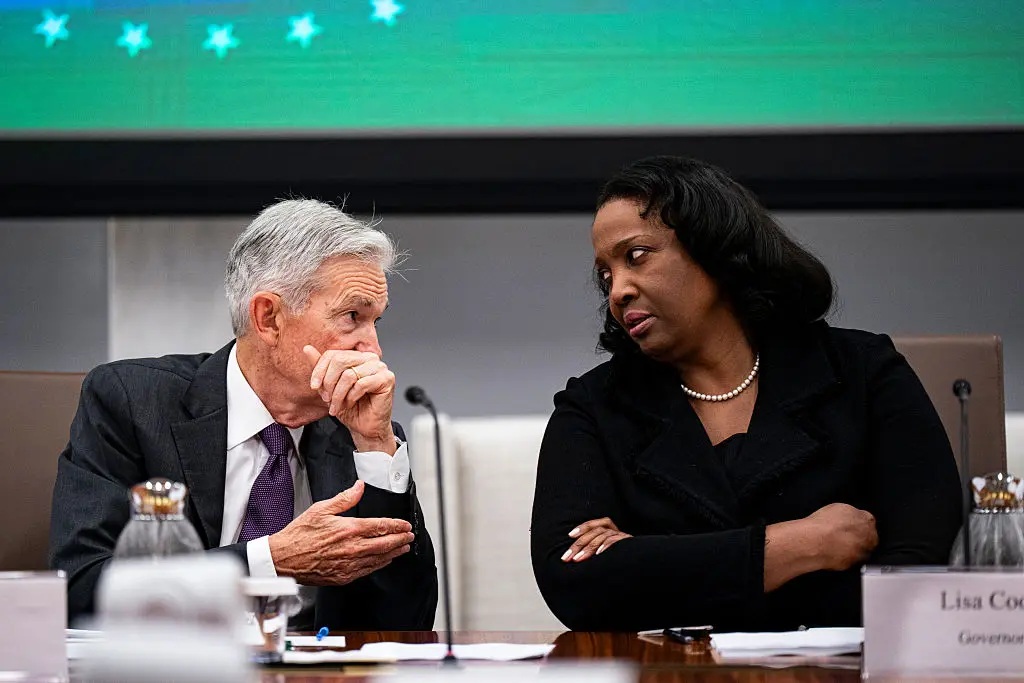
For now, Cook continues to carry out her duties alongside Powell and other governors. But with litigation underway, the dispute could escalate all the way to the Supreme Court, setting precedent for decades to come on the balance of power between the White House and the nation’s central bank.


 Pump Radar
 Stock Alerts