
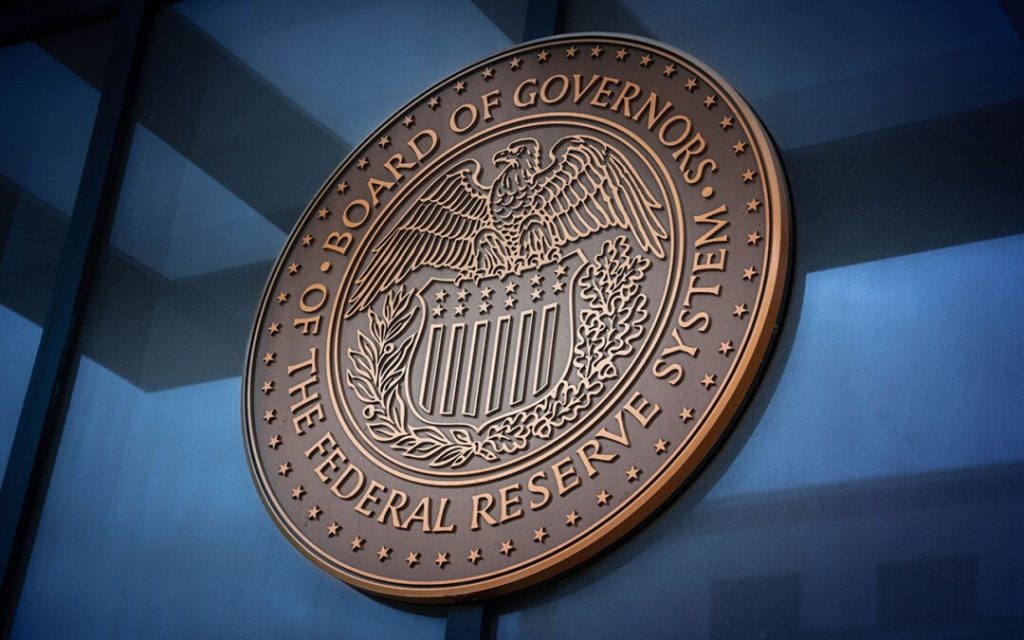


The Federal Reserve is facing growing internal debate as policymakers publicly voice sharply different views on the future path of U.S. monetary policy. On Thursday, Chicago Fed President Austan Goolsbee and Kansas City Fed President Jeff Schmid both signaled caution about aggressively cutting interest rates further, citing persistent inflation risks and the challenges of balancing the Fed’s dual mandate of stable prices and full employment.
Goolsbee expressed concern that moving too quickly could undermine progress in controlling inflation, which has remained above the Fed’s 2% target for nearly five consecutive years. Speaking at a breakfast in Grand Rapids, Michigan, he said he was “somewhat uneasy with front-loading too many rate cuts based just on the payroll jobs numbers slowing down.” He warned that current signals of stagflation—where slowing growth coincides with persistent inflation—pose one of the Fed’s “worst-case scenarios” and require a measured approach. Schmid, a voting member of the rate-setting committee, echoed similar concerns, noting that while he supported last week’s modest rate cut as a risk management move, he remains cautious because inflation appears sticky and could drift toward 3%. Weakening job market data, however, has tempered his worries about overheating, suggesting the labor market may be softening more sharply than expected.
In contrast, new Fed Governor Stephen Miran continues to push for a faster pace of rate reductions. Speaking in separate interviews with Fox Business and Bloomberg, Miran argued that the current federal funds rate range of 4% to 4.25% is overly restrictive and could leave the U.S. economy vulnerable to shocks. “That’s why it’s so important to start adjusting more quickly, rather than less quickly,” Miran said. “When monetary policy is in that restrictive a stance, the economy becomes more vulnerable to downside shocks. In my mind, there’s not really a need to be running that type of risk.” Miran’s position diverges from the Fed’s median estimate of two more cuts in 2025, which was released following last week’s quarter-point reduction, reflecting the broader divide among policymakers.
The debate highlights the Fed’s ongoing struggle to navigate an economy that is simultaneously experiencing signs of slowing growth and lingering inflation pressures. Policymakers are weighing how quickly to ease monetary policy without undermining the progress made in bringing inflation under control. As this internal divide becomes more public, investors and households alike are closely watching for signals about the central bank’s next moves and what they could mean for bank accounts, loans, investments, and the broader economy.


 Pump Radar
 Stock Alerts