
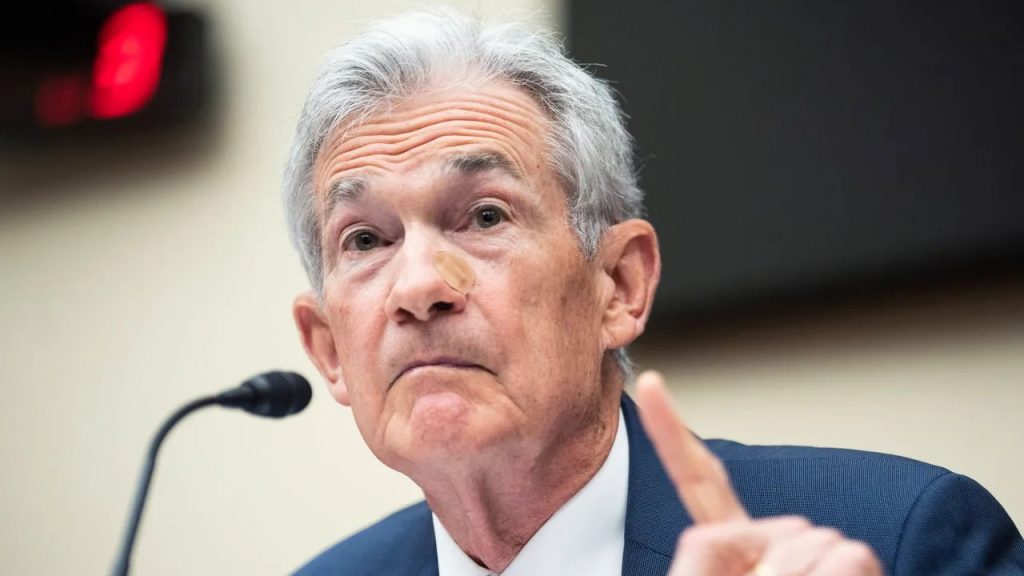


On Monday, the head of the Federal Housing Finance Agency (FHFA), William Pulte, took to social media to publicly call on Federal Reserve Chair Jerome Powell to resume cutting interest rates.
In a move reminiscent of former President Donald Trump’s approach to pressuring the central bank, Pulte criticized the Fed for holding rates steady and argued that the time has come for action.
“Jay Powell needs to lower interest rates — enough is enough,” Pulte wrote. “President Trump has crushed Biden’s inflation, and there is no reason not to lower rates. The housing market would be in much better shape if Chairman Powell does this.”
Trump himself has been urging the Fed to cut rates for months, pointing to the economic strain from his trade policies and tariffs. Many businesses have warned that these policies could force them to raise prices, a concern echoed in the Fed’s most recent Beige Book, which gathers anecdotal data on economic conditions across the country.
“This would be a perfect time for Fed Chairman Jerome Powell to cut interest rates,” Trump said back in April. “He is always ‘late,’ but he could now change his image, and quickly. Cut interest rates, Jerome, and stop playing politics.”
The Federal Reserve began reducing interest rates in the latter half of last year, following a prolonged period of elevated rates aimed at curbing post-pandemic inflation.
After inflation began to pick up last fall, the Federal Reserve halted its interest rate cuts in January, holding rates steady in the range of 4.25% to 4.5% since then.
Fed Chair Jerome Powell has pointed to ongoing economic uncertainty—fueled in part by the Trump administration’s erratic trade war policies—as a key reason for maintaining the pause.
“Tariff announcements and heightened uncertainty about government policies in general are the dominant economic developments of more recent weeks,” Powell said earlier this month.
Higher interest rates in the interbank lending market slow economic growth by raising borrowing costs for businesses, making it more expensive to invest and expand. This tightening of credit eventually affects workers, who are viewed as overhead. As companies cut costs, workers have less disposable income, which leads to reduced consumer spending. That, in turn, puts downward pressure on prices, helping to control inflation by curbing demand.
However, this strategy comes with side effects. Higher interest rates also drive up the cost of consumer financing—particularly mortgages—making housing less affordable. The housing market often reacts more slowly than other sectors to changes in inflation.
Since 2022, mortgage rates have hovered near 7%. As of now, the 30-year fixed-rate mortgage stands at 6.86%, according to Freddie Mac.
Shelter inflation, a major component of the Consumer Price Index (CPI), has eased to a 4% annual rate, steady from March to April. Overall, headline inflation has slowed more dramatically, dropping to a 2.3% annual rate in April—down from a recent high of 3% in January.

 Pump Radar
 Stock Alerts