


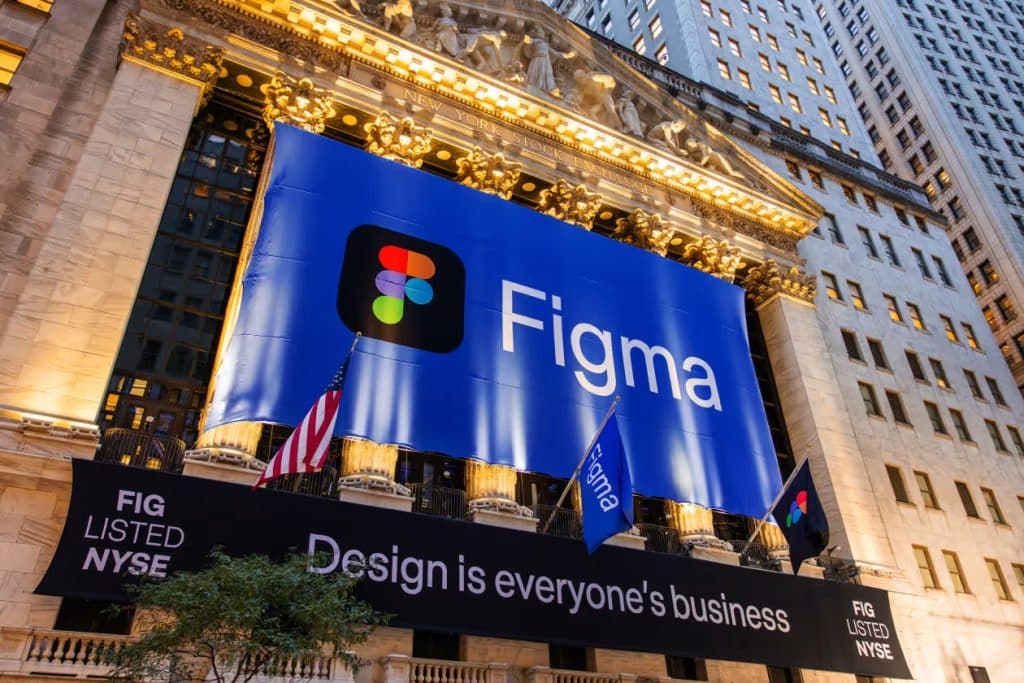
Figma released its first quarterly earnings report as a public company on Wednesday, and while the results slightly exceeded analyst expectations for revenue and profit, they fell short of the high expectations set by investors following the company’s explosive market debut. The disappointing guidance sent shares down 13% in after-hours trading, marking a sobering contrast to the excitement surrounding its initial public offering in July.
The company’s debut had been a standout moment for tech markets, with investors betting heavily on its ability to capitalize on the growing design software sector. Figma’s platform, which integrates the full product development cycle—from ideation and design to coding and deployment—has attracted attention from high-profile clients like Netflix, as well as independent freelancers seeking versatile tools to develop their own applications.
Figma reported second-quarter revenue of $249.6 million, a 41% increase from a year earlier, slightly above the average analyst estimate of $248.8 million. Its adjusted earnings per share of 9 cents also topped expectations of 8 cents. Despite the modest beat, the results were not enough to meet the lofty growth narrative investors had anticipated. Shares, which had surged 250% on the first day of trading, have now fallen more than 40% from their debut high, reflecting the pressure of sky-high valuations.
“The stock had been priced for perfection at over two hundred times expected earnings, which means even solid numbers cannot carry that many layers without some flattening,” said Michael Ashley Schulman, partner and CIO at Running Point Capital Advisors. He noted that Figma’s high valuation was built as much on its future potential as on current performance, and that management’s outlook disappointed investors hoping for continued explosive growth.
Figma has aggressively expanded its product offerings to retain and grow its subscriber base. This year alone, the company launched four new products, including Figma Make, an AI-powered tool capable of transforming a written prompt into a functional prototype. These innovations are central to Figma’s strategy of positioning itself as an all-in-one platform for product development.
For fiscal 2025, the company expects revenue between $1.02 billion and $1.03 billion, slightly above the $1.01 billion forecast from analysts. The guidance highlights steady growth but underscores the challenge of meeting investor expectations set during its IPO hype.
In addition, the company noted that as certain conditions tied to its initial public offering are met, the lock-up period for some employees will end later this week, allowing them to sell shares, while senior executives will remain restricted until later in the year. This development could add additional volatility to the stock in the coming months.
Overall, while Figma’s earnings demonstrate continued growth and innovation, the report serves as a reminder that even high-performing tech companies face pressure to deliver near-perfect results when market valuations and investor expectations are set at extraordinary levels.

 Pump Radar
 Stock Alerts