
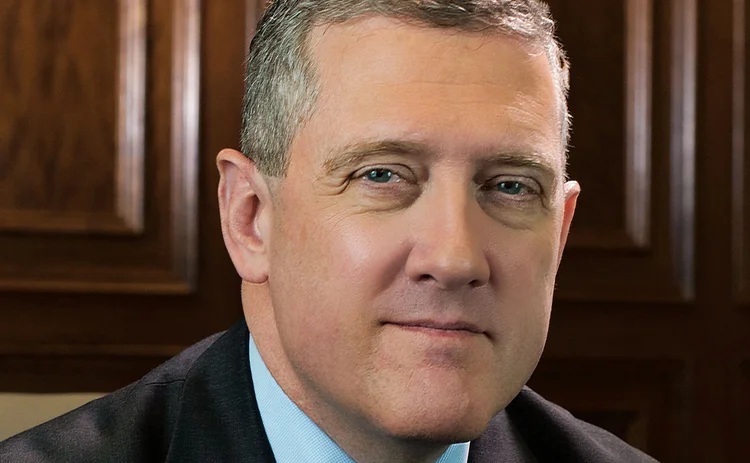


James Bullard, former president of the Federal Reserve Bank of St. Louis, revealed on Monday that he recently spoke with Treasury Secretary Scott Bessent about the possibility of becoming chair of the Federal Reserve and expressed strong interest in the role if the circumstances are favorable.
“I talked to the Treasury secretary last Wednesday and his team” regarding the top Fed position, as well as other issues, Bullard told Reuters in an interview. Bullard, who served as St. Louis Fed president from 2008 to 2023, is currently the Dean of the Mitch Daniels School of Business at Purdue University.
The Trump administration is actively interviewing candidates to replace Fed Chair Jerome Powell, whose term as chair ends next May. Bullard emphasized that his willingness to take the role depends on whether the central bank is positioned for long-term success.
“I’d be willing to take the job … if we’re set up for success,” Bullard said. “Success means that … we want to defend the reserve currency status of the dollar, want to keep inflation low and stable, and we want to protect the independence of the institution. If we’re going to go in that direction, then I think, you know, I’d be very interested in the job.”
Bullard’s discussion with the Trump administration reflects a broad search for Powell’s successor, with officials reportedly casting a wide net to identify potential leaders capable of navigating the complex monetary and economic challenges ahead. Powell, who is in the final months of his second term as Fed chair, retains the ability to remain on the Federal Reserve Board as a governor until 2028, leaving some flexibility in the timing and choice of his successor.
The conversation between Bullard and Treasury officials underscores the continued attention on the central bank’s leadership at a time when monetary policy, inflation control, and global financial stability remain top priorities for the U.S. economy.


 Pump Radar
 Stock Alerts