
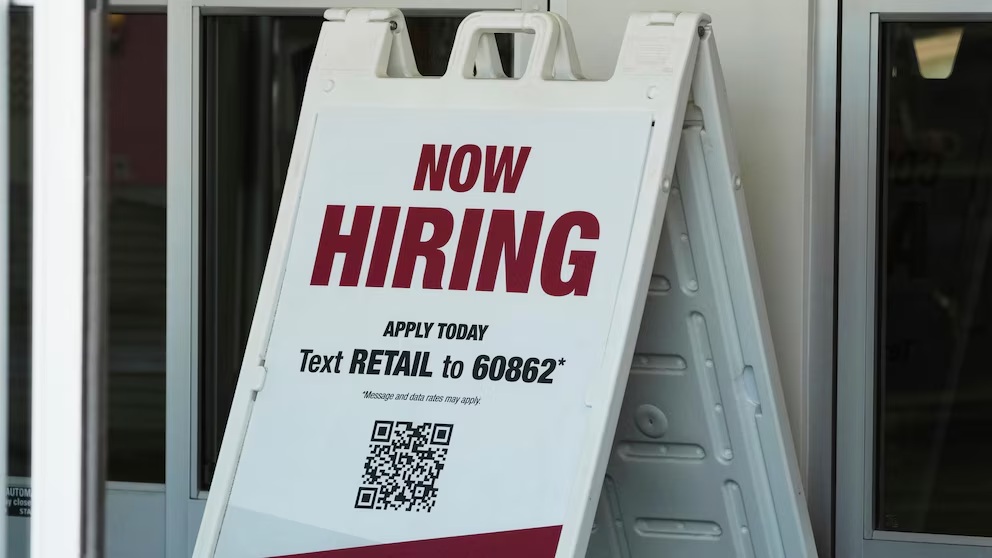


The U.S. labor market showed little sign of momentum in August, reinforcing concerns that the post-pandemic employment boom is grinding to a halt. According to Bureau of Labor Statistics data released Tuesday, job openings edged only slightly higher to 7.23 million, compared with 7.21 million in July. That marginal change underscores the broader trend: a labor market that remains sluggish and increasingly difficult for job seekers to navigate.
The slowdown was evident across multiple fronts. The hiring rate slipped to 3.2% in August, its weakest reading since June 2024 and a level rarely seen outside of the Great Recession and the early pandemic shock of April 2020. Meanwhile, the quit rate — a measure of worker confidence in finding new jobs — dropped to its lowest point this year, signaling that employees are less willing to voluntarily leave their roles amid heightened uncertainty.
“Yikes. The official U.S. ‘hiring rate’ fell to 3.2% in August,” Heather Long, chief economist at Navy Federal Credit Union, wrote on X. She called the pace of hiring “anemic,” warning that Americans increasingly feel stuck in their jobs. “The job market is frozen. And it appears to be getting worse.”
While the overall unemployment rate has remained relatively low at 4.3%, the stagnation in hiring is eroding sentiment. Consumers report greater pessimism about the state of the labor market, and the underlying data show why. Payroll growth has slowed dramatically, averaging just 29,000 new jobs per month since May. For comparison, monthly job creation exceeded 100,000 as recently as April.
Federal Reserve officials have also sounded the alarm on deeper structural shifts. In a speech Monday, Vice Chair Philip Jefferson noted that the supply of labor itself is tightening, with net immigration — a critical driver of workforce expansion — dropping sharply. “A low level of job creation would historically put upward pressure on the unemployment rate, though so far that effect has been muted because of the decline in labor force growth,” Jefferson said.
Economists at the Economic Policy Institute echoed those concerns, pointing to demographic headwinds. They observed that much of last year’s softer job growth reflected not just weaker demand but also “smaller working-age population growth due to reduced immigration and the aging of the workforce.” This year, however, fresh signs suggest outright deterioration.
Wages remain a relative bright spot, with nominal paychecks still rising faster than inflation. Yet the pace of real wage growth in the private sector has slowed to half what it was three months ago, raising doubts about how much longer households will see gains in purchasing power. At the same time, federal unemployment insurance claims have nearly doubled compared with a year ago, even as traditional state-level claims remain subdued — an unusual split that may indicate mounting pressure in certain sectors.
Taken together, the data paint a picture of a job market that is not collapsing but is clearly cooling. With fewer openings, weaker hiring, and lower quits, workers are treading cautiously, employers are pulling back, and the once-red-hot labor market appears to be entering a prolonged chill.

 Pump Radar
 Stock Alerts