


At Monterey Car Week in Carmel, California, GM brought a fresh dose of Detroit muscle to one of the automotive world’s most exclusive showcases. While the Corvette nameplate is part of Chevrolet, it increasingly stands out on its own, and the two concepts revealed—the Corvette CX and its racing-inspired twin, the CX-R—highlight where the sports car is headed. Both feature fighter jet–style interiors with innovative canopy openings, while powertrains embrace the future: the CX is fully electric, and the CX-R uses a hybrid setup. The CX-R also has a virtual presence as a drivable car in the Gran Turismo 7 racing game on PlayStation.
Rory Harvey, GM’s EVP and President of Global Markets, noted that the concepts drew exceptional interest. “We’ve had a number of customers ask, ‘Could we buy one of those vehicles today?’” he said. Though neither car has pricing or availability, the response offered GM an opportunity to collect information from high-end buyers who often own multiple cars. Harvey emphasized that Corvette already performs at supercar levels, boasting competitive lap times at the Nürburgring and holding 38% market share in the luxury sports car segment.
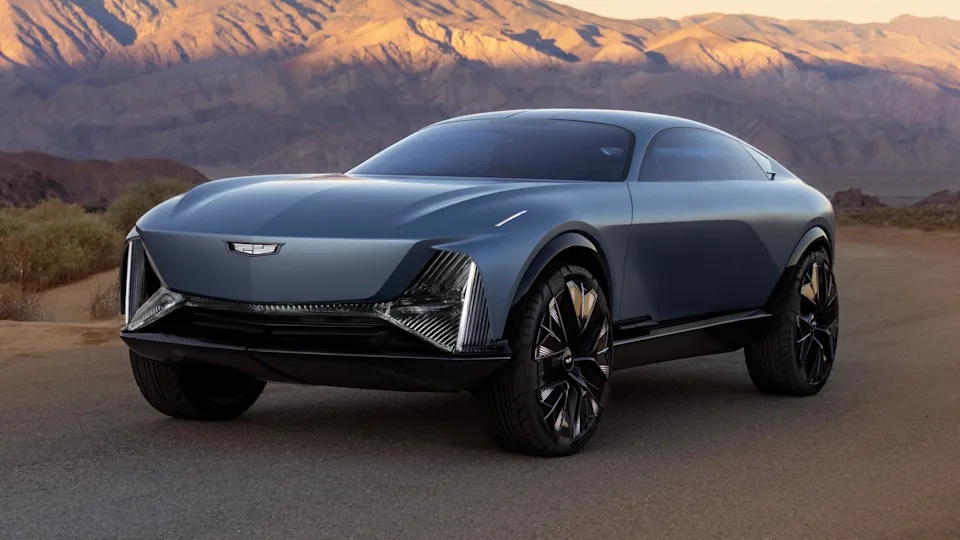
On the Cadillac side, the company unveiled the “Elevated Velocity” concept, a crossover-style EV SUV inspired by high-desert landscapes. The design signals a shift from Cadillac’s traditional angular style to more flowing, curved aesthetics. The brand is riding a strong wave of momentum, posting 12 consecutive quarters of year-over-year growth and ranking as the number-one luxury EV brand in Q2. Harvey said the company’s diverse portfolio, spanning traditional gas-powered models like the Escalade and CT5, alongside EVs like the Lyriq and Optiq, positions Cadillac to continue expanding—even if upcoming EV tax credits diminish.
GM executives also addressed the challenges of tariffs. The company felt significant impact in Q2 and expects additional pressure in the second half of the year. Harvey noted that preliminary trade deals offer room to adjust GM’s manufacturing footprint and product allocation to minimize exposure, estimating the company can mitigate roughly 30% of tariff impact.
Despite these headwinds, Harvey underscored GM’s strong positioning. “If you look at General Motors sales in the U.S., we are the fastest-growing brand, full stop. Compared to our nearest competitor, our growth is roughly double. Customers love our products,” he said. With new Corvette and Cadillac models generating excitement, coupled with solid sales momentum, GM appears poised to maintain its lead in both traditional and EV markets.

 Pump Radar
 Stock Alerts