
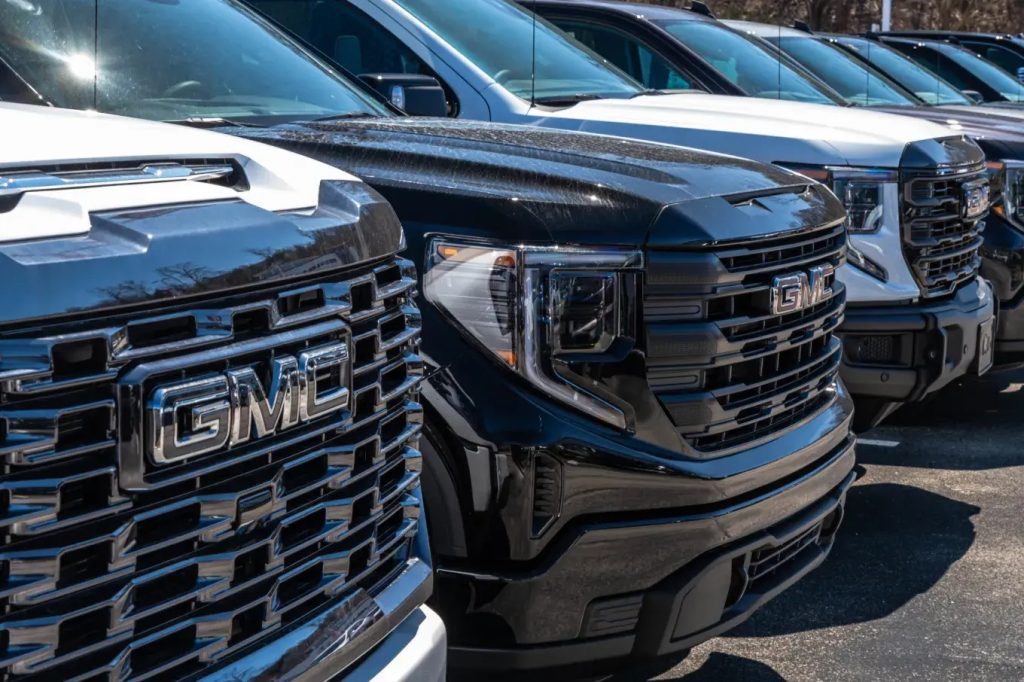


General Motors (GM) reported strong third-quarter sales on Wednesday, matching rival Ford (F) and underscoring the automaker’s momentum in both traditional gas-powered vehicles and electric vehicles (EVs). The results highlight GM’s largest quarterly market share in the U.S. since 2017.
GM said its Q3 sales totaled 710,347 vehicles, representing an 8% increase from the same period a year ago. The automaker also claimed the top spot in overall U.S. sales, marking its strongest quarterly market performance in nearly a decade.
Much of GM’s growth was driven by gas-powered vehicles, particularly popular pickups like the Chevrolet Silverado and full-size SUVs such as the GMC Yukon. According to GM, these categories remain positioned to lead the industry in unit sales by year-end.
Electric vehicles also played a major role in GM’s quarterly performance. The company set a new EV sales record, delivering 66,501 units—more than double Ford’s EV total. GM’s year-to-date U.S. EV sales now stand at 144,668, up 105% from a year earlier. The Chevrolet Equinox EV emerged as the best-selling non-Tesla EV in the U.S. during Q3, while Cadillac placed three vehicles among the top ten luxury EVs sold so far this year.
Ahead of the federal EV tax credit expiration, GM has reportedly been working to preserve incentives for leased vehicles. The company’s finance arm is signing deals for preexisting inventory and passing the savings on to consumers, similar to Ford’s strategy.
One area where GM lags behind its rival is in hybrid vehicles. Unlike Ford, which sold a record 55,000 hybrid units in the quarter, GM’s current lineup does not include hybrid options. However, GM’s crossover segment hit a Q3 record, with models including the GMC Terrain, Chevrolet Equinox, Chevrolet Traverse, and Buick Envista achieving their highest-ever quarterly sales.
Duncan Aldred, GM’s senior vice president and president of North America, highlighted the strength of the automaker’s current lineup. “We have the best lineup of ICE and EV vehicles we’ve ever had, and our brands have grown market share with consistently strong pricing, low incentives, and robust inventory,” Aldred said. GM also noted that its use of incentives was below the industry average, reflecting strong consumer demand and solid pricing power.
Unlike Ford, GM produces a significant portion of vehicles outside the U.S., leaving it exposed to a 25% tariff on imported vehicles. The company plans to provide further details on tariffs, its product portfolio, and its broader financial outlook when it reports full Q3 results on October 21, 2025.
GM’s third-quarter performance illustrates how a balanced portfolio of gas-powered and electric vehicles can drive both sales and market share, even as industry conditions remain competitive and federal incentives evolve. With continued growth in EV adoption and strong performance in core segments, GM appears well-positioned to capitalize on key trends in the North American automotive market.

 Pump Radar
 Stock Alerts