
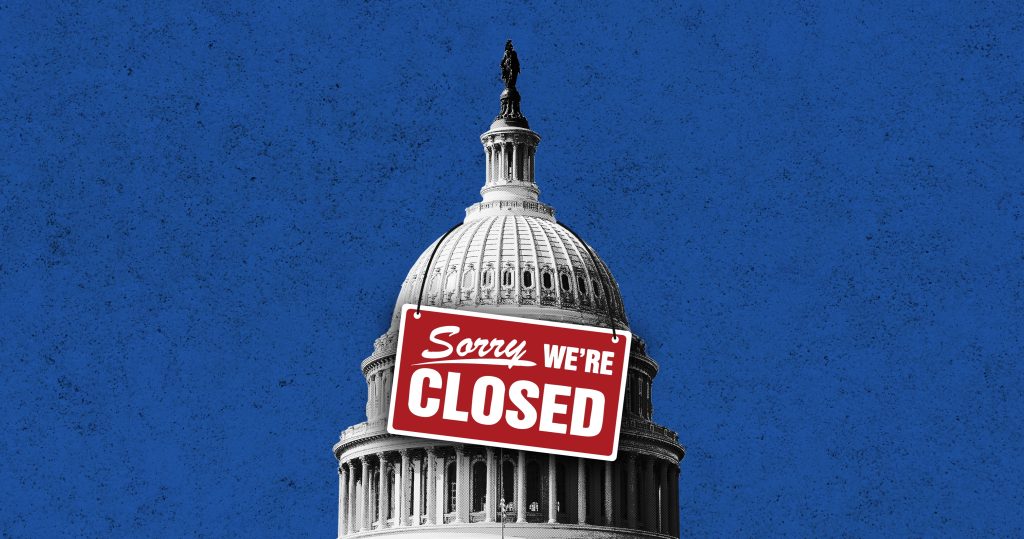


The U.S. government officially shut down on Oct. 1 after Congress failed to reach a funding deal for the 2026 fiscal year. While the immediate impact on most households may be limited if the standoff is brief, economists warn that a prolonged shutdown could ripple through paychecks, travel, mortgages, and even access to basic federal services.
At the core of the dispute is a political deadlock over spending priorities. Democrats are pushing to extend enhanced Affordable Care Act subsidies that have kept health coverage more affordable for 22 million people, while Republicans and the White House remain opposed. Without a resolution, “nonessential” federal functions are suspended until lawmakers strike an agreement.
Essential services — including air-traffic control, national security, and Social Security and Medicare benefits — continue operating. But hundreds of thousands of federal employees deemed nonessential are being furloughed without pay, and government contractors risk losing income without the promise of back pay. In the 2018-2019 shutdown, about 800,000 workers lost an estimated $70 billion in income; this time, the Congressional Budget Office projects 750,000 employees could be sidelined each day.
Short shutdowns tend to have little lasting economic impact, but every passing week chips away at economic growth. Moody’s chief economist Mark Zandi estimates that each week shaves about one-tenth of a percentage point off quarterly GDP. “Every tenth matters,” he said, noting the economy is already vulnerable given a slowing job market.
Families relying on federal programs — from food and housing assistance to veterans’ claims — may see disruptions. Mortgage approvals could also be delayed, especially for homes requiring federal flood insurance, since the program halts during shutdowns. “No mortgages which require federal flood insurance will be originated until a deal is reached,” said Jaret Seiberg, financial policy analyst at TD Cowen.
Travelers may also encounter headaches. National parks and monuments typically close, while TSA agents and air traffic controllers must continue working without pay, raising the risk of absenteeism that could lead to longer airport lines and travel delays. During the 2018-2019 shutdown, these staffing challenges caused widespread disruptions across the airline industry.
For Wall Street and policymakers, a shutdown brings another complication: delayed economic data. The Labor Department’s closely watched jobs report, scheduled for this Friday, won’t be released. Neither will the consumer price index update due Oct. 15. That leaves the Federal Reserve without crucial information ahead of its Oct. 28-29 meeting, just as officials weigh whether to continue lowering interest rates.
If this shutdown lasts only a few days or weeks, the financial pain will be relatively muted. But if it stretches beyond that, the fallout will extend to household incomes, small businesses tied to government contracts, the housing market, and even holiday travel. “The direct costs of shutdowns are usually negligible,” said Thomas Ryan, an economist at Capital Economics. “But if drawn out, the human and economic toll is real — and mounting.”


 Pump Radar
 Stock Alerts