
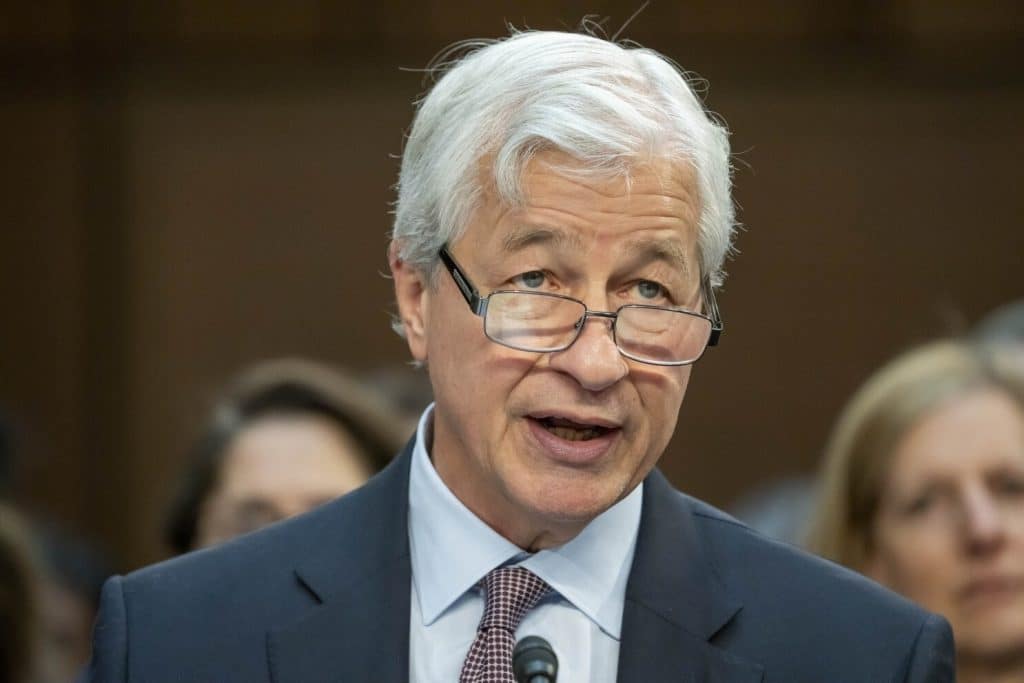


JPMorgan Chase CEO Jamie Dimon said Tuesday that a Labor Department report released earlier in the day confirms that the U.S. economy is showing clear signs of slowing. The report, which revised lower the nonfarm payrolls data for the year through March 2025, marked the largest downward adjustment in more than two decades, cutting 911,000 jobs from initial estimates.
“I think the economy is weakening,” Dimon said in remarks that underscore growing concern about the pace of economic growth. “Whether it’s on the way to recession or just weakening, I don’t know.”
The Labor Department’s revision surprised many on Wall Street. While analysts had anticipated some downward adjustment, the magnitude of the revision was far greater than expected, highlighting that the job market was not as robust as previously thought.
This latest data follows earlier signals of a slowing labor market. In July, the economy added only 73,000 jobs, a near halt in employment growth, prompting attention from both policymakers and investors. The release of that report sparked controversy when President Donald Trump dismissed the Bureau of Labor Statistics commissioner just hours later. August’s numbers continued the trend of subdued growth, with nonfarm payrolls increasing by only 22,000 jobs.
Dimon, who has guided JPMorgan through decades of economic turbulence, noted that the bank has access to a broad array of economic data spanning consumers, corporations, and global trade. While most Americans still have jobs and continue to spend—albeit unevenly depending on income—there are clear signs that consumer confidence may be slipping.
“There are a lot of different factors in the economy right now,” Dimon said, pointing to the contrast between weakening consumer demand and still-strong corporate profits. “We just have to wait and see how these dynamics play out.”
Dimon’s commentary is closely watched by investors, given his long tenure at the helm of the largest U.S. bank by assets and his track record of offering insights into economic trends before they become widely apparent. While he has often sounded warnings about potential risks, not all have materialized immediately.
Regarding monetary policy, Dimon suggested that the Federal Reserve is likely to reduce its benchmark interest rate at its next meeting later this month. However, he cautioned that such a move “might not be consequential to the economy,” highlighting that interest rate adjustments alone may not fully counteract the broader forces weakening growth.
As markets and policymakers continue to digest the labor market revisions and recent employment data, Dimon’s assessment adds a measured but cautious note: while the U.S. economy has not yet entered a recession, the signs of slowdown are becoming increasingly difficult to ignore.
 Pump Radar
 Stock Alerts