
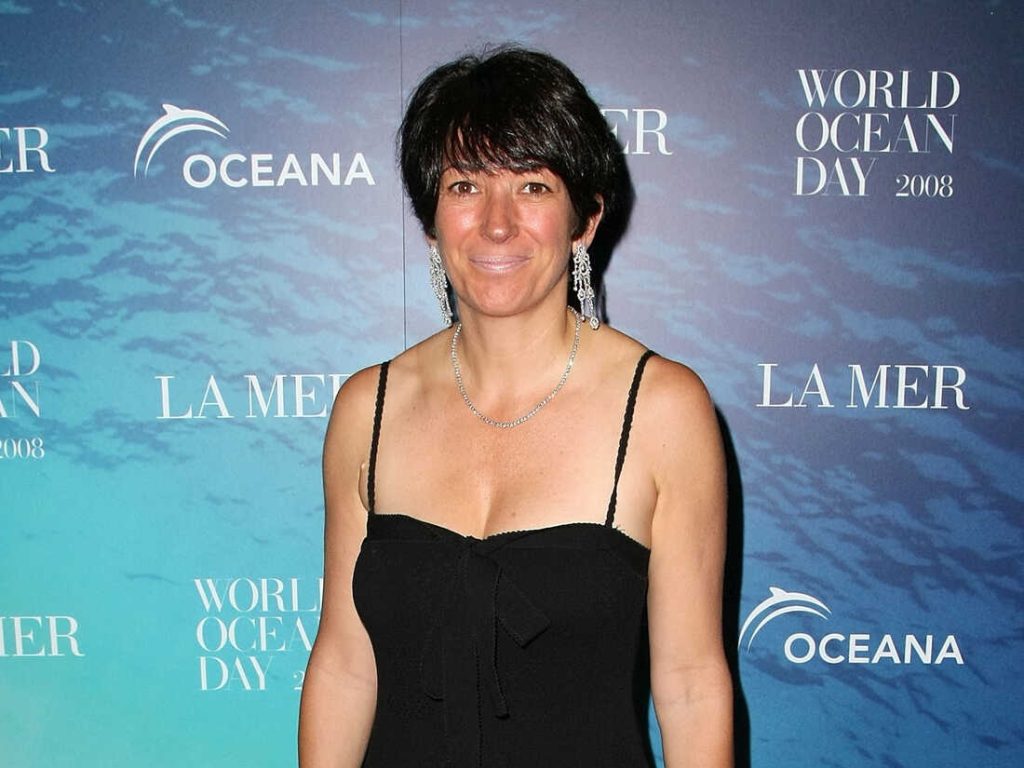


A federal judge in New York firmly denied a recent request from the Justice Department to unseal grand jury transcripts related to the criminal investigation of Ghislaine Maxwell, the convicted accomplice of the late Jeffrey Epstein. The ruling underscores the judiciary’s longstanding commitment to maintaining the secrecy of grand jury proceedings, while also casting doubt on the government’s justification for seeking the release of these sensitive materials.
Judge Paul Engelmayer, presiding in the U.S. District Court for Manhattan, was sharply critical of the Justice Department’s rationale. In his written decision issued Monday, he dismissed the government’s claim that unsealing the transcripts would shed meaningful new light on the crimes committed by Epstein and Maxwell or the scope of the government’s investigation.
“Its entire premise — that the Maxwell grand jury materials would bring to light meaningful new information about Epstein’s and Maxwell’s crimes, or the Government’s investigation into them — is demonstrably false,” Engelmayer wrote. The judge went on to characterize the government’s argument as “disingenuous,” indicating skepticism about the true intent behind the motion to disclose.
The Justice Department’s push to unseal these grand jury transcripts followed intense public scrutiny and criticism over its prior decision not to release Epstein’s investigative file, a move that sparked significant controversy during the Trump administration. The department’s request reflects ongoing tension between demands for transparency and longstanding legal protections surrounding grand jury secrecy.
In a related development, a federal judge in Florida had already rejected a similar bid by the Justice Department on July 23 to unseal grand jury transcripts from an earlier probe of Epstein conducted by federal prosecutors in that state during the mid-2000s. Meanwhile, the request to unseal grand jury transcripts connected to Epstein’s later indictment in Manhattan remains under consideration by another federal judge.
Judge Engelmayer cited precedent from a 1973 ruling affirming that “the policy that ‘proceedings before a grand jury shall generally remain secret’ is ‘older than our Nation itself.’” He emphasized that none of the exceptions allowing disclosure under federal appeals court standards were met by the government’s request.
The judge also expressed concern that the Justice Department’s request appeared driven more by public relations objectives than by a genuine need to reveal previously unknown information about the high-profile case.
“The Court’s review confirmed that unsealing the grand jury materials would not reveal new information of any consequence,” Engelmayer noted. He added, “A member of the public, appreciating that the Maxwell grand jury materials do not contribute anything to public knowledge, might conclude that the Government’s motion for their unsealing was aimed not at ‘transparency’ but at diversion — aimed not at full disclosure but at the illusion of such.”
Contrary to the government’s portrayal, Engelmayer described the grand jury testimony as “not a matter of significant historical or public interest,” but rather “garden-variety summary testimony by two law enforcement agents.”
The ruling comes in the context of a prolonged and complex legal saga. Jeffrey Epstein was indicted by a grand jury in Manhattan following testimony from an FBI agent concerning allegations of sex trafficking of underage girls. Epstein died by suicide in August 2019 while in federal custody, shortly after his arrest.
Subsequently, a second Manhattan grand jury indicted Maxwell on charges of grooming and procuring underage girls for Epstein’s abuse. Convicted in late 2021, Maxwell is currently serving a 20-year prison sentence.
This decision reaffirms the judiciary’s reluctance to erode the protections afforded to grand jury proceedings, particularly in highly sensitive cases, even amidst heightened public interest and calls for greater transparency.
 Pump Radar
 Stock Alerts