
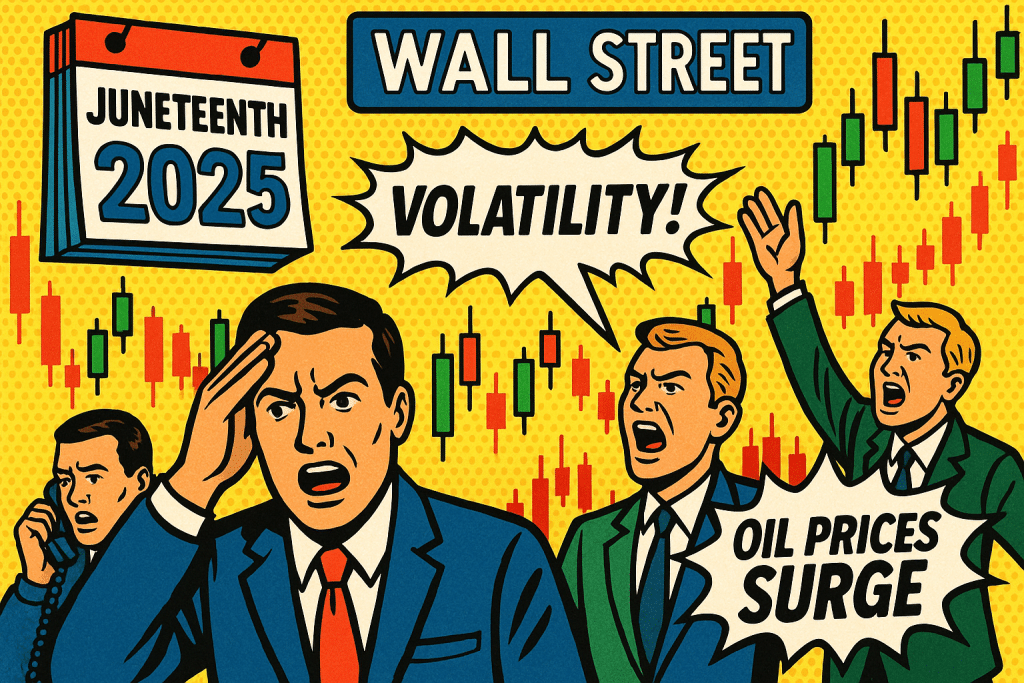


The week of Juneteenth 2025 offered investors a unique lens into how midweek holidays can disrupt market rhythms, intensify volatility, and shift investor behavior. With Juneteenth falling on Thursday, June 19, and U.S. equity and bond markets shuttered, traders were left to navigate a compressed trading schedule against a backdrop of heightened geopolitical tensions. This convergence of calendar quirks and global headlines produced a series of market ripples, offering lessons for both institutional and retail investors.
The Midweek Holiday Effect
Midweek holidays are always a bit tricky for the markets. Unlike long weekends, where trading volumes typically thin out on Friday and resume gradually on Monday, a Thursday holiday like Juneteenth creates a “split week” with fragmented trading activity. In 2025, this was particularly evident. The New York Stock Exchange, Nasdaq, and U.S. Treasury markets closed on June 19, creating a sharp break in market momentum. Futures markets, however, remained active, and it was here that much of the story unfolded.
The closure meant that any significant geopolitical developments or economic news would manifest first in the futures market before the cash market could react. This dynamic became crucial when Middle East headlines – particularly reports of escalating tensions between Israel and Iran – began surfacing. Oil prices spiked, with Brent crude climbing past $78 per barrel, while stock index futures slipped nearly one percent. Even though U.S. markets were technically closed, the risk-off sentiment was palpable.
Geopolitical Headlines Add Fuel to Volatility
The Middle East tensions added a layer of uncertainty to an already delicate trading week. Reports of potential U.S. involvement in the region, coupled with existing inflationary pressures, drove risk aversion. Global markets reflected this mood, with European and Asian indices declining on June 19 while U.S. futures markets took the brunt of investor sentiment.
The timing of these geopolitical developments could not have been worse for liquidity. A midweek holiday inherently reduces participation, with many traders choosing to extend time off or reduce risk exposure. As a result, order books were thinner, and price swings were more pronounced. This was particularly evident in energy stocks and defense-related sectors, which saw outsized moves when markets reopened on Friday.
Trading Patterns and Liquidity Risks
Liquidity risk was one of the defining features of the Juneteenth trading week. With a shortened schedule, institutional desks and market makers adjusted their trading strategies, leading to wider bid-ask spreads and slower execution. Traders who attempted to make moves during this period often faced higher slippage costs, especially in derivatives and options markets.
Cboe data from June confirmed that trading volumes during the Juneteenth week were among the lowest of the quarter. While some of this can be attributed to the holiday itself, the broader risk-off tone amplified the effect. For retail traders and smaller funds, this meant navigating a market that was less predictable and more prone to sudden price moves.
The Shadow of Triple Witching
Complicating matters further was the timing of triple witching – the simultaneous expiration of stock options, stock index options, and stock index futures – on Friday, June 20. Triple witching is known for its potential to spark volatility as traders unwind or roll over positions, and coming immediately after a midweek holiday, it created a perfect storm.
Friday’s session saw choppy trading as markets tried to digest not only the geopolitical headlines but also the technical pressures from options expirations. Many institutional investors used the holiday break to adjust hedges and reposition portfolios, leading to unpredictable flows when trading resumed.
Investor Behavior and Sentiment
Investor sentiment during this period was marked by caution. With geopolitical risks flaring and a shortened window to react, many traders opted for a defensive posture. Energy stocks and commodities saw increased interest as safe havens, while growth sectors, particularly technology, experienced some profit-taking.
The futures market served as an early indicator of this cautious tone. While the cash market remained closed on Thursday, futures pricing revealed investor anxiety, with S&P 500 futures dipping nearly one percent. When markets reopened on Friday, these signals translated into subdued early trading as participants awaited further developments in the Middle East and monitored oil price fluctuations.
Lessons for Future Midweek Holidays
The Juneteenth 2025 case study underscores the need for heightened awareness when trading around midweek holidays. Reduced liquidity, compressed trading schedules, and the potential for unexpected headlines can combine to create a volatile mix. For professional traders, this often means adjusting risk exposure or employing hedging strategies in advance of the holiday. For retail investors, it may be wiser to sit on the sidelines rather than attempt to navigate unpredictable swings.
Geopolitical events, like those witnessed during this period, add another dimension to market risk. In the absence of regular trading sessions, futures markets become the primary barometer of investor sentiment, and these can sometimes overreact due to thin liquidity. Understanding this dynamic can help investors interpret price moves more accurately and avoid knee-jerk reactions.
A Broader Market Perspective
Beyond the immediate trading implications, Juneteenth 2025 also highlighted broader concerns about market structure. The increasing reliance on futures and after-hours trading means that even during official market closures, significant price moves can occur. This trend raises questions about how well traditional trading calendars align with the realities of a global, 24/7 financial system.
Moreover, the episode served as a reminder of the interconnectedness of geopolitical and financial risks. With global supply chains and energy markets so tightly linked, a headline from the Middle East can reverberate across stock, bond, and commodity markets within minutes.
Conclusion
The week of Juneteenth 2025 will be remembered as a case study in how calendar anomalies and geopolitical uncertainties can converge to create market turbulence. A Thursday holiday disrupted the usual flow of trading, while Middle East tensions amplified volatility in futures and commodities. When markets reopened, they faced not just the aftershocks of these developments but also the mechanical pressures of triple witching.
For investors, the key takeaway is clear: midweek holidays are not just days off – they are periods that require strategic planning, heightened risk management, and close attention to global events. The Juneteenth experience reminds us that in the modern market environment, even a single day of closure can have outsized effects on sentiment and positioning.



 Pump Radar
 Stock Alerts