
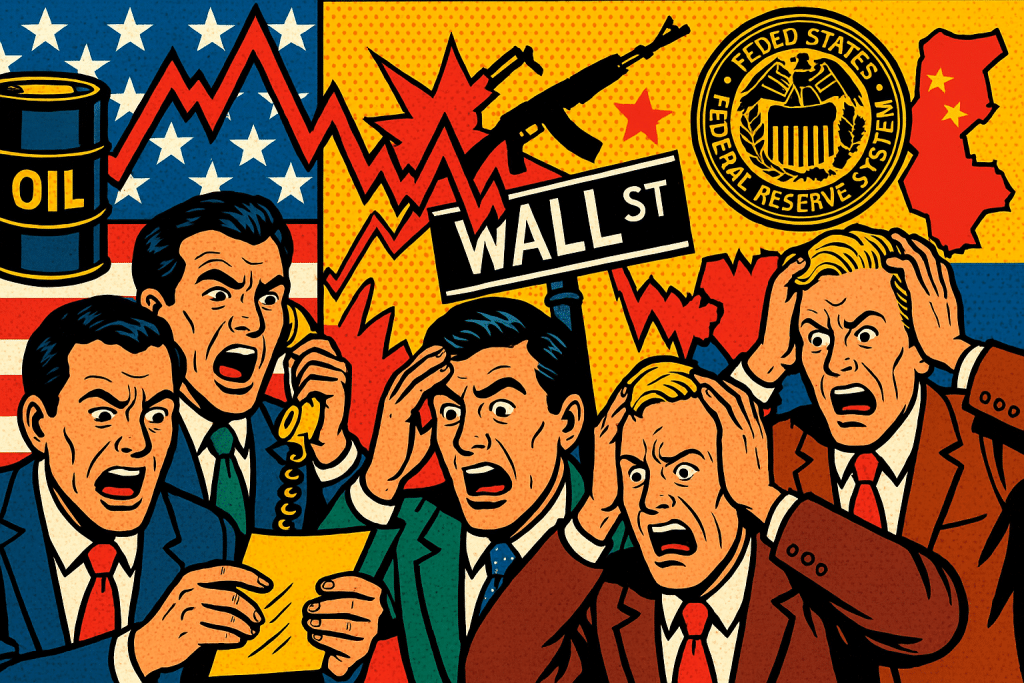


June 2025 turned out to be one of the most unpredictable months for Wall Street in recent memory. Investors were caught in the crossfire of a rare convergence of factors: the Juneteenth holiday and its impact on market liquidity, escalating tensions between Israel and Iran, and the Federal Reserve’s cautious stance on interest rate cuts. The result was a rollercoaster of volatility that tested traders’ nerves but also led to some surprising highs by the end of the month.
A Quiet Holiday with Loud Market Ripples
The Juneteenth holiday, now a federal holiday since 2021, is often considered a quiet period for trading. U.S. markets were closed on June 19, which might sound insignificant on the surface, but this pause came at a critical time. With markets shut for the day, trading volumes leading up to and following Juneteenth were thinner than usual. Low liquidity means even small trades can have an outsized impact on prices, making markets more prone to sudden moves.
This year, Juneteenth coincided with the infamous “triple witching” week – a period when stock options, stock index futures, and stock index options all expire simultaneously. Triple witching tends to amplify market volatility as traders close out positions or roll them over into new contracts. So, when the markets reopened on June 20, there was a perfect storm: the aftereffects of low-liquidity trading due to the holiday combined with the usual expiration-week chaos. The S&P 500 dipped slightly, the Dow Jones Industrial Average slid , and traders were bracing for more turbulence.
Geopolitical Tensions Add Fuel to the Fire
If the holiday-induced volatility wasn’t enough, geopolitical headlines added a layer of uncertainty that Wall Street couldn’t ignore. Mid-June saw a significant escalation in the conflict between Israel and Iran. Reports of Israeli strikes on Iranian military and nuclear infrastructure spooked investors, sending oil prices surging by as much as 11% in a single session. Higher oil prices typically stoke fears of rising inflation, which in turn makes the Federal Reserve’s job of controlling interest rates more complicated.
The ripple effects were immediate. Stock index futures tumbled, with the Dow dropping nearly 600 points in pre-market trading after the news broke. Safe-haven assets like gold rallied, while the CBOE Volatility Index (VIX), often referred to as Wall Street’s “fear gauge,” spiked over 13%. Investors started to price in the possibility of a wider Middle East conflict, which would not only disrupt energy markets but could also weigh on global economic growth.
Financial institutions, including RBC Capital Markets, issued warnings that the conflict could trigger a more significant correction in equities. Analysts suggested that the S&P 500 could fall as much as 20% if the geopolitical and inflationary pressures persisted. Even though these worst-case scenarios didn’t materialize in June, the market’s reaction was a reminder of just how sensitive investors remain to global events.
The Federal Reserve Holds Its Ground
Amid this chaos, the Federal Reserve’s June meeting was another focal point for traders. For months, investors had been betting that the Fed would begin cutting interest rates by mid-year to support economic growth. However, the central bank held rates steady, signaling that it was not yet confident inflation was under control. This decision added another layer of uncertainty, particularly since higher oil prices from the Israel-Iran conflict threatened to reignite inflationary pressures.
The Fed’s cautious tone was a double-edged sword. On one hand, keeping rates unchanged signaled that the economy was still strong enough to withstand tighter monetary policy. On the other hand, it left investors wondering how long they would have to wait for relief from high borrowing costs. Analysts from Deutsche Bank noted that markets had consistently underestimated the Fed’s willingness to stay hawkish, and June’s decision was another example of this dynamic.
The lack of a rate cut initially rattled bond markets and equity traders alike. However, as the month went on, the narrative shifted. With corporate earnings remaining resilient and consumer spending holding up better than expected, investors found reasons to stay optimistic, even if the path forward for interest rates remained unclear.
A Month of Volatility – and Resilience
The combined effect of Juneteenth, geopolitical turmoil, and Fed policy uncertainty created a cocktail of volatility throughout June. Daily swings in the S&P 500 were larger than average, and trading desks at major banks like Goldman Sachs and Morgan Stanley reported some of their best quarters in years thanks to the uptick in market activity. For traders who thrive on volatility, this was a golden opportunity.
Yet, despite all the noise, U.S. equities showed remarkable resilience. By the end of June, both the S&P 500 and the Nasdaq Composite managed to hit new all-time highs. This rally was fueled in part by a surge in retail investor activity, with smaller investors continuing to pour money into the market during dips. Volatility-targeting funds, which automatically adjust their positions based on market swings, also contributed to the upward momentum by buying into sell-offs.
Still, not everyone is convinced that the worst is over. Analysts at RBC and other firms have warned that the market’s strength could be masking underlying risks. If oil prices spike again or inflation data surprises on the upside, the Fed might be forced to stay on hold longer than investors currently expect. That, combined with the ever-present risk of further geopolitical escalations, could create a more challenging environment for stocks in the second half of the year.
Looking Ahead
The events of June 2025 were a stark reminder that markets are not just driven by earnings reports and economic data. Holidays like Juneteenth, which affect trading liquidity, can amplify other factors already in play. Add a geopolitical crisis and a cautious Federal Reserve into the mix, and you have all the ingredients for a volatile month.
For now, optimism seems to have the upper hand. Investors are betting that the worst of the Israel-Iran tensions are behind us and that the Fed will eventually pivot toward rate cuts later in the year. But the lessons of June are clear: when liquidity is thin, geopolitical risks are high, and policy direction is uncertain, markets can swing wildly. Traders and long-term investors alike would do well to keep their seatbelts fastened as we head into the second half of 2025.

 Pump Radar
 Stock Alerts