


U.S. job growth in the 12 months through March was likely far weaker than current government figures suggest, pointing to a labor market that slowed well before this summer’s hiring downturn.
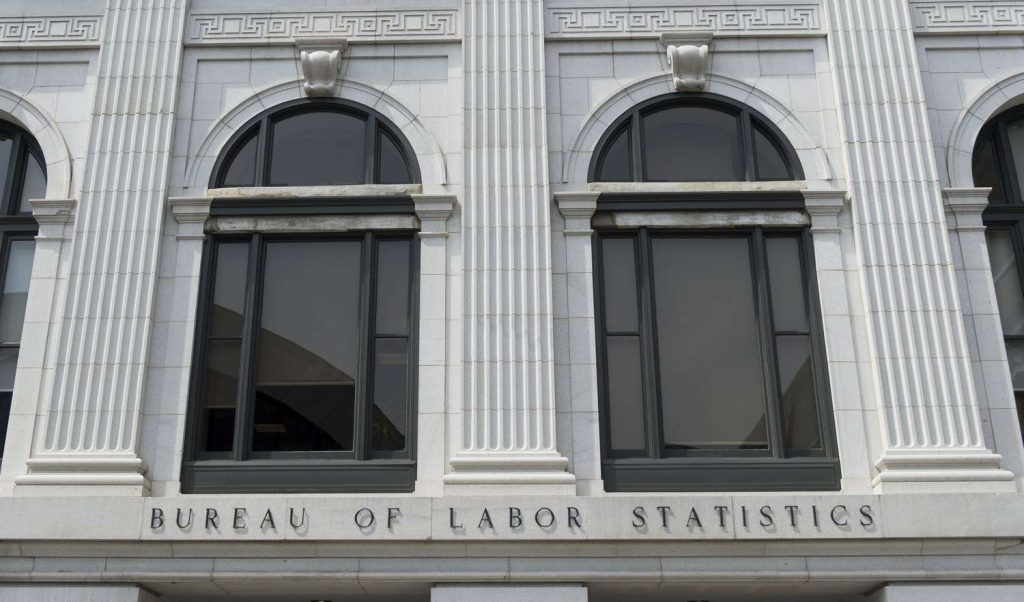
Economists at Wells Fargo, Comerica Bank and Pantheon Macroeconomics expect the Bureau of Labor Statistics (BLS) to report on Tuesday that payrolls for the year ended in March were almost 800,000 lower than initially estimated — an average shortfall of roughly 67,000 jobs per month. Analysts at Nomura, Bank of America and Royal Bank of Canada say the downgrade could approach one million.
Although the data represent an older snapshot of employment conditions, a large downward revision would highlight how much momentum the labor market lost last year and strengthen the case for a series of Federal Reserve interest-rate cuts. A second consecutive year of major revisions to employment counts could also draw renewed criticism from President Donald Trump, who has repeatedly questioned the accuracy of BLS reports.
Once a year, the BLS “benchmarks” its March payrolls estimate against the Quarterly Census of Employment and Wages — a far more comprehensive, though slower-moving, database derived from state unemployment insurance records that covers nearly all U.S. jobs. This process, combined with monthly revisions, ultimately makes the data more accurate over time.
“A big downward revision to job growth through March 2025 would have less immediate impact on monetary policy than a revision to the most recent months, but it does shape the broader context for how the economy has been performing,” said Bill Adams, chief economist at Comerica. “All else equal, downward revisions to job growth increase pressure on the Fed to ease policy.”
Such revisions would also bolster arguments that the Fed should have begun cutting rates earlier. Fed Governor Christopher Waller — who supported a rate cut at the central bank’s July meeting, when officials instead opted to hold steady — said he expects the benchmark revision to lower reported payroll growth by about 60,000 jobs per month on average. Policymakers are already widely expected to reduce borrowing costs at their meeting next week.


 Pump Radar
 Stock Alerts