
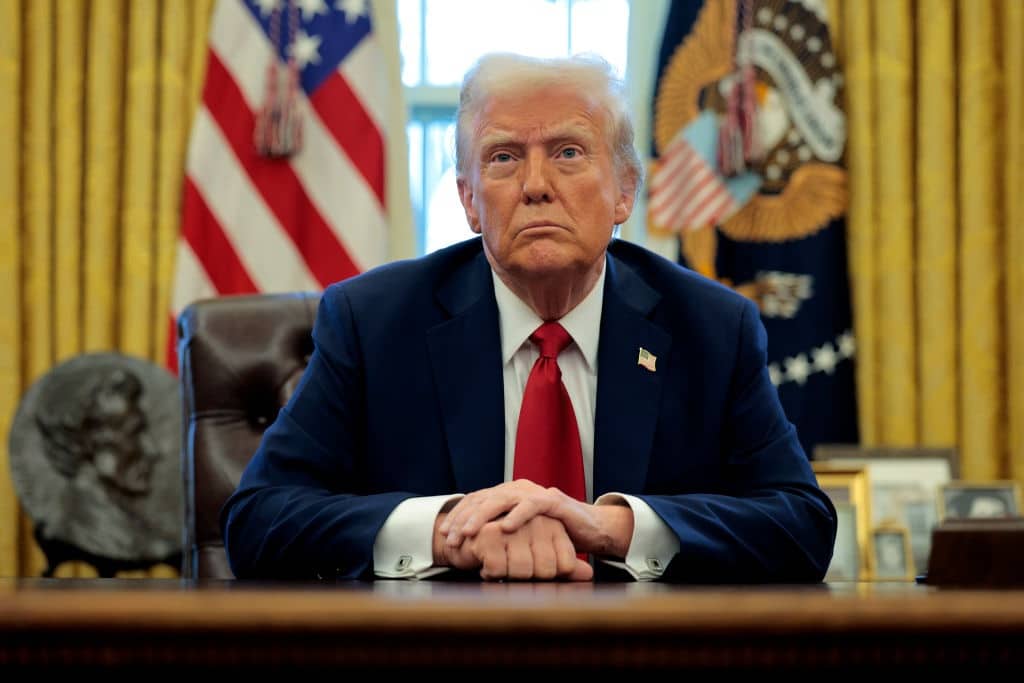


Trade tensions remain high Tuesday afternoon with last-ditch efforts underway and ongoing uncertainty around previously announced commitments. President Trump indicated a deal to delay tariffs on China is “close,” even as the U.S. prepares to enforce a key element of his trade agenda: tiered “reciprocal” tariffs ranging from 10% to 50%, set to begin Thursday morning.
Diplomatic activity continues worldwide. Switzerland’s president announced plans to travel to Washington to seek concessions aimed at avoiding a 39% tariff on Swiss goods. Meanwhile, India faces escalating pressure, with Trump telling CNBC, “we settled on 25% [tariffs], but I think I am going to raise that very substantially over the next 24 hours.” Indian officials appear to be focusing on Moscow rather than Washington as chances of a deal diminish.
Trump remains firm on advancing tariff increases starting Thursday, telling CNBC that “people love the tariffs” and even hinting he might run for president again partly due to popular support for his trade policies. Switzerland and India remain largely on the outside, but even countries with recent trade deals are negotiating to prepare for tariff impacts. Japan’s top trade negotiator will visit Washington this week to ensure progress on cutting auto tariffs to 15%, and EU talks continue around exemptions, such as for wine and spirits.
On China, Trump said, “We’re getting very close to a deal,” and hinted at an upcoming meeting with President Xi Jinping. He also warned of new sector-specific tariffs on semiconductors and pharmaceuticals, with pharmaceutical tariffs possibly announced “within the next week or so.”
U.S. customs provided new guidance on tariff exemptions, potentially offering some temporary relief for select importers. However, Bloomberg Economics forecasts the average U.S. tariff rate will rise to 15.2% if all duties go ahead—up from 13.3% currently and far above the 2.3% rate in 2024.
Trump’s team has set “bespoke” tariffs largely based on trade deficits, with many major partners facing a 15% rate and others higher. The EU, South Korea, and Japan have agreed to the 15% level, while some Asian countries face rates near 19%-20%. Trade Representative Jamieson Greer noted that some deals are announced, others are not, and some nations are simply assigned tariffs based on deficits.
Switzerland faces tariffs dictated by the U.S., and its delegation pushed for reductions Tuesday. Trump described talks as difficult, saying, “they essentially pay no tariffs,” yet discussions continue.
India’s prospects for relief seem bleak due to its ties with Russia and Russian oil. Capital Economics noted India could diversify energy sources but likely won’t “make a wholehearted effort to wean itself off Russian oil [as it] would not play well to be seen caving to Trump’s demands.” Bloomberg and Times of India reported Indian Prime Minister Modi’s aides are traveling to Russia, not the U.S., even amid escalating tariff threats. Trump confirmed talks with India are stalled, adding, “the sticking point with India is that tariffs are too high.”

 Pump Radar
 Stock Alerts