
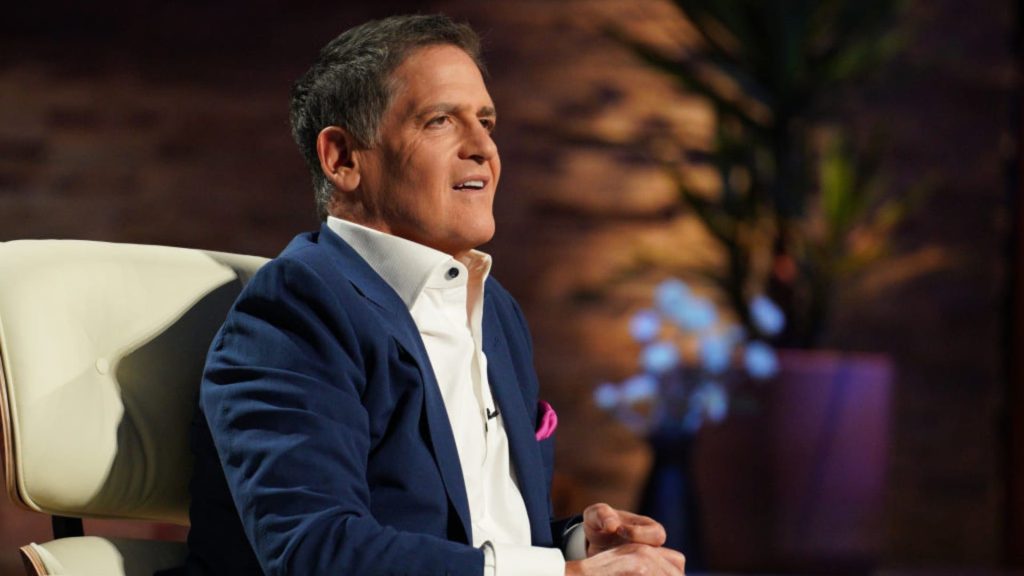


Billionaire entrepreneur and investor Mark Cuban believes artificial intelligence could generate more wealth for a single person than the world has ever seen.
Speaking on a recent episode of the High Performance podcast, Cuban predicted that AI will eventually help create the world’s first trillionaire. He emphasized that this breakthrough will likely come from someone who discovers an innovative way to harness the technology.
“We haven’t seen the best, or the craziest, of what [AI] is going to be able to do,” said the 66-year-old former Shark Tank star. “Not only do I think it’ll create a trillionaire, but it could be just one dude in the basement. That’s how crazy it could be.”
Today, generative AI is already being used to simplify daily tasks such as scheduling, list-making, and personal coaching. Some even treat AI as a digital confidant. In business, AI has begun transforming operations—Chipotle CEO Scott Boatwright told Fortune on June 9 that AI tools had cut his company’s hiring time by 75%.
But Cuban insists this is only the beginning.
“That’s the preseason” of what AI will eventually offer, he said.
Drawing comparisons to previous tech revolutions, Cuban explained: “Remember the early days of PCs and people were like, ‘I don’t need that. … What’s this internet thing? Why do we need it?’ Then it was smartphones. We’ll find something equivalent for AI and then, five years [later] … people will be like, ‘How did I live without it?’ People will make a lot of money.”
Despite the promise, Cuban isn’t ignoring AI’s risks.
“I’m not saying we’re going to get the Terminator,” he clarified. “I’m not saying that all of a sudden, there are going to be robots that are smarter than people … But we’ll find ways to make our lives better.”
Still, AI poses challenges. It has the potential to displace jobs, which is why companies like Shopify and Fiverr are urging employees to upskill in AI. Duolingo has announced plans to phase out contractors in roles AI can now handle.
There are also growing concerns over misuse. AI has been weaponized in scams, cyberattacks, and misinformation campaigns. And its environmental toll is significant—training large models consumes vast resources. One study found that training OpenAI’s GPT-3 used 1,287 megawatt hours of electricity, enough to power about 120 U.S. homes for a year.
Despite the downsides, Cuban urges everyone to engage with the technology.
“Download Gemini from Google. Download ChatGPT … and just ask your questions about anything,” he recommended. “But don’t assume the answers are right. And when you find something you don’t agree with, tell the AI you don’t agree with it,” to help refine the system and reduce bias.
Ultimately, he emphasized that AI is still just a tool. “You have to realize that it’s not actually thinking … It’s not actually smart,” Cuban said. “But what it can do is find information and package it in a way that people can understand.”


 Pump Radar
 Stock Alerts