
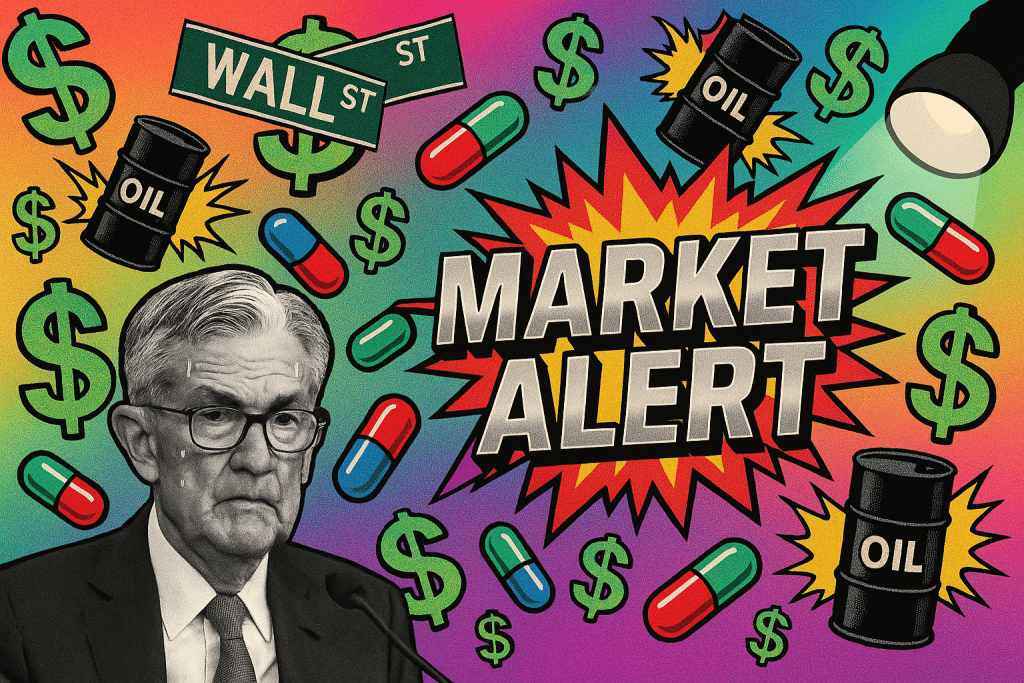


Markets rarely move in isolation, and the stretch between June 13 and 16, 2025 proved exactly that. From military escalations in the Middle East to shifting tones from central banks and cautious inflation watchers, investors had more than one reason to pause, rethink, or reposition.
Here’s what unfolded across markets – and how it could shape trading in the days ahead.
Middle East Escalation Sends Shockwaves Through Oil and Equities
The most immediate catalyst was a dramatic one: Israel carried out a series of strikes on Iranian nuclear sites, prompting a swift retaliation from Iran. The events, which began unfolding on June 13, ignited a sharp sell-off across global equity markets.
Oil prices surged between 7% and 11% in a single day – the steepest one-day gain in more than a year. That kind of spike instantly fed inflation concerns and pushed traders to reprice risk.
By the close of Friday, June 13:
- The Dow Jones dropped 1.8%
- The S&P 500 slid 1.1%
- The Nasdaq fell 1.3%
In tandem, safe-haven assets rallied. Gold saw renewed buying interest. Treasury yields fell . The U.S. dollar firmed. Meanwhile, sectors exposed to fuel costs and travel demand – like airlines – were hit hard. In contrast, energy names rallied , benefiting from the oil spike and defensive rotation.
The setup was a textbook example of how geopolitical instability in oil-producing regions reverberates instantly across global risk assets.
Dollar Holds Steady, Oil Retreats – But Volatility Remains Elevated
By June 16, markets were trying to stabilize. Crude oil gave up a small portion of its gains as traders digested the broader situation and assessed whether the Strait of Hormuz – through which a third of the world’s seaborne oil passes – was still under immediate threat.
The U.S. dollar remained firm, not surging dramatically, but offering investors enough stability to hold defensive positions. Analysts pointed out that a stronger dollar typically suppresses commodity prices, but the threat of a sustained conflict kept energy markets from cooling off too quickly.
Investors were also keeping an eye on the bond market, where yields pulled back – signaling both a flight to safety and renewed speculation that central banks may have to delay tightening or even consider renewed easing if global growth slows.
U.S. Unrest and Security Warnings Add to a Complex Domestic Backdrop
In addition to global tensions, domestic issues were rising to the surface. Major U.S. cities like Los Angeles and Washington, D.C., experienced elevated protest activity and visible security escalations, partly due to political demonstrations and the G7 Summit.
These developments haven’t had a material impact on economic data or market internals yet, but they do add layers of headline risk that traders must now price in. In a market already jumpy from global headlines, even local disruptions can spark outsized reactions.
ECB Flags Trade Risk, Echoing the Fed’s Caution
At the G7 meetings, European Central Bank Vice President Luis de Guindos emphasized growing concerns about global trade disruptions, inflation risk from energy volatility, and the need for central banks to remain “flexible but vigilant.”
This echoed the stance of the Federal Reserve, which, just weeks ago, warned that while inflation is improving, energy shocks and geopolitical tensions could slow disinflation progress. That combination – progress with caveats – is creating uncertainty about future rate cuts.
The takeaway? Markets now see fewer cuts in 2025 than they did just a month ago. For sectors sensitive to rate expectations – such as tech, real estate, and small caps – that repricing could influence direction into July.
Global Markets Show Resilience – For Now
Despite the tension, Asian markets were relatively stable, and European markets only modestly lower. Investors there seem to believe that while the Middle East escalation is significant, it’s not yet spiraling out of control.
At the G7 Summit, European leaders proposed new trade sanctions, likely targeting Iran and possibly involving tighter controls on oil exports or financial channels.
Such moves, if enacted, could add to oil supply constraints – keeping prices elevated even without further military escalation.
What It All Means for the Week Ahead
Here’s where things stand now:
- Energy prices are high, and inflation expectations are being re-evaluated.
- Safe-haven flows into bonds and gold may persist.
- Equities, especially cyclical and consumer-facing names, face downside pressure.
- Central bank communication will be scrutinized more than ever.
In short, this isn’t just about war headlines – it’s about how those headlines translate into the cost of goods, corporate margins, and policy responses.
Some traders will be looking to fade the panic, especially if tensions cool. Others will double down on defense, betting that volatility is here to stay. Either way, expect lower liquidity and choppier tape into midweek.
Final Thoughts
The period between June 13 and 16 was a reminder of how fast macro conditions can shift. From oil to bonds to tech stocks, everything moved – sometimes sharply – in response to headlines, policy tone, and shifting expectations.
Investors looking to stay ahead should focus on three things this week:
- Headline risk from the Middle East.
- Fed and ECB commentary – especially anything tied to oil or trade.
- Sector rotation out of consumer discretionary and into energy, defense, and utilities.
The bigger story? Mixed signals from inflation, policy, and geopolitics mean we’ve re-entered a “watch and wait” phase. And that, in this environment, might be the most tradable setup of all.

 Pump Radar
 Stock Alerts