


Despite persistent economic headwinds and geopolitical uncertainties, U.S. equities continued their upward trend during the week of June 2–6, 2025. Buoyed by robust corporate earnings in the tech sector and a surprisingly strong May jobs report, all four major indices posted solid gains. However, beneath the surface, investor sentiment remains cautious, with unresolved trade disputes and shifting expectations around Federal Reserve policy continuing to shape the landscape.
Major Indices Post Gains Across the Board
The S&P 500 climbed 1.4% during the week, briefly breaking through the closely watched 6,000 level before retreating slightly by Friday’s close. That symbolic milestone sparked headlines but also drew attention to concerns about overvaluation in the current rally.
The Dow Jones Industrial Average gained 1.1%, boosted by strong performances from industrial giants and renewed investor interest in financials. With a relatively balanced sector composition, the Dow’s rise reflected the broader resilience of blue-chip names amid shifting macro signals.
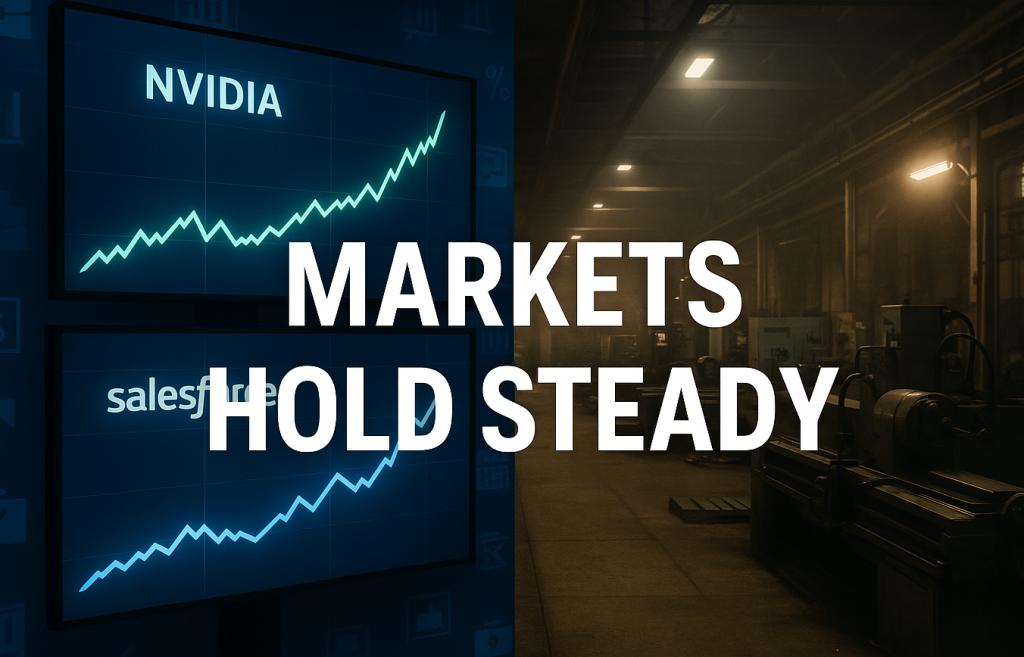
Meanwhile, the Nasdaq Composite outperformed its peers, rising 1.8% on the back of powerful earnings from tech titans like Nvidia and Salesforce . Despite isolated pullbacks, tech has remained the dominant driver of 2025 market gains.
Even the Russell 2000 , often seen as a bellwether for domestic economic sentiment, advanced 1.3%. Its rebound was attributed to easing trade tensions and speculative buying across small-cap stocks.
May Jobs Report Reassures, But Rate Cut Hopes Diminish
One of the week’s most influential data releases came from the Bureau of Labor Statistics, which reported that the U.S. added 139,000 jobs in May. The unemployment rate held steady at 4.2%, slightly higher than earlier in the year but well within the range considered consistent with full employment.
For markets, the jobs report was a double-edged sword. On one hand, it helped alleviate fears of a sharp economic slowdown, particularly in light of recent weak manufacturing and services data. On the other hand, the relative strength of the labor market diminished expectations that the Federal Reserve might begin cutting interest rates in the near term.
As Barron’s noted in its analysis, the Fed now finds itself in a holding pattern – balancing cooling inflation with a labor market that has yet to show definitive signs of distress. Traders are increasingly skeptical that the central bank will make any meaningful policy moves before the end of Q3.
Tech Leads While Tesla Stirs Controversy
The technology sector once again dominated headlines and returns. Nvidia posted another round of stellar earnings, reinforcing its status as the defining stock of the AI era. With surging demand for data center chips and ongoing expansion in high-performance computing, the company remains one of the most closely watched symbols of this market cycle.
Salesforce also delivered strong results, with upbeat revenue and guidance that surprised even bullish analysts. Its gains helped bolster investor confidence in the enterprise software space, which had been underperforming in recent quarters.
Meanwhile, Tesla was a source of market volatility. The electric vehicle manufacturer’s shares were buffeted by ongoing public disputes between CEO Elon Musk and President Donald Trump. Despite dipping midweek, Tesla managed a modest recovery by Friday. Still, analysts warned that the distraction could weigh on the stock in the weeks ahead, especially as competition in the EV market intensifies and regulatory pressure increases.
Trade Policy in Flux
Geopolitics remained another wildcard. Early in the week, markets responded positively to a federal court’s decision to block key provisions of the Trump administration’s proposed tariffs on imported electronics and vehicle components. The ruling provided short-term relief, especially for U.S.-based manufacturers and retailers who rely on global supply chains.
However, the administration quickly signaled its intent to appeal the decision, introducing new layers of uncertainty. For many investors, this tug-of-war underscores the difficulty of navigating policy risks in an election year.
While tariff-related headlines have had a muted impact on tech names so far, sectors such as consumer discretionary, transportation, and industrials remain vulnerable to renewed trade restrictions. Analysts warn that if the legal tide turns in favor of the White House, a more protectionist posture could dent corporate margins heading into the second half of 2025.
Sector Performance: Winners and Laggards
On a sector level, technology, industrials, and communication services were the week’s top performers. Each benefited from either earnings strength or rotation away from defensive holdings as investors chased growth.
Conversely, consumer discretionary stocks struggled, particularly retailers issuing cautious outlooks amid uneven spending patterns. The energy sector also faced challenges as oil prices fluctuated and investor sentiment cooled in the wake of disappointing demand forecasts.
Looking Ahead: Momentum Meets Caution
The positive tone from the first week of June suggests that investors are willing to look past some of the warning signs – at least for now. But risks remain.
The Fed’s next policy meeting is approaching, and while no immediate changes are expected, updated forecasts could move markets. Corporate guidance for Q2 will also begin to trickle in, offering a deeper view into the health of sectors beyond tech.
Additionally, macro data due later this month – including updates on inflation, housing, and retail sales – will test the market’s current optimism. If the economic slowdown deepens or earnings growth falters, the rally could face real pressure.
Still, as long as the AI boom continues to lift key stocks and the labor market remains intact, the indices appear poised to hold their ground.
Final Thoughts
The week of June 2–6 was a case study in contrasts. Investors embraced strong earnings and employment data while navigating a minefield of policy risk and macroeconomic uncertainty. It’s a fragile balance – but for now, the bulls have the edge.



 Pump Radar
 Stock Alerts