
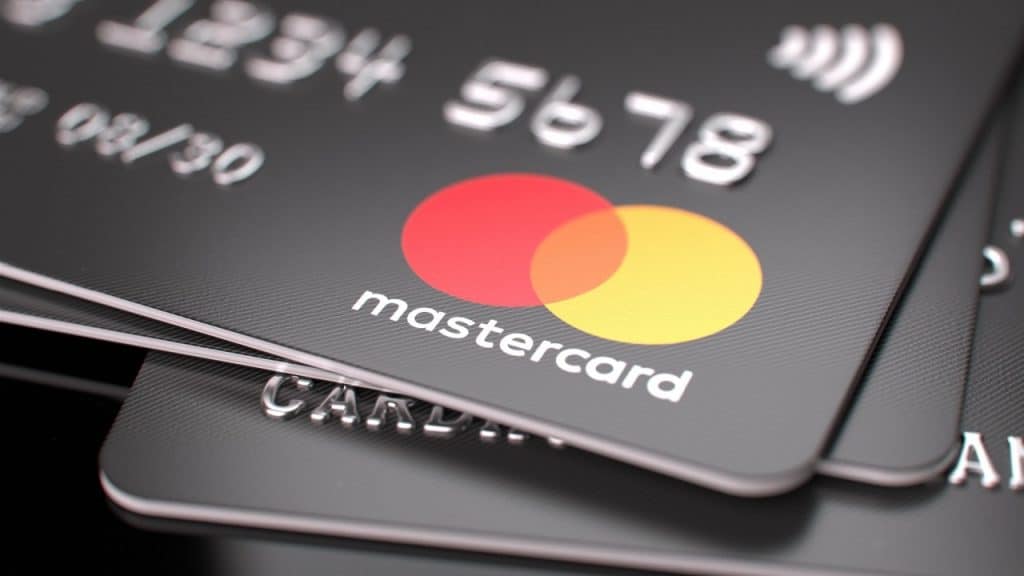


Mastercard is making a major move into stablecoins, teaming up with Paxos, PayPal, and Fiserv as it prepares for what it sees as a coming boom in digital assets. The payments giant is signaling its openness to collaborating with a broad range of players to scale and deliver payment technology for stablecoins.
The company announced it is joining the Paxos Global Dollar Network and plans to integrate PayPal’s PYUSD and Fiserv’s forthcoming FIUSD into its systems. Mastercard also already supports Circle’s USDC, the second-largest stablecoin by market cap.
Beyond these partnerships, Mastercard is enhancing its stablecoin infrastructure in several key ways. It’s upgrading its Mastercard Move feature to allow financial institutions and digital wallets to send and receive stablecoins. The company is also rolling out its Mastercard One centralized credential solution for digital asset transactions, with Fiserv as the first adopter. The two firms plan to connect Fiserv’s Digital Asset Platform—which enables bank-issued stablecoins—with Mastercard’s Multi-Token Network, a framework for building digital asset products and validating users for banks, fintechs, and central banks.
Mastercard and Visa have long supported the development of stablecoin technology, but Mastercard’s Tuesday announcement comes amid a flurry of activity sparked by the GENIUS Act’s momentum in Congress. That legislation has triggered a wave of stablecoin announcements from major banks and retailers.
“Stablecoins are the popular new kid, literally, on the block,”
— Alenka Grealish, analyst at Celent, via American Banker
Mastercard’s Position on Stablecoins
Today, Mastercard says it allows consumers to spend stablecoin balances at over 150 million merchant locations worldwide, thanks to partnerships with crypto platforms like MetaMask, Crypto.com, OKX, and Kraken. Exchanges such as Binance, Bybit, and Coinbase also accept Mastercard for crypto purchases.
“We do this because stablecoins alone do not offer the global acceptance, security, reliability, consumer protections and scale that have made card payments trusted and preferred by billions,”
— Jorn Lambert, Chief Product Officer at Mastercard
“Mastercard plays a unique role in bridging that gap, working across crypto and financial ecosystems to unlock this potential,”
— Lambert added in Tuesday’s announcement
Lambert emphasized that stablecoins can help solve real-world problems, citing benefits like:
-
Faster, lower-cost cross-border remittances
-
Near-instant payouts to families
-
Better payment systems for content creators and gig workers
-
Programmable B2B transactions triggered by specific conditions
He noted that stablecoins likely won’t be used directly at the point of sale, as they typically require a currency conversion at both ends of a transaction. That conversion could bypass traditional card networks, potentially reducing revenue.
Adding further tension: Walmart and Amazon are rumored to be developing their own stablecoins, potentially challenging Visa and Mastercard. Both retail giants have clashed with the networks before over transaction fees. In fact, stablecoin transaction volume in 2024 hit $27.6 trillion—8% more than the combined total of Visa and Mastercard—according to crypto exchange CEX.IO.
Still, analysts believe Visa and Mastercard are well positioned to adapt.
“Visa and Mastercard will have a key role to play even if stablecoin adoption gains ground. Being centrally situated in the payments ecosystem and a trusted party for banks, merchants and consumers, makes the networks well positioned to add value and play a critical role in driving adoption of the stablecoin ecosystem, despite beliefs that stablecoin is a risk to their business model,”
— KBW analyst note
“Each wave of payments innovation has reaffirmed a simple truth: Consumers and merchants adopt solutions that are convenient, secure and dependable,”
— Lambert said in Mastercard’s statement
“We don’t see stablecoins disrupting this dynamic — in fact, they reinforce it. Stablecoins hold tremendous promise but should be held to that same simple but high standard. There’s still work to be done to fully realize their promise.”
Visa, meanwhile, pointed to its own stablecoin strategy in a recent position paper, highlighting potential use cases such as settlement improvements, better cross-border payments, and serving as a bridge to card networks.
“In 2025, we believe that every institution that moves money will need a stablecoin strategy,”
— Visa, in its stablecoin position paper
“As more players in the payments ecosystem explore this powerful new technology, Visa stands ready to help our partners navigate the transformation, bringing the scale, trust and innovation needed to help build the next generation of global payments.”
Despite all the developments, one key question looms: Will there be enough demand?
“There is some demand in countries plagued by high inflation and select currency corridors,”
— Grealish said
“But [stablecoins are regarded] ambivalently in the U.S., where consumers love their credit cards and need sustainable incentives to be motivated to use stablecoins.


 Pump Radar
 Stock Alerts