
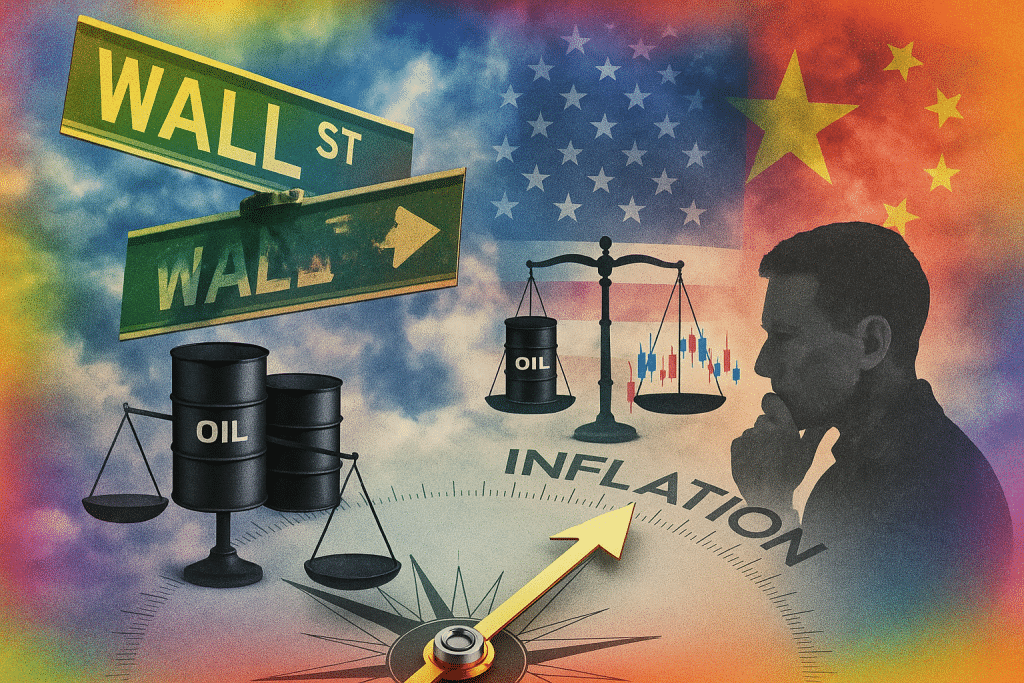


The U.S. stock market is treading water again. After a brief rally earlier this week that sent the S&P 500 within reach of all-time highs, a cautious mood has returned. On Wednesday, U.S. equity futures edged slightly lower as investors recalibrated expectations ahead of two major catalysts: key inflation data and the next steps in U.S.–China trade negotiations.
Midweek declines weren’t dramatic – the S&P 500 dipped 0.3% while the Nasdaq shed 0.5% – but the tone was unmistakable. Volatility is back, and investors are bracing for whatever the next macro headline brings. In a market where optimism has often won out, this week has served as a reality check.
So what’s actually moving the needle right now? And what should traders be watching as the week unfolds?
The Setup: Geopolitics, Inflation, and Trade
Let’s start with what changed. Tuesday’s session had all the ingredients for a classic risk-on rally. Tesla jumped over 6% on positive sentiment around EV incentives and improving margins. That alone helped pull the S&P 500 higher. But behind the scenes, optimism was quietly building over a renewed round of U.S.–China trade talks, reportedly taking place in London. After months of stalemate, any sign of progress was enough to reignite hopes of tariff relief and smoother global supply chains.
But fast-forward 24 hours, and sentiment started to shift. Oil prices ticked higher, not because of demand growth, but due to rising Middle East tensions. That reintroduced a layer of geopolitical uncertainty, especially with global shipping routes already under stress. Meanwhile, attention turned toward inflation data, with both the Consumer Price Index (CPI) and Producer Price Index (PPI) expected in the coming days.
The result? A market that’s not sure which direction to commit to. Bond yields pulled back slightly – often a sign of safety-seeking behavior – while investors tiptoed back from recent highs in tech and growth names.
Why CPI Matters This Time
Inflation prints have become routine, but that doesn’t make them less important. For months, the Federal Reserve has held rates steady, signaling patience in the face of gradually cooling prices. But recent data has sent mixed signals. Shelter inflation remains sticky, services prices aren’t falling as fast as hoped, and energy costs are now climbing again.
The upcoming CPI report is expected to show a modest monthly increase, but traders are especially focused on the core readings – which exclude volatile food and energy prices – to gauge underlying pressures. If core inflation comes in hot, it could shake the market’s confidence in the Fed’s dovish lean. If it cools off meaningfully, talk of rate cuts may return to the forefront.
And let’s not forget: inflation doesn’t just move bond markets. It shapes everything from consumer confidence to earnings forecasts. That’s why this week’s data could be a deciding factor in whether the S&P 500 breaks new highs or takes a breather.
Trade Talks Return – With Caveats
The other wildcard is trade. For years, U.S.–China relations have been a dominant macro theme. After a period of relative quiet, it appears that both countries are quietly resuming negotiations. Reports suggest that talks in London this week are focused on easing rare-earth export controls and reducing select tariffs imposed during the last round of tensions.
Markets cheered the headlines on Tuesday. Any reduction in trade barriers is seen as good news for industrials, semiconductors, and consumer goods companies that rely heavily on Chinese manufacturing. But as always, the devil is in the details.
This isn’t a sweeping new trade deal. It’s a framework for possible future progress, and investors know how fragile these agreements can be. Past efforts have been derailed by politics, enforcement disputes, and national security concerns. Still, just the act of restarting the conversation has added a degree of hope to markets that have grown weary of endless gridlock.
Sector Reactions: Winners and Laggards
Tuesday’s rally wasn’t broad-based. While Tesla and other megacap tech names lifted the major indexes, there were clear laggards. Retail stocks took a step back as recent earnings reports from companies like Best Buy raised concerns about consumer softness. In contrast, industrials and materials saw modest gains, reflecting a renewed interest in cyclical sectors tied to trade outcomes.
Semiconductors remain the swing sector to watch. They’re sensitive to both inflation and trade, and recent price action has been choppy. If trade momentum builds and inflation stays contained, chip stocks could lead the next leg higher. If not, they might drag the broader tech sector with them on any pullback.
The Bigger Picture: Still a Bull Market?
Despite this week’s hesitations, the broader trend remains positive. The S&P 500 is still near record highs. The Nasdaq is coming off one of its best months of the year. And the Fed, for all its caution, continues to signal that the next move is more likely to be a cut than a hike – assuming the data plays along.
That’s why investors aren’t panicking. Instead, they’re adjusting. Rotating. Hedging. Waiting.
This is a market that’s grown increasingly sophisticated in how it digests news. Gone are the days when one inflation print or trade rumor could derail the entire trend. Now, investors are looking for patterns – confirmation across indicators, earnings consistency, and geopolitical context – before making big portfolio moves.
What to Watch Next
The remainder of the week hinges on clarity. Clarity from inflation reports. Clarity from trade negotiations. And clarity from corporate guidance as the final wave of earnings season wraps up.
In the meantime, traders will be watching the 10-year yield for signs of risk aversion, monitoring crude oil for geopolitical flare-ups, and parsing every word from Fed officials to detect any shift in tone.
Market rallies don’t end because of one down day. But they do pause when uncertainty rises. This week feels like one of those pause moments. Whether it’s a temporary breather or the start of something bigger depends on the data still to come.
Until then, investors would be wise to stay nimble – and stay tuned.


 Pump Radar
 Stock Alerts