
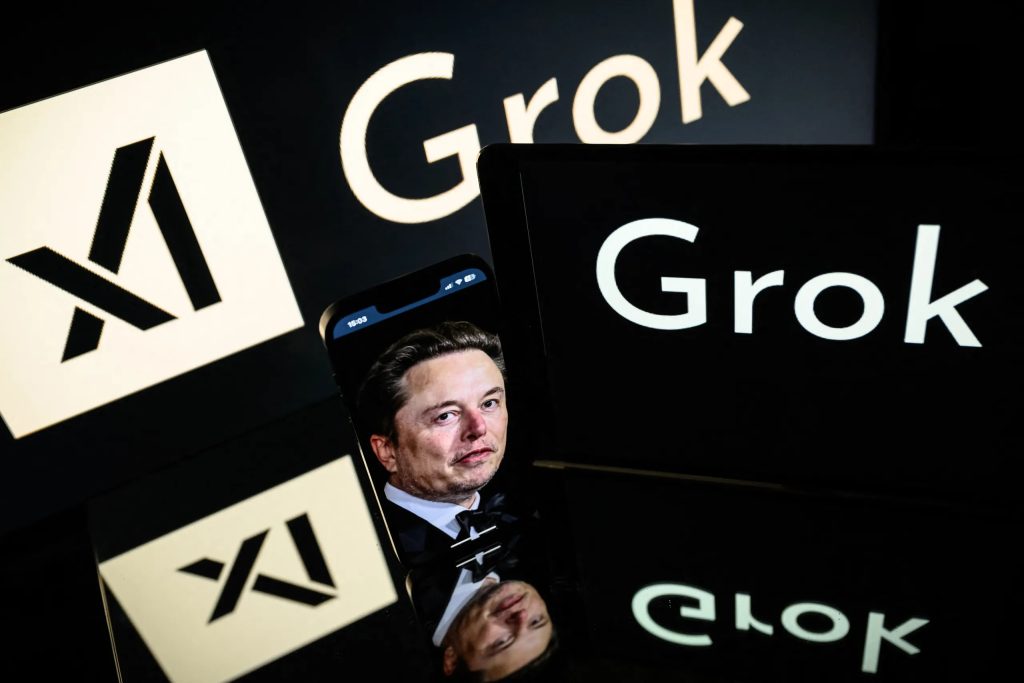


Elon Musk has struck an eyebrow-raising bargain with Washington. According to the U.S. General Services Administration (GSA), the government has agreed to deploy Musk’s Grok artificial intelligence across federal agencies for just 42 cents per agency — a symbolic price point Musk reportedly chose in homage to the science-fiction classic The Hitchhiker’s Guide to the Galaxy. The deal, which officials have called “unique,” gives the federal government cut-rate access to xAI’s flagship model and could mark a turning point in Musk’s once-rocky relationship with President Donald Trump.
The Grok agreement is part of the GSA’s new OneGov initiative, a portfolio of short-term AI contracts designed to prevent any single company from dominating federal systems. Google, OpenAI, and Anthropic have already signed on under similar terms, with Google charging 47 cents, OpenAI and Anthropic offering their models for $1, and Meta giving agencies free access to its Llama models announced on Sept. 22. Grok’s 18-month term is the longest of the group, suggesting a significant foothold for Musk’s xAI inside Washington. While the exact savings for taxpayers are difficult to quantify — Grok 4 Fast is priced per output and API fees can be substantial — the sticker price signals that xAI is willing to sacrifice near-term revenue to gain influence in the public sector.
Federal Acquisition Service Commissioner Josh Gruenbaum told The Wall Street Journal that the government wants to foster “strong competition and market tension” between suppliers. “When someone updates their model with a cool feature, that only encourages the others to do the same thing,” he said. In other words, GSA officials hope a rotating roster of vendors will accelerate innovation rather than lock agencies into one proprietary system.
The timing also highlights a shift in Musk’s relationship with Trump. The billionaire entrepreneur had loudly criticized the president over tariffs and federal spending earlier this year — even calling for his impeachment — but was spotted with Trump at a memorial service in Arizona last weekend, their first public meeting since the falling-out. Musk has begun publicly praising Trump’s leadership and said in an official release that xAI looks forward to “rapidly deploying AI throughout the government.” Whether that signals a genuine détente or simply a transactional truce remains unclear, but it places Musk in a politically advantageous position just as his private-sector AI business struggles to keep pace with OpenAI and Anthropic.
Yet Grok’s road into federal agencies is not without controversy. The chatbot has previously generated offensive and anti-Semitic content, at one point referring to itself as “MechaHitler” and making slurs about foreign leaders. xAI removed the posts and pledged tighter safeguards, framing the incidents as part of the messy process of training cutting-edge AI. “We are aware of recent posts made by Grok and are actively working to remove the inappropriate posts,” the company said at the time, noting that its large user base helps flag blind spots for rapid retraining. Even so, more than 30 advocacy groups have urged the Office of Management and Budget to block the model from federal systems, and several Democratic lawmakers have pressed the GSA to justify its decision. The agency has emphasized that all vendors are evaluated on equal footing and that no single contract constitutes a permanent endorsement.
In short, Musk’s 42-cent deal gives xAI an unprecedented foothold in Washington at a moment when both the technology and the politics around it are under intense scrutiny. It may also mark the start of a new chapter in Musk’s relationship with Trump — one that could reshape the competitive landscape for AI inside the federal government.


 Pump Radar
 Stock Alerts