
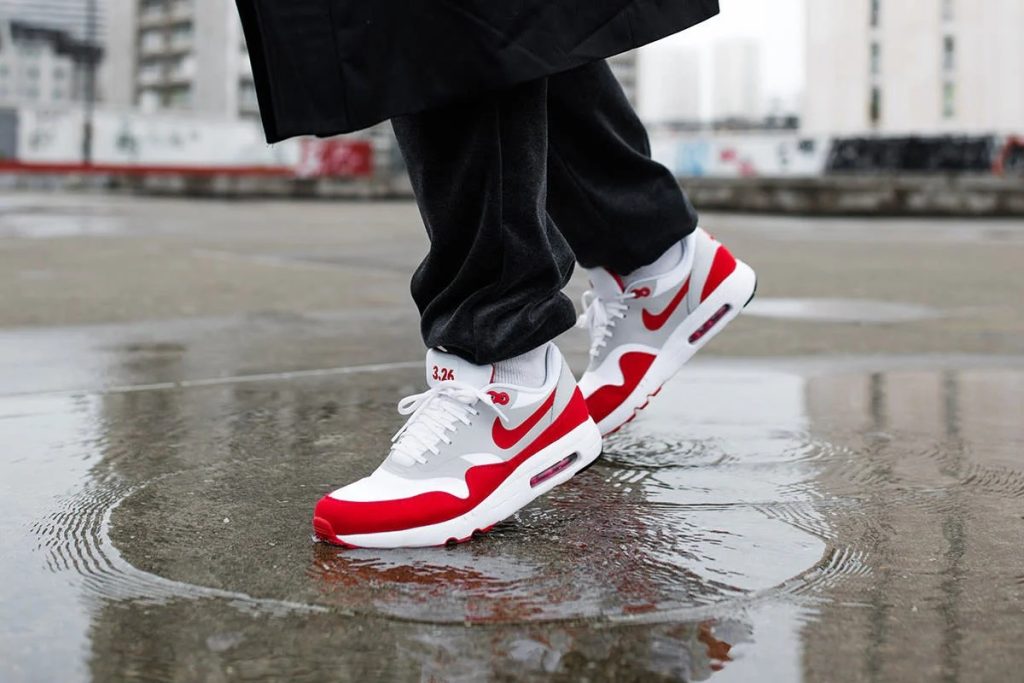


Nike (NKE) reported fiscal first-quarter earnings and revenue on Tuesday that exceeded Wall Street forecasts, fueled by unexpectedly higher sales. Revenue rose 1% year-over-year to $11.72 billion, surpassing analysts’ $11.0 billion estimate. The performance was a positive signal for CEO Elliott Hill’s ongoing turnaround strategy, though the company warned that challenges remain, particularly during the critical holiday shopping season.
Nike had previously projected a mid-single-digit decline in quarterly sales, making the 1% growth a surprising outcome. Earnings per share came in at 49 cents, well above the 27-cent consensus, though net income fell 31% from $1.05 billion a year ago. Gross margin slipped 3.2 percentage points to 42.2%, reflecting the impact of higher tariffs and inventory clearance efforts.
Looking ahead, Nike expects low single-digit sales declines in the current quarter, spanning early September to early December. Foreign exchange provided a modest 1-percentage-point tailwind, meaning sales could have been weaker without favorable currency moves.
Tariff pressures continue to weigh on profitability. Nike now expects $1.5 billion in tariff costs for fiscal 2026, up from a $1 billion projection in June, and anticipates a 1.2-point gross margin hit. For the current quarter, gross margins are expected to drop between 3 and 3.75 points. CFO Matt Friend cautioned that “progress will not be linear,” highlighting ongoing challenges in managing external headwinds while executing the company’s turnaround strategy.
Nike highlighted three areas of strength this quarter: wholesale, running, and North America. Wholesale revenue grew 7% to roughly $6.8 billion, while North American sales climbed 4% to $5.02 billion, outperforming analysts’ expectations of $4.55 billion.
However, other segments showed ongoing struggles. Nike’s direct business, including stores and online sales, declined 4% to $4.5 billion, while Converse sales fell 27%. Revenue in Greater China, a key market, dropped 9%, reflecting structural challenges and underperforming seasonal sell-through. Hill acknowledged that continued investment will be required to stabilize the market there.
Nike’s turnaround strategy under Hill — who has been CEO for nearly a year — focuses on clearing stale inventory, reigniting innovation, and reorganizing corporate structure by sport rather than by gender and age categories. Inventory declined 2% year-over-year, offset partially by higher product costs tied to tariffs. Management said inventory clearance efforts will continue, with a goal of improving gross margins in the second half of the year.
As part of the restructuring, Nike has begun reorganizing its teams, moving approximately 8,000 employees into new roles or eliminating around 1% of staff. Hill emphasized that the realignment will allow Nike, Jordan, and Converse to operate with more focused, sport-based teams, enhancing innovation, storytelling, and community engagement.
In short, Nike’s first-quarter results provide a glimmer of progress for the company’s turnaround, yet challenges remain. Tariffs, lingering inventory pressures, and uneven performance across geographies and brands are expected to weigh on profitability and sales in the near term. Hill and Friend stressed that while the company is gaining momentum, recovery will proceed unevenly across the business as they navigate external and internal headwinds.


 Pump Radar
 Stock Alerts