


Nuclear startup Deep Fission announced Monday that it has gone public through a reverse merger, securing $30 million in funding. The move marks one of the more unconventional routes into the public markets for a small energy startup, highlighting both the promise and the challenges of advancing next-generation nuclear technology.
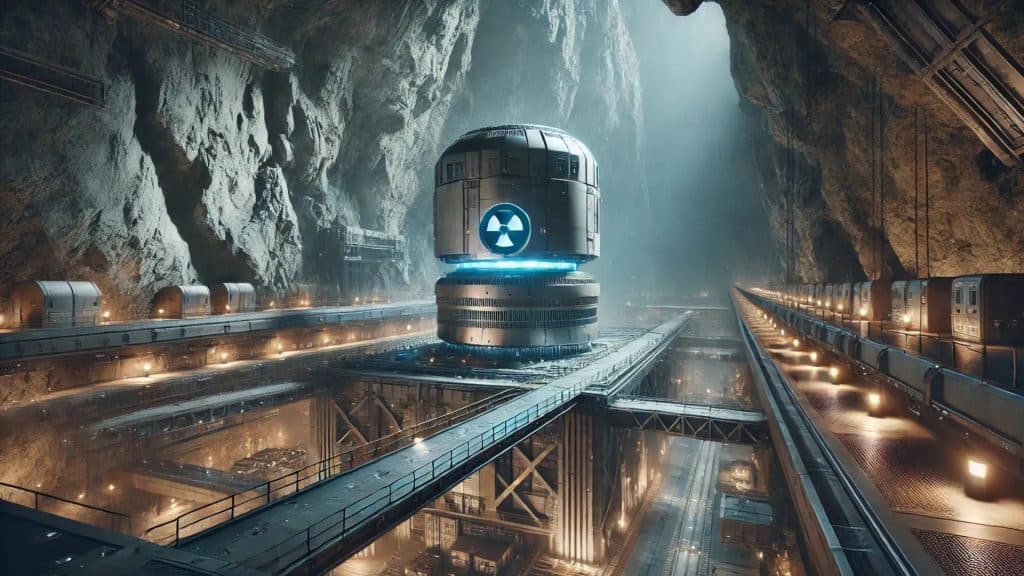
The company’s vision is strikingly ambitious: it plans to build small, cylindrical nuclear reactors and lower them into 30-inch-diameter shafts drilled a mile into the Earth. By burying its reactors underground, Deep Fission aims to mitigate long-standing safety concerns associated with nuclear power, including the risk of meltdowns and potential threats from sabotage or terrorist attacks.
Each of Deep Fission’s 15-megawatt reactors is cooled using pressurized water, the same proven technology employed in nuclear submarines and many existing commercial nuclear plants. The approach leverages decades of engineering knowledge while attempting to address the limitations of traditional surface-based reactors.
Earlier this year, Deep Fission signed a deal with data center developer Endeavor to deploy 2 gigawatts of underground reactors, signaling interest from industries seeking reliable, low-carbon energy solutions. The startup has also attracted attention from government agencies: in August, it was selected—alongside nine other companies—for the Department of Energy’s Reactor Pilot Program, a streamlined permitting process designed to accelerate the deployment of innovative nuclear technology.
Until recently, Deep Fission had been seeking a $15 million seed round to fund its development. Its rapid pivot to a SPAC-style reverse merger with Surfside Acquisition Inc., a four-year-old shell company, comes with some unusual characteristics: the offering was priced at $3 per share, well below the typical $10 per share often seen in SPAC transactions. The newly merged company will continue under the Deep Fission name, with plans to eventually list on the OTCQB.
The structure and timing of the merger suggest that Deep Fission may have encountered difficulty raising capital from traditional venture investors. The company’s initial capitalization came from a $4 million investment last year, leaving it in need of additional funding to support its capital-intensive operations. The reverse merger provides some breathing room, but it also introduces SEC reporting obligations, a new layer of administrative and financial responsibility for a small startup.
Despite the challenges, Deep Fission remains ambitious: the company expects to begin construction of its first reactor by July 2026. If successful, it could offer a novel approach to nuclear power—one that is safer, more secure, and potentially more scalable than traditional designs. The startup’s journey reflects both the promise and peril of trying to revolutionize an industry long defined by caution and regulatory oversight.
As Deep Fission navigates the public markets, investors and industry observers alike will be watching to see whether underground reactors can truly become a practical and economically viable energy solution, or whether the hurdles of nuclear development remain too high for small startups to overcome.

 Pump Radar
 Stock Alerts