


Nvidia (NVDA) and the University of Bristol have officially launched the UK’s most powerful AI supercomputer, Isambard-AI, as part of a broader effort to establish sovereign AI infrastructure—systems built specifically for individual nations.
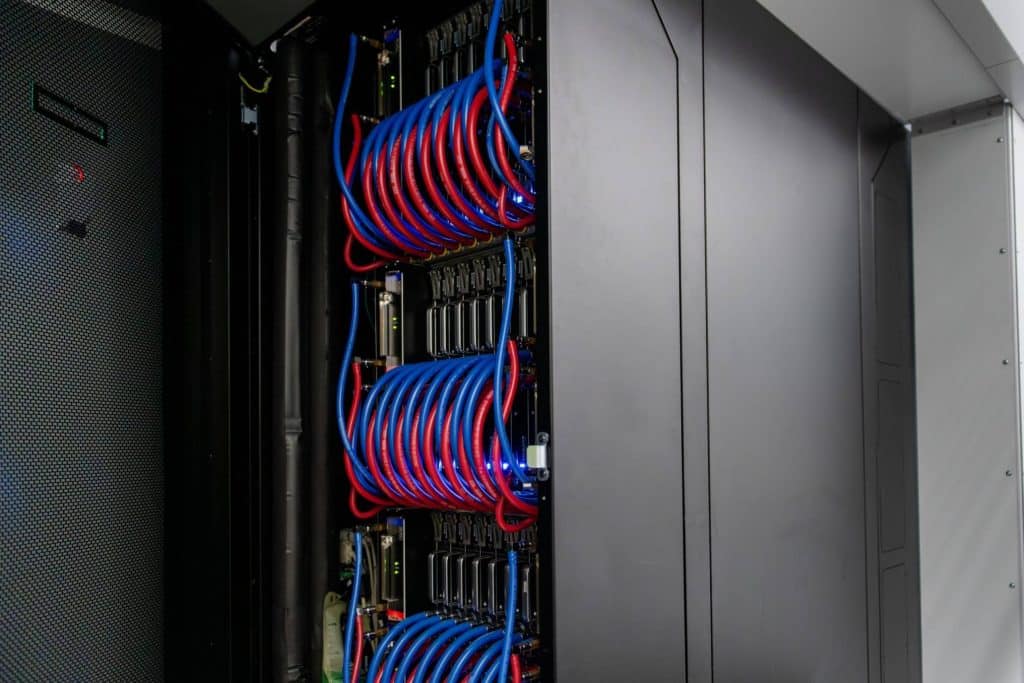
Touted as not only the fastest supercomputer in the UK but also among the most energy-efficient worldwide, Isambard-AI is powered by 5,448 Nvidia Grace Hopper superchips and housed in liquid-cooled HPE server cabinets, each loaded with 440 GPUs. The machine will support a range of research efforts, including materials science, drug discovery, and the development of large language models tailored to regional languages such as Welsh.
“Every industrial revolution begins with infrastructure. AI is the essential infrastructure of our time, just as electricity and the internet once were,” said Nvidia CEO Jensen Huang. “With bold leadership from Europe’s governments and industries, AI will drive transformative innovation and prosperity for generations to come.”
Despite its computing power, Isambard-AI is modest in size compared to the hyperscale systems run by tech giants like Amazon (AMZN), Microsoft (MSFT), Meta (META), and Google. Those data centers consume gigawatts of power, whereas Isambard-AI runs on just 5 megawatts. Professor Simon McIntosh-Smith of the University of Bristol, who also leads the Bristol Centre for Supercomputing (BriCS), noted the project was completed in under two years—far quicker than the typical three-year timeline. “Normally, it takes more than three years to complete similar projects,” he told Yahoo Finance.
Access to the system will be managed through the UK government’s Department for Science, Innovation, and Technology. Thanks to its architecture, the supercomputer can execute a variety of tasks concurrently throughout the day, boosting research efficiency.
The team opted for liquid cooling over traditional air-based systems, enabling higher GPU density and improved energy performance. Additionally, the university is exploring a sustainability initiative to repurpose heated wastewater from the supercomputer to warm campus buildings and eventually nearby homes and businesses.
Though the system officially launched Thursday, McIntosh-Smith said testing was already underway, including AI-driven research on Alzheimer’s vaccines and skin cancer detection.
The debut of Isambard-AI comes as Nvidia continues expanding into sovereign AI, a growing segment beyond its sales to major tech firms. In May, Nvidia CEO Jensen Huang joined President Trump at an event in Saudi Arabia, where Trump approved GPU sales to local companies. The U.S. has also drawn up a plan to sell hundreds of thousands of chips to the UAE, though progress is on hold over concerns about potential access by China, according to The Wall Street Journal.
Nvidia’s push into Europe is also accelerating. In June, the company announced that firms across the UK, France, Germany, and Italy are investing in new or expanded AI infrastructure.
Despite its international expansion, the U.S. remains Nvidia’s largest market, accounting for $61.2 billion of its $130.4 billion in revenue last fiscal year. Taiwan and China contributed $20.5 billion and $17.1 billion, respectively, while Singapore saw $23.6 billion in sales—though most shipments there are invoiced locally and shipped elsewhere.



 Pump Radar
 Stock Alerts