
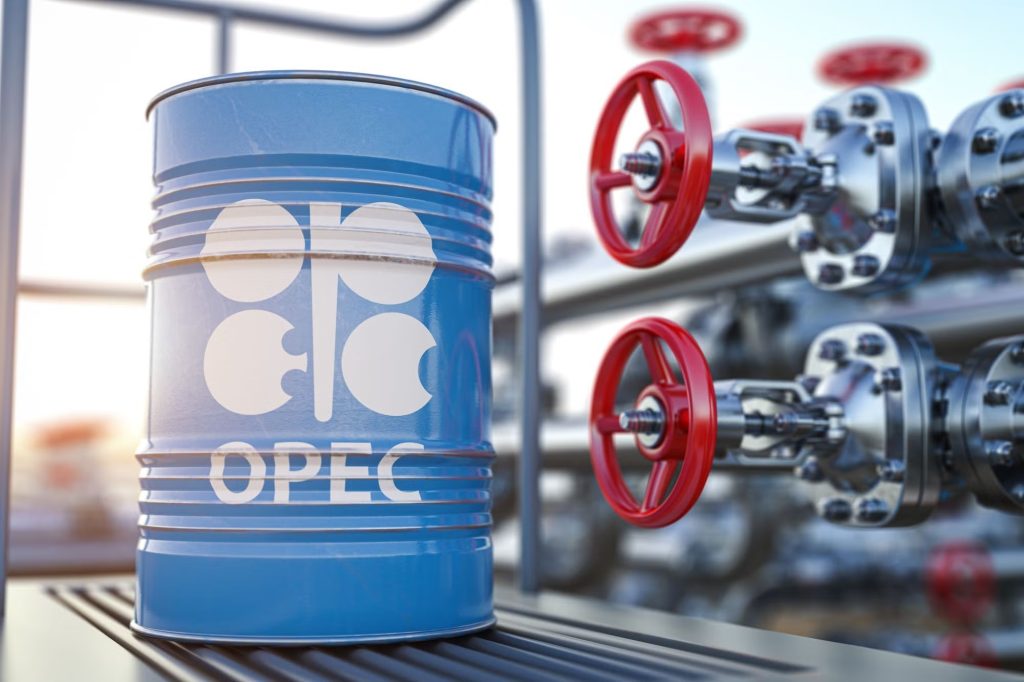


OPEC+ is preparing to deliver another increase in oil production but is signaling that the size of the hikes may begin to taper off as global demand softens with the end of the summer driving season, according to several people familiar with the group’s internal discussions. The coalition — which includes the Organization of the Petroleum Exporting Countries along with Russia and other allies — will hold an online meeting on Sunday at 12:30 GMT to finalize the plan.
Since April, OPEC+ has reversed a years-long strategy of deep output cuts and has already boosted quotas by roughly 2.5 million barrels per day — equivalent to about 2.4% of global demand. That pivot came partly in response to political pressure from U.S. President Donald Trump to ease oil prices for American consumers, as well as to regain market share ceded to rivals such as U.S. shale producers.
Even so, the extra barrels have not brought about a dramatic fall in prices. Brent crude settled at $65.50 a barrel on Friday, down 2.2% on the day, pressured by a weaker-than-expected U.S. jobs report and anticipation of further OPEC+ supply. Yet prices remain well above their April 2025 low near $58, buoyed by Western sanctions on Russia and Iran that have tightened available supply and encouraged new output from non-OPEC competitors.
Another increase beginning in October would represent the unwinding of a second layer of production cuts — roughly 1.65 million barrels per day — more than a year ahead of the group’s original schedule. Two OPEC+ sources said members have reached an agreement in principle to raise output by at least 135,000 barrels per day starting next month. A third source said the October hike could be larger, in the range of 200,000 to 350,000 barrels per day. By comparison, at its last meeting in August, the group agreed to lift production by 547,000 barrels per day for September.
The numbers highlight how far the bloc has come since its pandemic-era strategy of deep supply curbs. OPEC+ currently maintains two layers of cuts: a 1.65 million-barrel-per-day reduction applied to eight core members, and a broader 2 million-barrel-per-day cut by the full group, both formally scheduled to remain in place until the end of 2026. Unwinding those cuts in stages could give the market more stability while allowing key producers to defend their customer base.
Analysts note, however, that the group’s recent hikes have consistently fallen short of pledged amounts because many members are already pumping near capacity. That leaves only Saudi Arabia and the United Arab Emirates with meaningful spare production to bring online, limiting how much OPEC+ can actually add to the market in the near term.
The outcome of Sunday’s meeting will be closely watched by traders weighing the tug-of-war between supply and demand. A slower pace of output increases would suggest OPEC+ is wary of flooding the market at a time when global growth appears to be cooling, while another large boost could signal confidence that demand will remain resilient even into the weaker autumn season.



 Pump Radar
 Stock Alerts