
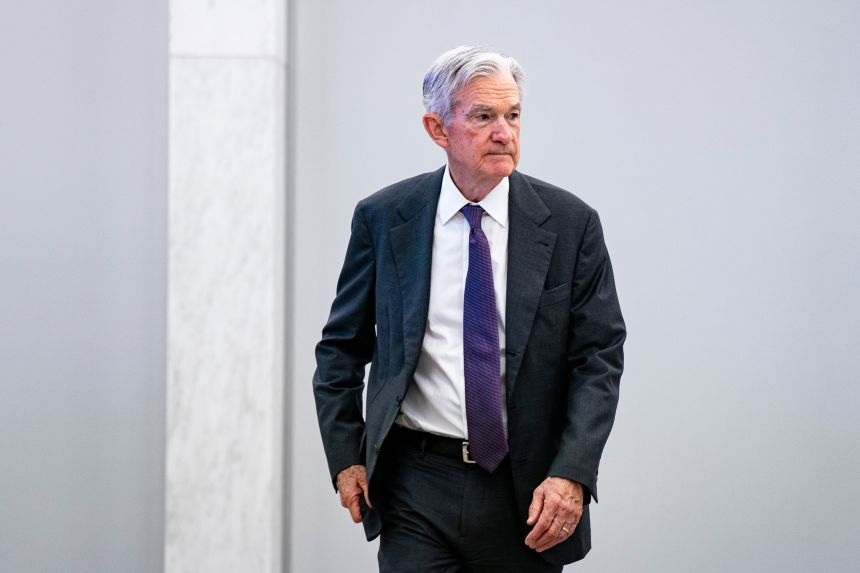


Federal Reserve Chair Jerome Powell used his closely watched Jackson Hole address on Friday to signal that a shift in monetary policy could be coming as soon as September. Powell said that “the baseline outlook and the shifting balance of risks may warrant adjusting our policy stance,” a remark that markets immediately interpreted as opening the door to a rate cut next month.
In his prepared remarks, Powell sought to strike a careful balance. On the one hand, he acknowledged that risks to inflation remain tilted to the upside, citing tariff-related price pressures that are “now clearly visible” and likely to accumulate in the months ahead. “The question that matters for monetary policy,” Powell said, “is whether these price increases are likely to materially raise the risk of an ongoing inflation problem.” He emphasized that the Fed “will not allow a one-time increase in the price level to become an ongoing inflation problem.”
Markets rallied sharply in response to Powell’s speech. U.S. stocks surged, Treasury yields slipped, and CME FedWatch data showed the probability of a September cut jumping to more than 90% immediately following his comments. The reaction underscores how sensitive investors remain to signs of easing, with Powell’s remarks marking the clearest indication yet that the Fed could move next month.
The Fed last held rates steady in late July, leaving the federal funds target range at 4.25%–4.50%. Since that decision, Fed officials have been split on the path forward. Governors Michelle Bowman and Chris Waller—who both argued for cuts at the July meeting—have continued to voice support for easing. Meanwhile, regional presidents such as Cleveland Fed President Beth Hammack have cautioned that sticky inflation justifies keeping policy unchanged.
Powell also dedicated a portion of his speech to labor market conditions, pointing out that recent hiring data shows a marked slowdown. He noted that both demand for and supply of workers have weakened, creating “a curious kind of balance” in employment trends. “This unusual situation suggests that downside risks to employment are rising,” he warned, noting that such risks could materialize quickly in the form of higher layoffs and rising unemployment. July’s jobs report highlighted this fragility: the economy added just 73,000 jobs, while prior months saw downward revisions totaling 250,000. Over the past three months, monthly job growth has averaged just 35,000. The weak data has also fueled political pressure, with President Trump calling for immediate cuts and removing the head of the Bureau of Labor Statistics following the July report.
Beyond the near-term policy debate, Powell also unveiled details of the Fed’s updated long-term policy framework, which undergoes review every five years. The central bank will now aim for inflation of 2% directly, rather than averaging 2% over time. Powell admitted that the Fed’s 2020 framework—which allowed for a “moderate inflation overshoot”—proved irrelevant once inflation surged in 2021. “There was nothing intentional or moderate about the inflation that arrived,” Powell said. The new language emphasizes that inflation at 2%, measured annually, remains the most consistent path for fulfilling the Fed’s dual mandate of maximum employment and price stability.
With markets now firmly anticipating easing, the focus shifts to upcoming economic data. Two critical reports—the August CPI release and the next jobs report—will help determine whether Powell’s hint at Jackson Hole translates into an actual cut when the Fed meets on September 17.

 Pump Radar
 Stock Alerts