
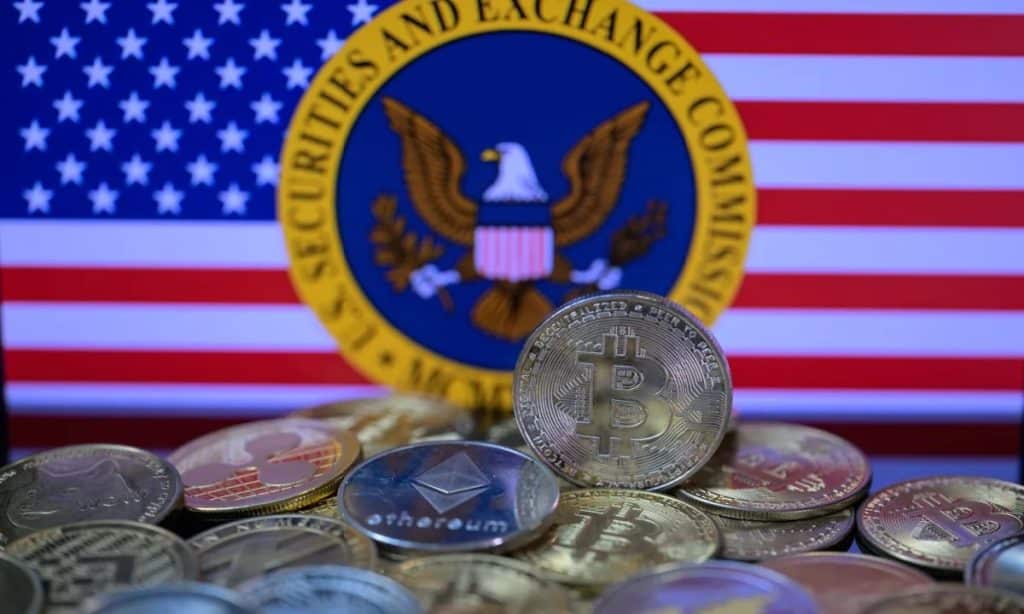


SEC Chair Paul Atkins said Friday he wants to create “very straightforward” rules for crypto companies to give investors more “certainty,” though he warned that crafting and implementing these regulations may take “a while”—possibly up to a few years.
“You want to ask questions first and have people give input to make sure things are correct and there are no loopholes,” he told Yahoo Finance in an interview following the launch of “Project Crypto,” the SEC’s new initiative aimed at modernizing digital asset oversight. The agency plans to begin rolling out proposals in the coming months, with formal rules likely extending into 2026.
Atkins is also exploring the potential to tokenize all securities—putting them on the blockchain to create digital representations of publicly traded assets. “You can follow the transactions back to inception because of that openness,” he said. “I think we can use that as a lever to help you make sure that things are consonant with the securities laws.”
This approach marks a distinct departure from the SEC’s stance under the previous administration. Under former Chair Gary Gensler, the agency pursued enforcement-heavy tactics and declined to write industry-specific rules for crypto, asserting that most tokens were already securities under existing laws.
President Trump, who appointed Atkins, pledged to ease regulations on the crypto sector. That promise has already begun to take shape with the passage of the GENIUS Act—the first federal framework for stablecoins—and the introduction of the CLARITY Act, which seeks to distinguish digital assets as either securities or commodities.
Atkins said the SEC will revisit the Howey test, the legal standard for determining what qualifies as a security, and interpret how “digital asset” applies under that framework. “We need to have straightforward rules so that people can see, OK, is this a commodity? Is this a security? And then if it’s a security, then what do I need to do to make sure that I can issue it and that it can be traded properly under the law?” Atkins said.
While Gensler’s SEC maintained that most crypto assets are securities, Atkins has said he believes most are not. He is also considering an “innovation exemption” for companies experimenting with blockchain-based trading models. Still, when asked if a tokenized stock remains a security, Atkins replied: “The tokenization of securities is just a wrapper around the security itself. So that’s still, in most cases, probably a security.”
SEC Commissioner Hester Peirce, who leads the agency’s crypto task force, echoed that view in a recent statement, asserting that tokenizing a security still results in a security under the law.
Atkins emphasized that new rulemaking could also include removing outdated regulations that hinder digital innovation. “In the past, the SEC didn’t make any accommodations for things that clearly don’t fit with respect to either a crypto company, crypto-related company,” he said. “We want to cut through all of that and make things very straightforward so that people have certainty… investors who are interested in investing in that innovation need to have certainty that everything is legal and that it’s not going to get tied up in litigation.”


 Pump Radar
 Stock Alerts