
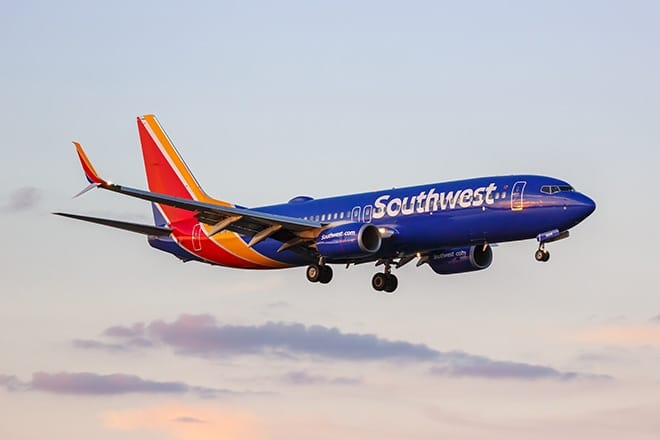


Southwest Airlines will begin selling tickets with assigned seats on July 29, the airline told CNBC, with passengers flying in assigned seats starting January 27. This marks the end of Southwest’s more than 50-year tradition of open seating, a policy that has distinguished it from competitors—alongside its offering of two free checked bags. Both are changing as the airline aims to boost revenue and compete with more profitable rivals.
Southwest announced in March that these initiatives are expected to add $800 million to earnings before interest and taxes in 2025 and $1.7 billion in 2026.
Although Southwest first revealed plans to end open seating a year ago, it had not set a firm date until now. The changes are part of a broad overhaul of its business model, including plans to charge many customers for checked bags and introduce new fare types this spring. Top-tier customers will remain exempt from many fees and restrictions.
Using computer modeling and live testing, Southwest ensured that the new boarding procedures would not slow down the boarding process and would allow planes to return to the air quickly.
“We wanted to make sure that, as we designed a boarding construct that sort of paired well with assigned seating, that we were optimizing for efficiency, but also the second priority: balancing that with making sure that we’re taking care of our most loyal customers, so tier members, cardholders and customers who buy our most premium products,” Stephanie Shafer Modi, managing director of fares and ancillary products at Southwest, told CNBC.
Starting January 27, familiar elements of Southwest’s open-seating system—the early morning alarms to secure boarding positions, the A-B-C groups, large stanchions marking boarding order, and the onboard scramble for seats—will be replaced.
The new boarding system will feature eight groups, determined by seat selection, status, and other factors. The most loyal and highest-spending customers will board first, but boarding order will ultimately be based on seat location. The breakdown is:
- The first two groups include top-tier elite frequent flyers and passengers with premium ticket classes.
- Groups three through eight cover “Choice” and “Basic” ticket holders, depending on seat location.
- Credit card holders and Rapid Rewards credit card members will board no later than Group 5.
- Boarding will occur via two queues.
The airline did not disclose pricing for seat assignments as an add-on fee, which varies by route and demand on competing carriers. Access to certain seats will depend on fare type, with options including standard, preferred, and extra-legroom seats.
Southwest is actively reconfiguring its Boeing 737 fleet to add extra-legroom seating, with about 200 aircraft completed—roughly 25% of the fleet, a spokesperson said. While these seats are not yet available for sale, customers have been able to purchase earlier boarding, improving their chances of securing extra-legroom seats.
Shafer Modi noted that Southwest customers value sitting together, and while the new boarding process will change things, the airline aims to accommodate families.
“I think that if families want that sense of control, they have the optionality to pick their seats through … our existing products that we’re selling,” she said. “We will try to do our best to make sure that families are seated together no matter how they buy a ticket.”
 Pump Radar
 Stock Alerts