
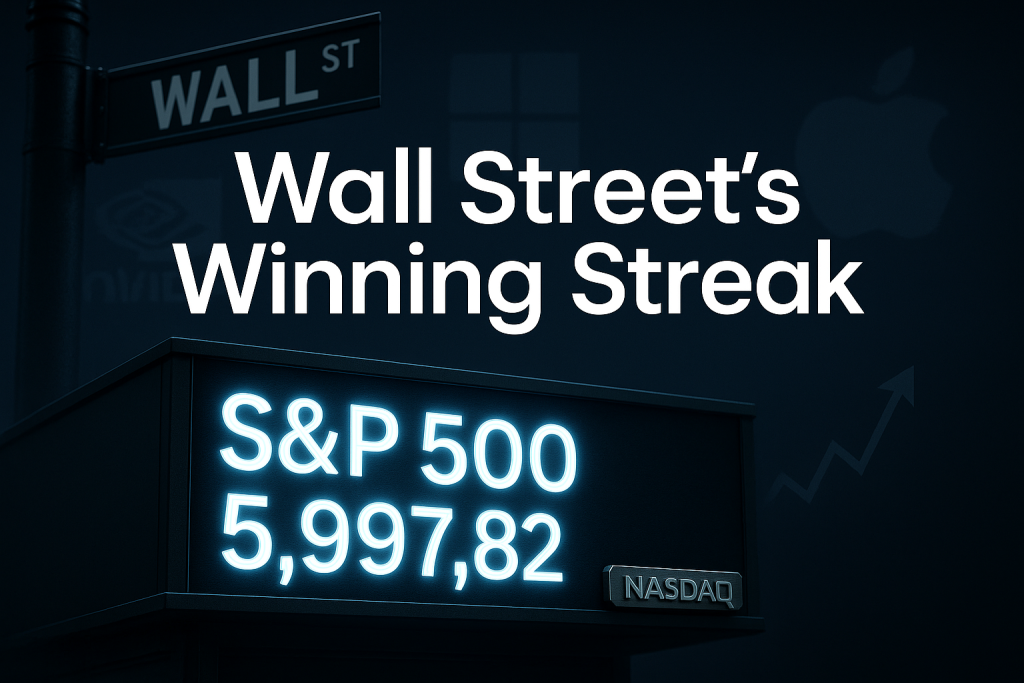


As the closing bell rang on Friday, traders and investors alike took a step back to appreciate what had been one of the strongest weeks for U.S. equities in months. The S&P 500 , widely considered the benchmark for the American stock market, came within striking distance of the historic 6,000 mark, riding a wave of bullish sentiment fueled by tech momentum, easing inflation fears, and encouraging economic indicators. Though it ultimately closed just shy of that milestone, the message from Wall Street was clear: optimism is back in the driver’s seat – at least for now.
This past week wasn’t just about numbers ticking up on a screen. It was a reflection of broader forces converging: surging confidence in mega-cap tech, tame inflation data, a cooling labor market, and growing expectations that the Federal Reserve may not need to raise interest rates further this year. For weekend readers trying to make sense of the rally, here’s a breakdown of the key drivers behind the market’s winning streak and what to watch heading into June.
Tech Carries the Rally
The spotlight shone brightest on the technology sector, which once again acted as the market’s engine. AI enthusiasm hasn’t cooled off, and neither has investor appetite for companies leading the digital transformation. Nvidia , Microsoft , Alphabet , and Apple all posted gains during the week, driven in part by strong earnings, continued innovation in artificial intelligence, and increasing capital expenditures from global corporations looking to modernize infrastructure.
Nvidia, in particular, stood out after posting earnings that beat Wall Street expectations across the board. The chipmaker reported a year-over-year revenue increase of over 60%, reaffirming its role as the top pick for investors betting on the AI revolution. The market’s response was immediate: Nvidia’s stock surged post-earnings, helping lift the Nasdaq Composite and boosting sentiment across related sectors, including semiconductors and data infrastructure providers.
This tech-led charge had ripple effects across the major indexes. The Nasdaq Composite rose nearly 2% for the week, while the S&P 500 gained 1.6%. The Dow Jones Industrial Average , often less tech-heavy, still managed a respectable 1.2% increase, while the small-cap Russell 2000 advanced by 0.9%, reflecting broader investor confidence.
Inflation and Interest Rates: A Tamer Landscape
Arguably just as important as tech’s strength were the macroeconomic developments that gave investors room to breathe. Inflation data released midweek showed a smaller-than-expected increase in the core Personal Consumption Expenditures (PCE) index, the Federal Reserve’s preferred inflation gauge. April’s core PCE rose 0.2%, below the anticipated 0.3%, suggesting that inflationary pressures may be cooling without a complete economic downturn.
This data gave markets a jolt of optimism. Not only did it reduce the immediate fear of further interest rate hikes, but it also reinforced the notion that the Fed’s tightening campaign over the past two years is finally yielding results. While policymakers have yet to signal a definitive pivot, traders are increasingly betting on a pause in rate increases – and possibly even a cut – by the end of the year.
The bond market echoed this sentiment, with yields on the 10-year Treasury note falling slightly over the week. Lower yields are typically favorable for equities, especially high-growth tech stocks that are more sensitive to changes in interest rates.
Labor Market Slows – But That’s a Good Thing?
Jobless claims for the week came in slightly higher than forecast, another data point that paradoxically boosted market sentiment. In the current environment, signs of a cooling labor market are seen not as red flags but as indicators that the economy is moving toward equilibrium. If wage growth slows and job openings decrease, the Fed may feel less pressure to hike rates further.
Of course, there’s a line between “cooling” and “cracking.” For now, though, investors appear to believe that the economy remains resilient enough to avoid a hard landing. That’s especially important heading into the summer months, traditionally a quieter season for the markets but one where macro shocks can quickly catch traders off guard.
Consumer Confidence and Earnings Beat
Consumer confidence data, while slightly mixed, showed resilience in spending patterns. Retail earnings added to the upbeat tone. Companies like Costco , Target , and Dollar General provided insight into consumer behavior, indicating that while shoppers are more budget-conscious, spending remains steady – particularly on essentials and value-driven goods.
The earnings season overall is winding down with a positive skew. According to data from FactSet, nearly 78% of S&P 500 companies have reported earnings above analyst expectations this quarter. This is well above the long-term average and has helped stabilize valuations even as share prices rise.
What’s Next?
As we step into June, the market faces a new set of questions. Can the S&P 500 break through the psychological 6,000 level? Will tech momentum hold as we move further away from earnings season? And most importantly – how will the Federal Reserve interpret the recent economic data in its next policy decision?
Several key events loom in the coming weeks, including the next Federal Open Market Committee (FOMC) meeting, updated jobs reports, and another round of inflation data. The geopolitical environment, especially around trade talks and oil production levels, also remains a wild card.
For long-term investors, this week served as a reminder of the market’s potential for upside – especially when headlines align with broader trends. But with valuations stretched and uncertainty still lingering, the importance of diversification and risk management remains front and center.
Final Thoughts
Wall Street’s latest rally has been impressive, no doubt. The S&P 500 brushing up against 6,000 is both a milestone and a metaphor – a symbol of how far the market has come since the volatility of 2022 and early 2023. Whether the momentum continues or stalls will depend on a mix of earnings, data, and Fed signals.
Still, for weekend readers reflecting on the past week, one message stands out: while macro uncertainty hasn’t vanished, investor sentiment is shifting toward cautious optimism. And sometimes, in markets, that’s all it takes to start a winning streak.


 Pump Radar
 Stock Alerts