
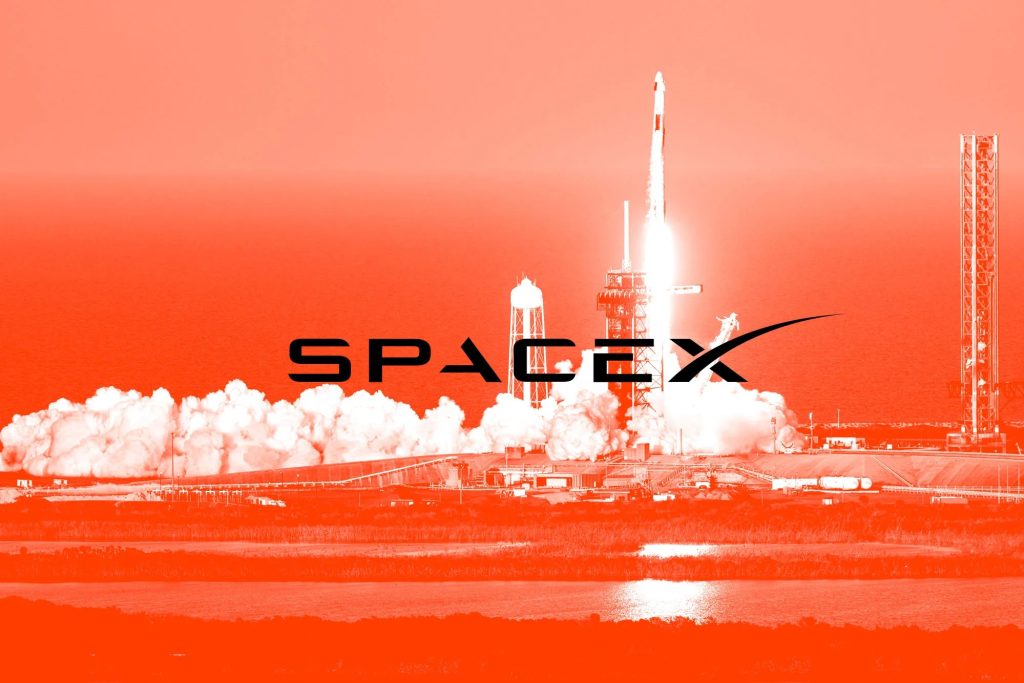


Elon Musk’s SpaceX announced Monday that it will purchase wireless spectrum licenses from EchoStar for approximately $17 billion, a move that will be pivotal for expanding the Starlink satellite network’s emerging 5G connectivity business. In a parallel arrangement, EchoStar’s Boost Mobile subscribers will gain access to Starlink direct-to-cell service, extending satellite coverage to regions currently without service.
The acquisition will enable SpaceX to build and deploy upgraded, laser-connected satellites designed to increase the cell network’s capacity by “more than 100 times,” according to the company. Gwynne Shotwell, SpaceX president and COO, said the deal will help the company “end mobile dead zones around the world,” adding that the exclusive spectrum will allow development of next-generation Starlink Direct-to-Cell satellites with a step change in performance and coverage.
The announcement sent EchoStar shares soaring 19% in early trading, while U.S. wireless carriers saw declines: AT&T and T-Mobile fell more than 3%, and Verizon dropped over 2%. The move comes amid rising mobile data usage; Americans consumed a record 132 trillion megabytes of mobile data in 2024, up 35% from the previous record, according to industry group CTIA.
Since 2020, SpaceX has launched more than 8,000 Starlink satellites into low-Earth orbit, building a distributed network that serves militaries, transportation companies, and rural consumers. Approximately 600 of those satellites, which SpaceX calls “cell towers in space,” have been launched since January 2024 for the direct-to-cell network and orbit closer to Earth than the main constellation. The deployment of these larger satellites relies heavily on Starship, SpaceX’s next-generation rocket, which has been under development for nearly a decade and is approaching readiness for operational Starlink missions expected early next year.
The deal follows months of scrutiny from the Federal Communications Commission, which questioned EchoStar’s use of mobile-satellite service spectrum and whether it was meeting 5G deployment obligations. EchoStar said the transaction with SpaceX, along with its separate $23 billion sale of nationwide spectrum licenses to AT&T in August, would address the FCC’s concerns. The FCC said the agreements “hold the potential to supercharge competition, extend innovative new services to millions of Americans, and boost U.S. leadership in next-gen connectivity.” AT&T’s acquisition included 50 MHz of nationwide mid-band and low-band spectrum.
Under the terms of the deal, SpaceX will pay up to $8.5 billion in cash and issue up to $8.5 billion in stock. It will also cover roughly $2 billion in interest payments on EchoStar’s debt obligations through late 2027. Following the sale, EchoStar will continue operating its satellite TV service Dish TV, streaming platform Sling, Hughes internet service, and its Boost Mobile brand.
SpaceX had previously lobbied the FCC to reallocate underused airwaves for satellite-to-phone service, arguing that EchoStar’s spectrum in the 2 gigahertz band had been “chronically underused” and could be shared among next-generation satellite systems. The deal will allow SpaceX to operate Starlink direct-to-cell services on spectrum it owns outright, rather than relying entirely on frequencies leased from mobile carriers such as T-Mobile.
This transaction builds on a broader industry trend of spectrum consolidation and deployment, following deals such as Verizon’s $20 billion acquisition of fiber-optic provider Frontier Communications and its $52 billion purchase of spectrum in 2021.



 Pump Radar
 Stock Alerts