
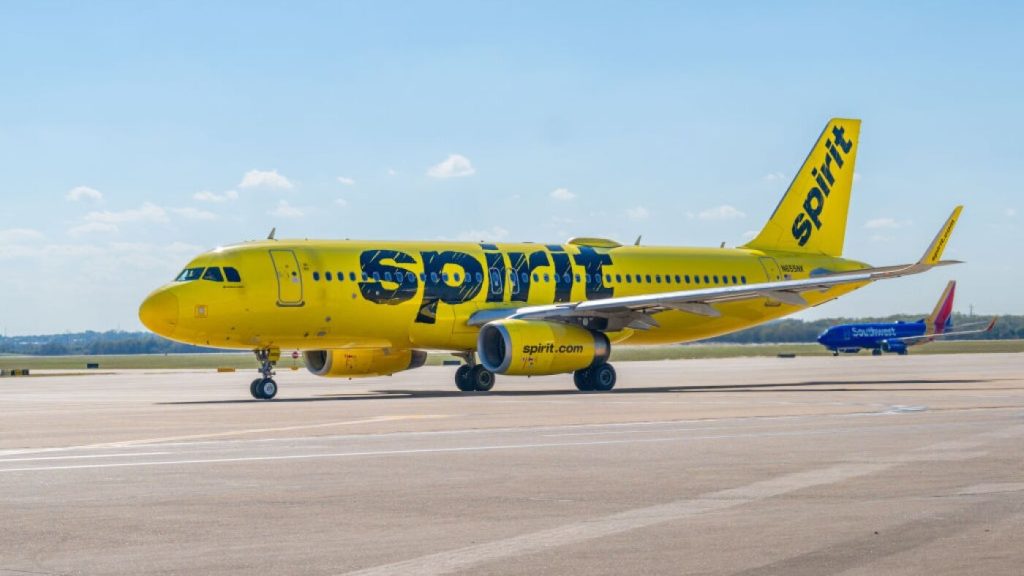


Shares of Spirit Aviation Holdings (FLYY), the parent of low-cost carrier Spirit Airlines, cratered more than 40% on Tuesday after the company warned it is running out of cash and may not survive the next 12 months without a dramatic reversal in fortunes.
In its second-quarter financial disclosure, Spirit cited “adverse market conditions” including an oversupply of domestic flight capacity and sluggish demand for budget leisure travel. These pressures have created a “challenging pricing environment” that is squeezing revenue just as the company struggles under the weight of its post-bankruptcy debt load. Management warned these conditions are expected to persist through at least the rest of 2025.
The company has launched a series of emergency measures to shore up liquidity — from furloughing pilots to selling spare engines, aircraft, real estate, and excess airport gate capacity. But Spirit admitted there is “substantial doubt” about its ability to continue as a going concern, noting the uncertainty of successfully completing these asset sales or cost-cutting initiatives in time to avoid a crisis.
The warning underscores the difficulties Spirit has faced since emerging from bankruptcy in March. The restructuring, triggered by a failed takeover attempt by JetBlue Airlines and an earlier rejected offer from Frontier, left Spirit with $795 million in debt, $350 million in new equity, and a $275 million credit line. These financing arrangements came with strict minimum liquidity requirements that the airline is now struggling to meet, compounded by collateral obligations tied to its credit card processing agreements.
Financial results for the quarter reflected the strain: Spirit reported $1.02 billion in revenue but posted a net loss of $245.8 million, translating to a $7.24 loss per share. That performance starkly contrasted with industry heavyweights Delta, American, and United — all of which rallied nearly 10% Tuesday as investors rewarded carriers that have been able to capitalize on premium service offerings and higher-yield passengers.
New CEO Dave Davis is attempting to reposition Spirit to capture more affluent travelers, introducing a premium economy seating option, refreshing the loyalty program, and forging partnerships with other airlines and travel companies to boost bookings. However, excess industry capacity, particularly in the budget segment, continues to undermine pricing power.
Industry leaders have emphasized the growing importance of premium products in attracting and retaining customers. Delta CEO Ed Bastian recently noted that carriers investing in reliability, service quality, and differentiated offerings are better able to command higher fares and weather downturns. Spirit’s challenge will be adapting its ultra-low-cost model quickly enough to stabilize operations before liquidity runs out.
With the clock ticking and competition intensifying, Spirit faces a turbulent path ahead — one that may determine whether the carrier can stay airborne or is forced into another restructuring, or worse, a shutdown.

 Pump Radar
 Stock Alerts