
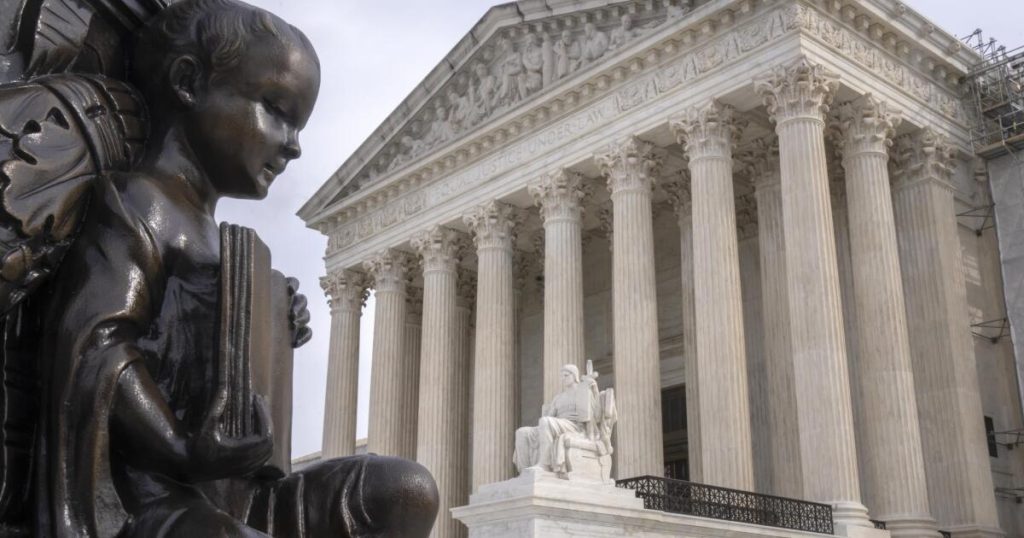


U.S. Treasury Secretary Scott Bessent expressed confidence Monday that the Supreme Court will uphold President Trump’s use of a 1977 emergency law to impose broad tariffs, while noting the administration has contingency plans if the Court rules otherwise. Bessent told Reuters he is preparing a legal brief for the solicitor general emphasizing the need to address long-standing trade imbalances and to curb the flow of fentanyl entering the United States.
The comments come in the wake of a federal appeals court ruling Friday that found most of Trump’s global tariffs illegal, reaffirming a prior judgment by the Court of International Trade. The judges concluded that the president exceeded his authority under emergency powers but allowed the tariffs to remain in effect while the appeals process continues. Trump quickly responded on Truth Social, declaring, “ALL TARIFFS ARE STILL IN EFFECT!” He further called the court “Highly Partisan” and asserted that “with the help of the United States Supreme Court, we will use [tariffs] to benefit our nation.”
The ruling puts Trump’s so-called “reciprocal” tariffs, which target dozens of U.S. trade partners, into a new phase of legal uncertainty. Meanwhile, Trump criticized the trade relationship with India, claiming it has been heavily one-sided for decades. “In other words, they sell us massive amounts of goods, their biggest ‘client,’ but we sell them very little—until now a totally one-sided relationship, and it has been for many decades,” he posted. “It has been a totally one-sided disaster!”
Trump’s remarks come as Indian Prime Minister Narendra Modi seeks closer ties with China and Russia amid cooling relations with the U.S. In other global trade developments, Brazil’s President Lula authorized retaliation against Trump’s 50% U.S. tariffs but indicated a willingness to negotiate, while Mexico announced plans to raise tariffs on Chinese goods in its 2026 budget to protect domestic industries amid U.S. pressure over cheap Chinese imports passing through Mexico.
The ongoing legal and diplomatic developments underscore the broader uncertainty surrounding Trump-era tariffs and highlight the complex interplay of U.S. trade policy, international relations, and domestic legal challenges.
 Pump Radar
 Stock Alerts