
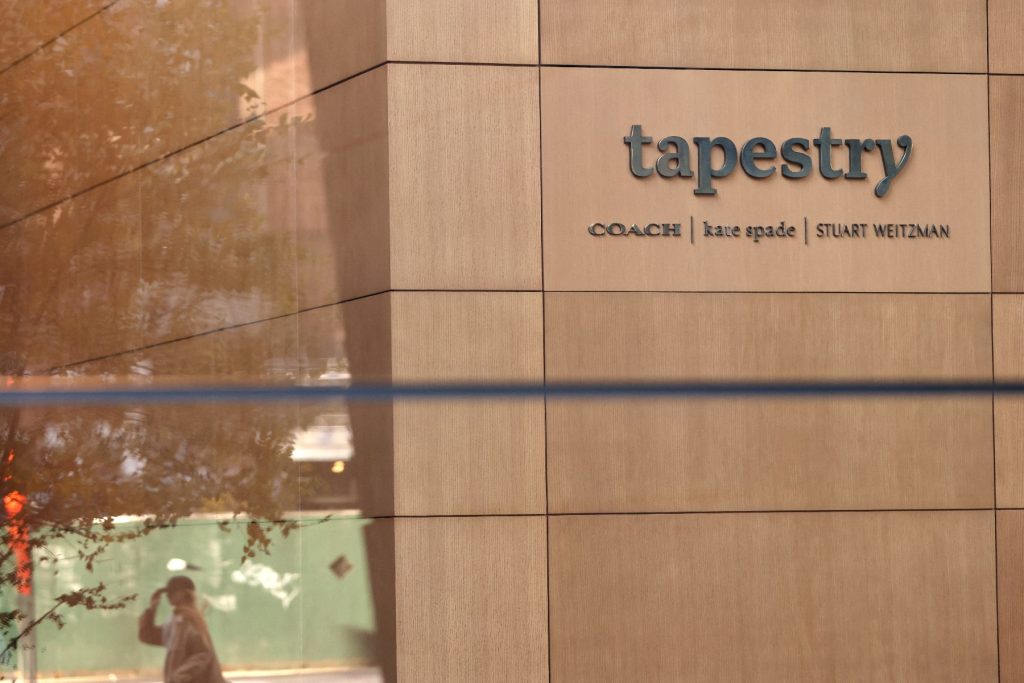


Shares of Tapestry, the parent company of Coach and Kate Spade, dropped 15% on Thursday after the luxury handbag and accessory maker said higher tariffs would significantly impact its profits in fiscal 2026. Tapestry expects duties to total $160 million for the year, pressuring earnings even as sales continue to grow. The company now anticipates full-year earnings of $5.30 to $5.45 per share, below the $5.49 analysts surveyed by FactSet had forecast.
On Thursday’s earnings call, CFO Scott Roe said that consumer demand remains strong and has even accelerated so far in the current quarter. He noted, however, that the company is “facing greater than previously expected profit headwinds from tariffs and duties, with the earlier than expected ending of de minimis exemptions being a meaningful factor.” The suspension of the de minimis rule, which previously allowed imports valued at $800 or less to enter the U.S. duty-free, has contributed to rising costs.
Despite these headwinds, Tapestry expects revenue to reach about $7.2 billion in fiscal 2026, excluding the Stuart Weitzman brand, which it agreed to sell to Caleres for $105 million earlier this year. That figure represents low single-digit growth from the prior year. The company also exceeded Wall Street expectations for fourth-quarter fiscal 2025 earnings and revenue.
Retailers and consumer brands have been adjusting to rising tariffs in various ways, including shifting production overseas, raising prices, trimming promotions, and emphasizing high-demand or trendy products. While some companies, such as Crocs, have reduced orders amid softer demand, Tapestry is taking a more cautious approach, focusing on global manufacturing efficiencies and operational improvements to offset higher costs.
Roe stressed that the company’s conservative outlook “has nothing to do with the trajectory of our business” and said it is being prudent in setting guidance at this early stage. He added that the company is confident demand remains solid and sees no slowdown in consumer interest.
Investors and analysts will be closely watching upcoming quarterly reports from major U.S. retailers, including Walmart, Home Depot, and Target, for additional insight on how the sector is managing tariff pressures and shifting consumer trends.


 Pump Radar
 Stock Alerts