
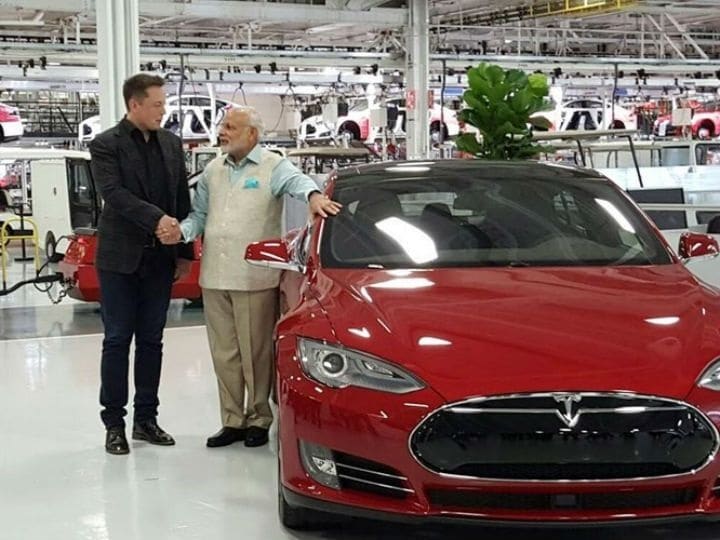


Tesla officially launched in India on Tuesday, bringing its Model Y to the market after years of delays. However, pricing emerged as the biggest challenge for the EV maker’s debut.
The all-electric Model Y is priced far higher in India than in other major Tesla markets. The Rear-Wheel Drive version is listed at ₹59,89,000, while the Long Range Rear-Wheel Drive comes in at ₹67,89,000 — equal to $69,686 and $78,994, respectively.
Deliveries are expected to begin in the third quarter, but questions remain about how competitive Tesla can be at this price point.
The elevated cost reflects tariffs and fees levied by the Indian government. Ongoing talks between President Trump and Indian Prime Minister Narendra Modi could result in reduced duties, making Tesla vehicles more affordable in the future.
Maharashtra Chief Minister Devendra Fadnavis commented outside Tesla’s new outlet in the region (via Reuters), “In the future, we wish to see R&D and manufacturing done in India, and I am sure at an appropriate stage, Tesla will think about it.”
The situation mirrors Tesla’s long-standing negotiations with Indian officials. The automaker has long expressed interest in the Indian market but resisted high import duties without first testing demand. India, meanwhile, pushed for a local Gigafactory commitment before making concessions.
The move marks a push into a major new market that could help rejuvenate demand by tapping into India’s large base of potential buyers.
The company’s website lists the Model Y at 61,07,190 rupees, or about $71,000. In contrast, U.S. buyers can purchase the same vehicle for around $45,000 — and for $37,500 after applying a $7,500 federal EV tax credit, which is set to expire at the end of September.
Tesla has long sought entry into the Indian market, but steep tariffs on imported cars have been a major obstacle. According to the World Trade Organization and Tesla executives, those tariffs can more than double the cost of a vehicle sold in India.
“We’ve been working on getting into India. India is a very hot market,” Tesla CFO Vaibhav Taneja said during an investor call in April. “It will be a great market to enter because India has a big middle class.” Still, he added that tariffs “create a little bit of tension, which we’re trying to work around.”
India ranks as the world’s third-largest auto market, trailing only China and the U.S. Tesla’s absence there has weighed on its global performance, with the company experiencing its largest sales drop in history amid intensifying EV competition and backlash in some markets to Musk’s political involvement.
Tesla earns nearly half of its revenue from the U.S., with just over 20% from China and the rest from other countries.
Trade discussions between the U.S. and India remain ongoing. Two months ago, President Donald Trump said India had offered to remove tariffs on U.S. imports in exchange for avoiding new tariffs on its exports. However, Indian officials stated no preliminary agreement had been reached.
Tesla continues to face rising competition, particularly from Chinese EV makers like BYD, which is expected to surpass Tesla as the world’s largest EV manufacturer — despite not being able to sell vehicles in the U.S.
Meanwhile, Tesla is also facing internal challenges. The Wall Street Journal reported Tuesday that Troy Jones, the company’s vice president of sales and service, has left Tesla, citing people familiar with the matter. The company did not respond to a request for comment.
Although Tesla has floated the idea of building a plant in India, its current factories in the U.S., China, and Germany are operating below capacity. A planned facility in Mexico has also been put on hold.


 Pump Radar
 Stock Alerts