
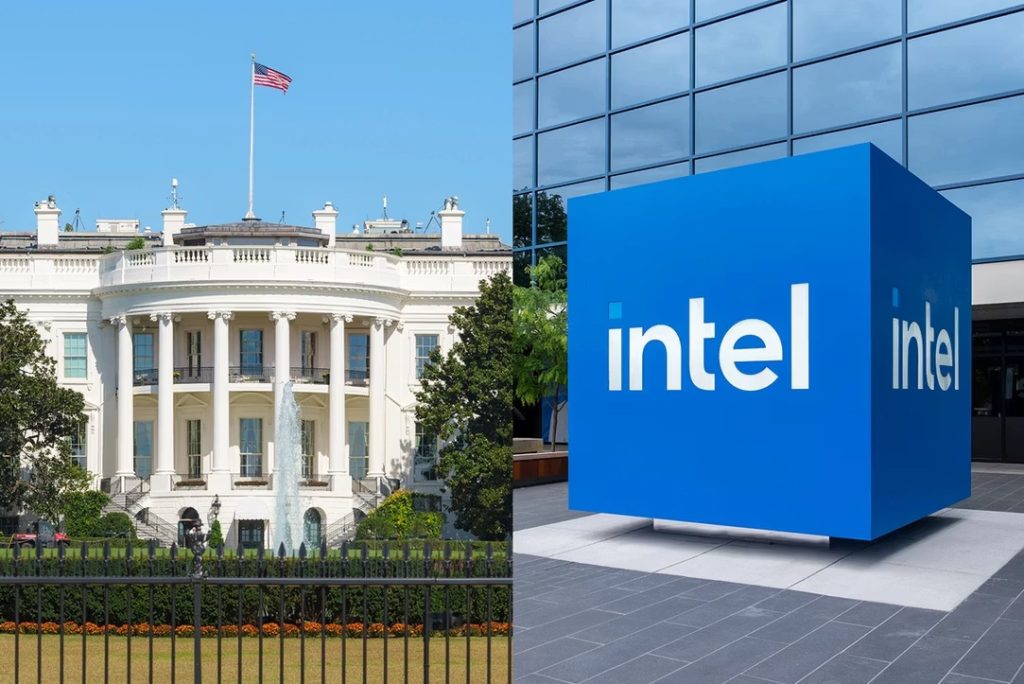


The Trump administration’s push to take equity stakes in major American companies may be about to reach a new frontier: nuclear energy. Following groundbreaking deals in the semiconductor and rare earth industries, analysts now expect the White House to pursue ownership positions in firms tied to enriched uranium and nuclear fuel production—a sector that is increasingly viewed as essential to both national security and the energy needs of the artificial intelligence boom.
From Intel to Nuclear: A Broader Investment Strategy
Earlier this month, the administration finalized a high-profile deal with Intel, taking a 9.9% stake in the struggling chipmaker as part of a push to secure domestic semiconductor manufacturing. A similar arrangement was struck with MP Materials, the leading US producer of rare earth minerals critical to defense and clean energy technologies. Both moves signaled a sharp departure from past practice: rather than handing out subsidies with no strings attached, the government is now demanding ownership in exchange for financial support.
Officials suggest these agreements are only the beginning of a sweeping investment strategy. “If we’re going to give you the money, we want a piece of the action for the American taxpayer,” Commerce Secretary Howard Lutnick recently said, contrasting the Trump administration’s approach with prior subsidy programs under President Biden.
Nuclear Fuel in the Spotlight
Nuclear energy is rapidly climbing the agenda. In a note last week, Compass Point analysts led by Whitney Stanco argued that the Department of Energy’s newly created nuclear fuel consortium could pave the way for federal equity stakes. The initiative aligns with the industry’s request for $3.4 billion in federal funding—appropriated during the Biden administration but not yet fully allocated—to boost domestic uranium enrichment capacity.
Two companies stand out as potential beneficiaries. Centrus Energy (LEU), based in Maryland, is the only US firm currently producing enriched uranium under a DOE contract. Its shares have soared more than 180% this year. BWX Technologies (BWXT), a Virginia-based defense and nuclear fuel company valued at $15 billion, has also rallied 45% year-to-date and is seen as a prime candidate for government partnership.
The strategic logic is clear. The Russia-Ukraine war highlighted America’s vulnerability to foreign uranium supplies, much of which still comes from overseas. Meanwhile, the AI-driven surge in energy demand has renewed interest in nuclear power, with big tech firms striking deals directly with nuclear providers to secure steady electricity for their data centers.
A Sector on the Rise
Investor enthusiasm for nuclear energy has been building for months. Constellation Energy (CEG) and Vistra (VSTR), both major US nuclear power operators, are each up more than 35% year-to-date. Meanwhile, next-generation nuclear companies like Oklo (OKLO) are attracting speculative fervor. Oklo—developer of small modular reactors (SMRs)—has seen its stock climb more than 1,000% in a year, helped by a Buy rating from BofA, which highlighted nuclear’s role in meeting AI-related energy demand.
Around the world, government ownership of nuclear fuel production is standard. France owns 90% of Orano, one of the largest enrichment firms, while Urenco—a key supplier to the US—is owned jointly by the UK and Dutch governments alongside German utilities. Analysts believe Washington could use funding commitments and even trade negotiations to increase US ownership of nuclear fuel capacity, reducing reliance on foreign-controlled entities.
The Risks of Government Ownership
Yet critics warn of dangers in this new model of government-backed capitalism. Philip Rossetti, senior fellow at the R Street Institute, calls it a “fundamental tension.” By offering equity-based protection, the government may encourage companies to seek subsidies rather than improve efficiency. “If a company becomes inefficient—if costs rise or investment lags—the burden falls on the public,” Rossetti said.
That debate is already playing out. Supporters argue taxpayers deserve a return for underwriting strategic industries, while skeptics fear creeping inefficiency and politicization. Still, the White House shows little hesitation in pursuing this path, signaling that Intel and MP Materials were only the first steps.
What Comes Next
The list of potential targets is growing. Beyond nuclear energy, Commerce Secretary Lutnick recently suggested defense giant Lockheed Martin (LMT) could be next, telling CNBC there has been a “monstrous discussion about defense” inside the administration.
Markets have already reacted to the strategy. MP Materials surged 50% in a single session after news the Pentagon would become its largest shareholder. Intel shares jumped 5% on confirmation of the government stake. If similar deals are struck in nuclear energy—an industry critical to both national security and the future of AI-powered growth—investor interest could accelerate even further.
For now, the nuclear sector appears firmly in Washington’s crosshairs. With enriched uranium capacity concentrated overseas and energy demands rising rapidly at home, the Trump administration may see no alternative but to extend its equity-driven model of industrial policy into one of the most sensitive and strategic industries of all.



 Pump Radar
 Stock Alerts