


Debanking is back in the spotlight after President Trump claimed Tuesday that the nation’s two largest banks, JPMorgan Chase (JPM) and Bank of America (BAC), denied him service.
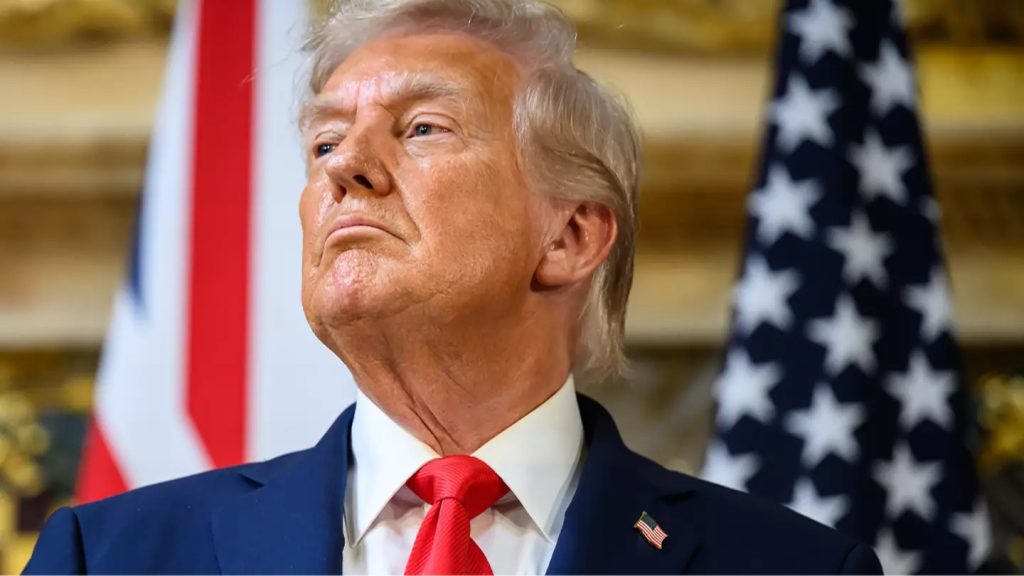
“The banks discriminated against me very badly, and I was very good to the banks,” Trump told CNBC’s Squawk Box, adding, “they discriminate against many conservatives.”
Republicans have long alleged that U.S. banks exclude customers for political reasons. More recently, crypto firms have also reported difficulty accessing banking services during the Biden administration.
“I had hundreds of millions. I had many, many accounts loaded up with cash. I was loaded up with cash, and they told me, ‘I’m sorry, sir, we can’t have you. You have 20 days to get out,’” Trump said about JPMorgan Chase.
He said Bank of America similarly rejected him when he tried to “deposit a billion dollars plus.”
“He said, ‘We can’t do it,’” Trump added, blaming pressure from Washington regulators for the denials.
“I ended up going to small banks all over the place,” he said.
Trump’s remarks followed a Wall Street Journal report that the White House is preparing an executive order to fine banks that discriminate against customers based on political views.
Bank of America did not immediately respond. JPMorgan said in a statement: “We don’t close accounts for political reasons, and we agree with President Trump that regulatory change is desperately needed. We commend the White House for addressing this issue and look forward to working with them to get this right.”
Both banks and their CEOs have denied politically motivated debanking.
Trump first raised the issue in January at Davos, confronting Bank of America’s Brian Moynihan: “I hope you start opening your bank to conservatives.” He also mentioned JPMorgan CEO Jamie Dimon, saying, “I don’t know if the regulators mandated that because of Biden or what, but you and Jamie and everybody else, I hope you open your banks to conservatives, because what you’re doing is wrong.”
Two months later, the Trump Organization sued Capital One (COF), accusing it of debanking hundreds of accounts after the Jan. 6 Capitol attack.
Bank regulators have removed “reputational risk” as a supervisory criterion, which critics say gave regulators broad discretion to pressure banks to reject certain customers.
“The heart of the problem is regulatory overreach and supervisory discretion,” said a Bank Policy Institute spokesperson. “The banking agencies have already taken steps to address issues like reputational risk, and we’re hopeful any forthcoming executive order will reinforce this progress by directing regulators to confront the flawed regulatory framework that gave rise to these concerns.”
Both banks’ leaders point to regulators as the root cause. JPMorgan’s Dimon said earlier this year, “We have not debanked anyone because of political or religious relationships, period,” though he acknowledged debanking occurs.
Bank of America’s Moynihan told CBS, “The reality is that if they gave us clarity from the regulatory thing and avoid the second-guessing, that would be helpful.”

 Pump Radar
 Stock Alerts