
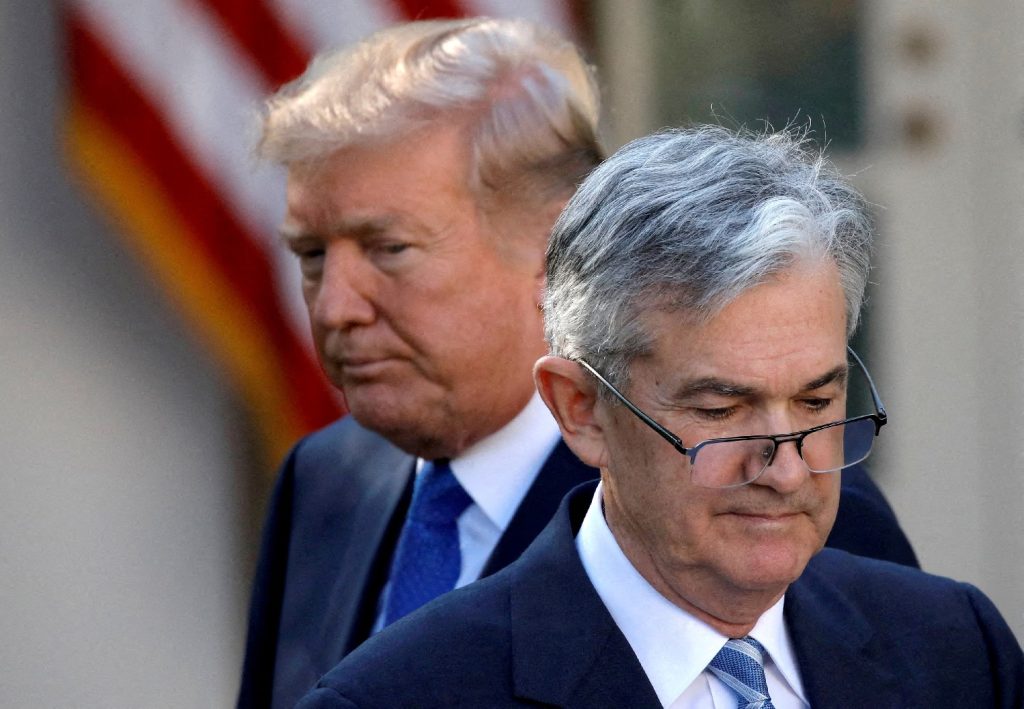


President Donald Trump launched another sharp critique of Federal Reserve Chair Jerome Powell on Friday, intensifying a months-long campaign against the central bank’s leadership and reviving concerns about its independence. In a post on his social media platform Truth Social, the president wrote: “Jerome ‘Too Late’ Powell should have lowered rates long ago. As usual, he’s ‘Too Late!’” The comment underscored Trump’s frustration with what he sees as overly cautious monetary policy, even as economic indicators point to slowing momentum.
The latest broadside comes on the heels of Trump’s recent push to remove Fed Governor Lisa Cook and reshape the central bank more aggressively in favor of rate cuts. Taken together, these moves have heightened scrutiny over how far the White House might go in trying to influence what is traditionally an independent institution. Economists and former Fed officials warn that such public pressure campaigns can undermine market confidence in the central bank’s credibility and independence, especially at a moment when policy decisions carry outsized importance for financial markets and the economy.
Trump’s remarks were timed to coincide with a weaker-than-expected August jobs report from the Bureau of Labor Statistics — the first monthly reading since the president abruptly dismissed the agency’s commissioner following July’s data release. The report showed job growth slowing far more than analysts had projected, adding fuel to speculation that the labor market is cooling enough to justify easier monetary policy. Revisions to previous months were also stark: June payrolls, once thought to be positive, were revised into negative territory, marking the first monthly employment contraction since the early months of 2020.
These developments have dramatically shifted expectations in the bond market. Traders are now assigning virtually 100% odds to a rate cut at the Fed’s upcoming September meeting, and many expect additional reductions into next year as the central bank attempts to balance a softening labor market with still-elevated inflation. While investors generally welcome the prospect of lower borrowing costs — and stocks have rallied on the assumption that the Fed will move soon — Trump’s repeated interventions add an unusual political dimension to what is normally a technocratic process.
By amplifying his attacks on Powell and signaling a desire to recast the Fed’s leadership, Trump is making monetary policy an overtly political issue in the middle of an already tense economic backdrop. Whether this strategy pressures the central bank to act faster or backfires by stiffening its resolve remains to be seen. For now, markets appear convinced that softer data will give the Fed cover to begin cutting rates, but the president’s rhetoric ensures that every decision from the Powell-led institution will be scrutinized through a political lens.

 Pump Radar
 Stock Alerts