
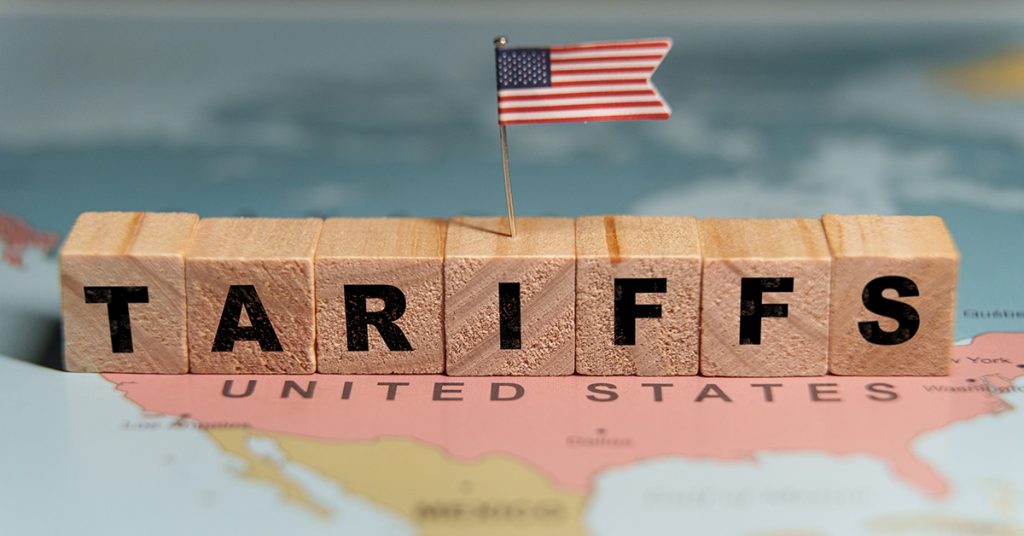


President Trump on Thursday announced a sweeping new set of tariffs targeting pharmaceuticals, heavy trucks, furniture, and home improvement products, including a 100% duty on patented drugs, unless the manufacturer is building a production facility in the United States. The move reflects the rapid expansion of Trump’s industry-focused trade policies and marks one of the most aggressive rounds of sector-specific duties to date.
The announced tariffs vary from 30% to 100%, with pharmaceutical companies receiving an exception only if they are investing in domestic manufacturing. While Trump has previously signaled plans for pharma tariffs, the new duties on trucks, furniture, and kitchen cabinets represent fresh targets, showing how his administration is broadening its trade agenda across multiple U.S. import categories. Imported heavy trucks, for example, will face a 25% duty; kitchen cabinets and bathroom vanities will carry a 50% tariff, and upholstered furniture imports will be subject to a 30% levy.
Beyond these sectors, the administration is also reportedly pressing chipmakers to produce in the U.S. a number of chips equivalent to what they export or supply to foreign customers. Companies that fail to maintain this 1:1 production ratio could face tariffs, according to reports, highlighting a broader strategy to curb reliance on foreign supply chains.
Earlier in the week, Trump floated the idea of using revenue generated from these tariffs to support U.S. farmers, who have felt the initial brunt of trade restrictions. “For a little while, [farmers are] going to be hurt until the tariffs kick into their benefit,” Trump said. However, the mechanism for providing such relief remains unclear, and any program could face legal hurdles with a looming Supreme Court review of the tariffs. A potential adverse ruling could force the administration to refund billions of dollars in revenue collected from these duties.
Meanwhile, trade negotiations with China continue. Reports indicate the U.S. and China are in the final stages of securing a “huge” Boeing (BA) aircraft deal that could serve as a central element of a broader trade agreement. Progress on the deal followed a call between Trump and Chinese President Xi Jinping, during which the two leaders reportedly agreed on a plan to spin off TikTok’s U.S. operations. Oracle (ORCL) was later named as part of the consortium of investors for the TikTok deal. Trump indicated that additional meetings between the two countries are planned in the coming months to advance these and other trade objectives.
The tariff announcement, scheduled to take effect on October 1, 2025, has already drawn market attention. Analysts and investors are closely monitoring the potential economic impact, with many noting that the move could disrupt supply chains while also benefiting domestic manufacturers that scale up production in response to the new duties. Bloomberg News reports that the announcement has already triggered reactions across global markets, particularly in sectors directly affected by the tariffs.
Trump underscored his commitment to industry-specific tariffs on Truth Social, stating that he is “never going to be done with tariffs,” signaling that additional duties could follow in the future. The expansion of the tariff program illustrates the administration’s continued willingness to use trade policy aggressively to influence U.S. industry and production while navigating the complex interplay of domestic economic interests and international negotiations.

 Pump Radar
 Stock Alerts