
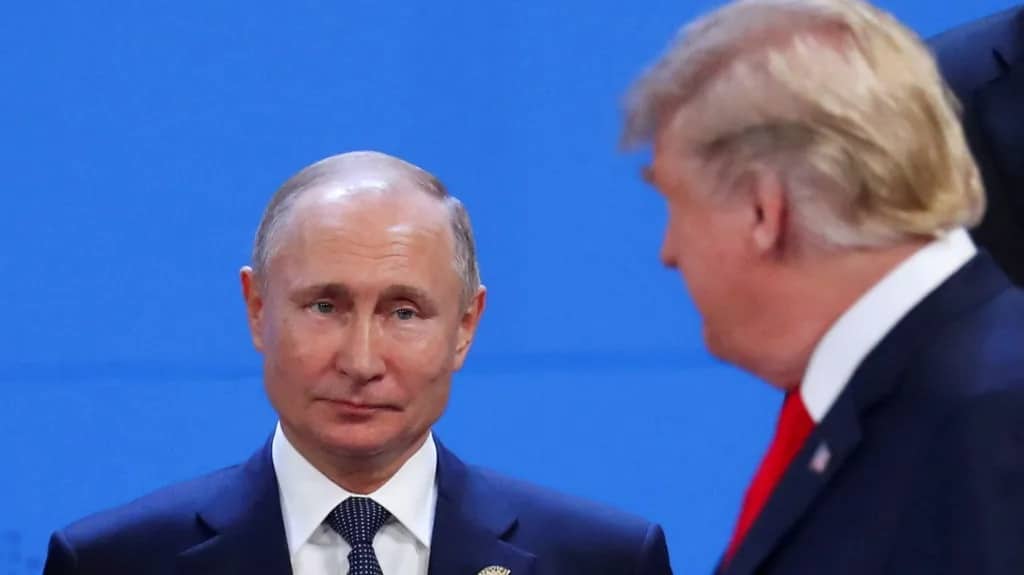


During a White House meeting with NATO Secretary General Mark Rutte, U.S. President Donald Trump declared he is “very, very unhappy” with Russia and announced plans to send “top-of-the-line” weapons to Ukraine through NATO.
Trump warned that if a ceasefire deal is not reached within 50 days, he will impose “very severe” secondary tariffs of 100% on Russia and on countries that continue trading with Moscow.
This announcement marks a sharp shift in Trump’s stance on Russia’s war in Ukraine, signaling impatience with Russian President Vladimir Putin, according to our North America correspondent Anthony Zurcher.
Meanwhile, Ukrainian President Volodymyr Zelensky reported “productive” talks with U.S. envoy Keith Kellogg in Kyiv, while Kremlin spokesperson Dmitry Peskov emphasized the importance of continuing dialogue.
On the surface, this marks a major change in Donald Trump’s approach to the Ukraine-Russia conflict. Previously, weapons shipments were carryovers from the Biden administration.
Now, Trump is authorizing fresh deliveries—not only defensive systems like Patriot missile batteries to protect Ukraine’s skies, but also offensive weapons, including missiles capable of striking deep inside Russia.
However, there’s one key condition: European governments will cover 100% of the costs.
Despite his hardline stance on who pays for these weapons, Trump expressed an unexpectedly warm tone toward European allies, who have often been targets of his criticism.
Trump’s rhetoric on Putin has hardened in recent weeks, particularly after a recent phone call followed by Russia’s heaviest bombardment of Kyiv since the war began.
Today, Trump said he was “very disappointed and unhappy with Russia,” giving Moscow 50 days to agree to a deal before implementing 100% secondary sanctions. These sanctions would not only impact Russia but also countries trading with it, such as China and India.
At a White House event, Trump described his meeting with NATO Secretary General Mark Rutte as “great,” outlining the agreement details.
He reiterated his frustration with Putin, stating, “We thought we had four deals with Putin,” referring to failed peace talks after phone conversations.
Secondary sanctions mean that any country continuing to trade with Russia would face hefty tariffs on goods sold to the U.S.—up to 100%.
For example, if India continues buying oil from Russia, U.S. companies importing Indian goods would pay a 100% tariff, making those goods too expensive for U.S. buyers, which would hurt India’s revenue.
The goal is to cripple Russia’s economy by cutting off revenue streams from sales like oil, limiting its ability to finance the war.
The White House said these tariffs would only be applied if no peace deal is reached within 50 days.
Countries negotiating trade deals with the U.S. would likely be wary of potential future tariffs.
During the Oval Office announcement, Trump revealed that if “we don’t have a deal within 50 days,” secondary tariffs of 100% on Russia would be imposed.
He confirmed that “top-of-the-line” weapons would be sent to Ukraine in a NATO-coordinated operation.
Trump said he was “very unhappy” with Russia and “disappointed” in Putin, emphasizing his desire to end the war.
Rutte called the agreement “really big” and confirmed European nations would pay for the weapons, describing that as “totally logical.” The weapons’ value totals billions.

 Pump Radar
 Stock Alerts