
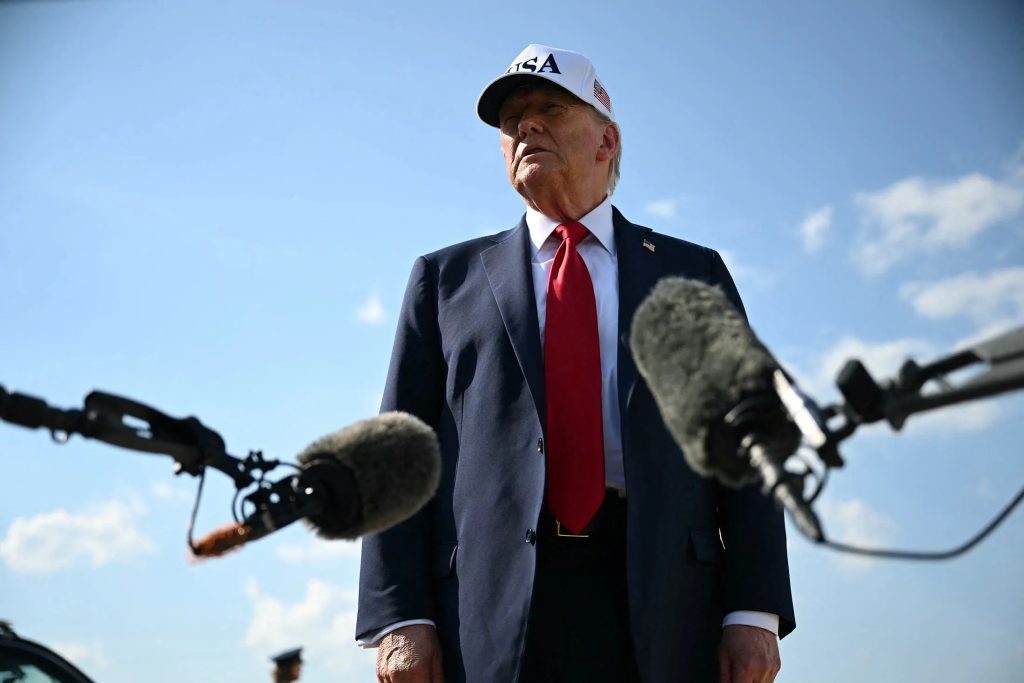


President Donald Trump on Monday reignited his aggressive trade agenda, announcing 25% tariffs on imports from Japan and South Korea, and signaling broader action through a wave of formal letters sent to U.S. trading partners. These measures mark the latest escalation in a strategy to reshape America’s global trade relationships through unilateral tariffs.
Trump publicly shared the letters on his Truth Social platform, formally notifying the leaders of both countries about the duties. In those letters, he also issued a warning that retaliatory actions would be met with even higher tariffs:
“If for any reason you decide to raise your tariffs, then, whatever the number you choose to raise them by, will be added on to the 25 per cent that we charge.”
The White House confirmed that Trump would sign an executive order delaying the implementation of the tariffs until August 1, allowing a final negotiation window. This pause follows a similar 90-day delay issued in April as part of what Trump called the “Liberation Day” trade reset. While Monday’s tariff levels are largely consistent with those April rates—Japan at 24%, South Korea at 25%—the administration is now formalizing and escalating its stance.
Trump appeared particularly frustrated with the pace of negotiations with Japan, which he had previously described as “spoiled” while threatening tariffs as high as 35%. South Korea, on the other hand, had maintained a more constructive dialogue, with weekend talks reportedly taking place in Washington. Still, those talks stalled, in part due to political developments within South Korea.
As the letters went public, U.S. stocks dropped to session lows, reflecting investor anxiety over a potential return to trade war dynamics. Analysts noted that markets are now bracing for uncertainty in the coming weeks, especially as global partners respond to the new measures.
Trump’s tariff campaign didn’t stop with Japan and South Korea. He released additional letters addressed to leaders in South Africa, Malaysia, Myanmar, Laos, and Kazakhstan, with new tariff rates ranging from 25% to 40%. These letters included similar language, urging foreign companies to relocate manufacturing operations to the United States and warning of further retaliation if the tariffs are matched.
According to Trump’s posts, these are the tariff levels set to begin on August 1:
-
Myanmar: 40% (down from 44% in April)
-
Laos: 40% (down from 48%)
-
South Africa: 30% (unchanged)
-
Kazakhstan: 25% (down from 27%)
-
Malaysia: 25% (up slightly from 24%)
Each letter emphasized a desire to move production to U.S. soil, with Trump offering expedited permitting as an incentive. In the letter to Japan, he stated:
“There will be no Tariff if Japan, or companies within your Country, decide to build or manufacture product within the United States and, in fact, we will do everything possible to get approvals quickly, professionally, and routinely — In other words, in a matter of weeks.”
Trump also warned that transshipping—when countries route goods through a third party to avoid tariffs—would be penalized. Any products entering the U.S. via Japan or South Korea that originated elsewhere could face tariffs based on their country of origin.
While tensions are mounting with some countries, others have made progress toward resolution:
-
China: The U.S. has relaxed certain export restrictions on chip design software and ethane, indicating progress under a framework agreement aimed at broader trade cooperation.
-
Vietnam: Trump announced a trade deal that sets a 20% tariff on Vietnamese imports—down from the previously threatened 46%. However, transshipped goods from Vietnam will face a 40% tariff.
-
European Union: The EU has signaled it may accept a 10% blanket tariff on many exports but is still seeking exemptions for specific sectors.
-
Canada: In a major concession, Canada has repealed its digital services tax, which would have affected major U.S. tech firms. Trade talks are now underway, with a mid-July deal targeted.
With negotiations ongoing, the next three weeks will be critical for Japan, South Korea, and other targeted nations. Trump’s approach—direct, transactional, and rooted in his belief that trade deficits harm the U.S.—is again putting long-standing alliances to the test.


 Pump Radar
 Stock Alerts