
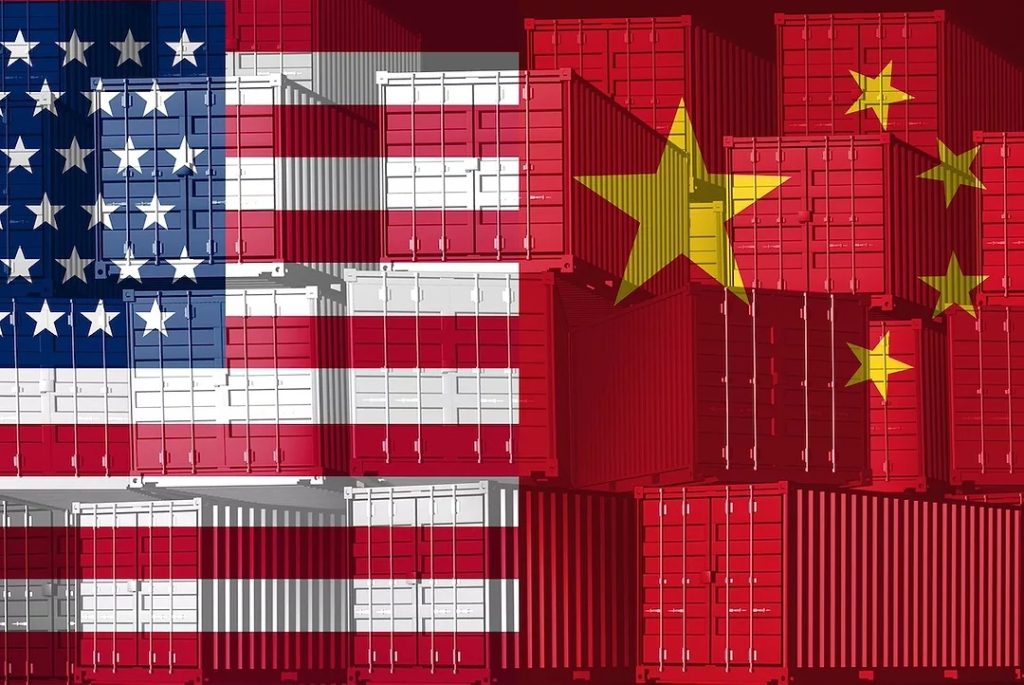


President Donald Trump on Monday signed an executive order granting yet another 90-day extension on the suspension of the most severe tariffs on Chinese imports, originally scheduled to take effect Tuesday. This move delays the implementation of the highest tariff rates as both Washington and Beijing continue to negotiate toward a potential trade agreement.
Trump announced the signing on his social media platform at approximately 8 p.m. Eastern Time, with China’s state-run news agency Xinhua confirming the extension shortly thereafter. The coordinated pause reflects ongoing efforts by both countries to maintain a fragile truce in their trade tensions while talks progress.
The extension maintains the headline tariff rates agreed upon in May — 30% on certain Chinese imports and 10% on select U.S. goods — until the new deadline of November 10. This effectively prevents a snapback to previous tariff levels, which at times exceeded 100% on key goods. However, sector-specific tariffs, including those on steel and certain medical supplies, will continue to keep the overall tariff burden elevated between the two nations.
This tariff reprieve comes as President Trump’s focus has increasingly shifted to geopolitical concerns, especially the conflict in Ukraine and Russia’s energy exports. Notably, Trump recently imposed a new 25% tariff on imports from India in response to the country’s continued purchase of Russian oil, signaling a more complex and multifaceted trade landscape.
The pause could also pave the way for a potential face-to-face summit between President Trump and Chinese President Xi Jinping later this year. Both sides have floated the idea of a meeting, possibly coinciding with the Asia-Pacific Economic Cooperation (APEC) summit scheduled for late October in South Korea. Such a high-profile encounter would mark a significant step forward in U.S.-China relations.
Monday’s announcement follows a series of three rounds of trade negotiations held over the past several months — in Geneva (May), London (June), and Stockholm (July) — which showed some signs of progress despite persistent disagreements. China’s Vice Premier He Lifeng, the lead negotiator on economic matters, has been a consistent presence at the talks, accompanied most recently by Chinese trade envoy Li Chenggang. After the July meeting, Li described the discussions as “candid exchanges” addressing each country’s economic concerns.
Key topics under negotiation have included semiconductors, especially the resumption of U.S. exports of Nvidia’s AI chips to China, as well as the trade of rare earth minerals — vital components in technology manufacturing. However, a wide range of contentious issues remains unresolved between the two economic powerhouses.
In a notable development over the weekend, the Trump administration reached an agreement with semiconductor giants Nvidia and AMD allowing limited chip sales into China, tied to a 15% royalty on revenues generated from those sales. Despite this breakthrough, China quickly urged companies not to deploy Nvidia’s advanced H20 AI chips, complicating efforts by the U.S. to leverage trade concessions into economic gains.
As the November tariff deadline looms, markets and policymakers alike will closely watch whether these negotiations culminate in a lasting deal or if tariffs could once again escalate tensions between the world’s two largest economies.
 Pump Radar
 Stock Alerts